
The Federal Public Service Commission has confirmed the written-test window for General Recruitment Phase-III/2026: 12 to 19 October 2026, across 13 cities (FPSC notice of 29 September 2026). Note the correction to earlier tentative reports: the GR papers run 12–19 October — the CSS MPT 2027 is a separate screening on 10 October. If you applied under any Phase-III case, your admission certificate is now the most important document you own. Below: the confirmed schedule, the exact paper pattern for your grade, the negative-marking math, exam-day rules, the postponed cases to check, and a focused final-week plan.
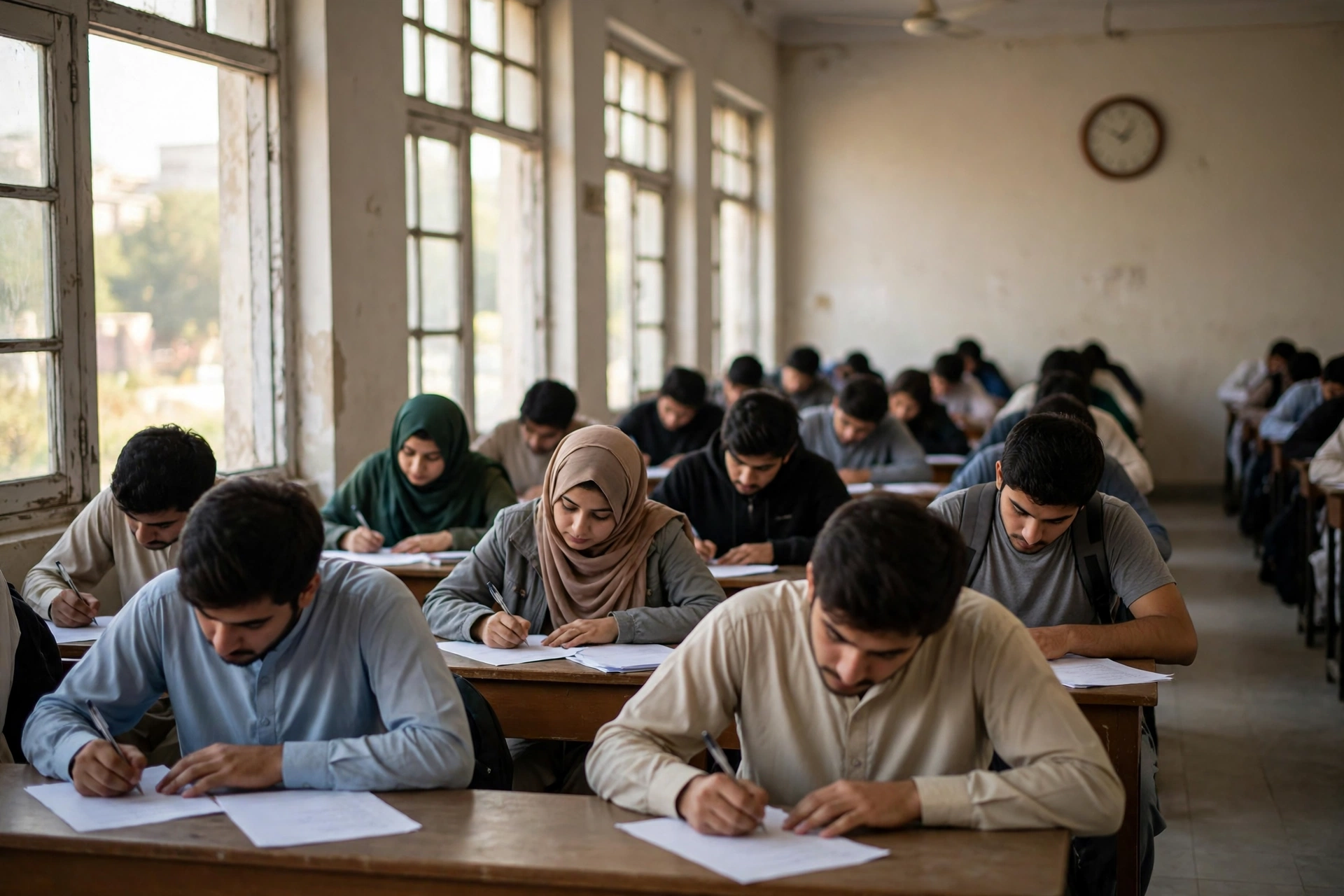
Confirmed schedule: 12–19 October 2026
FPSC’s notice of 29 September 2026 fixes the General Recruitment Phase-III/2026 written tests for 12 to 19 October 2026. The CSS MPT 2027 screening is separate, on 10 October 2026 — different test, different cities, so don’t mix up your roll number slip. (CSS aspirants: our CSS MPT pattern guide covers that screening; the CSS test format page maps the full route.)
- Test cities (GR Phase-3): D.I. Khan, Gilgit, Gujranwala, Hyderabad, Islamabad, Karachi, Lahore, Multan, Peshawar, Quetta, Rawalpindi, Skardu and Sukkur.
- Timings: morning papers 10:00–11:40 am; afternoon papers start at 2:00 pm and end at 3:40 pm or 5:20 pm depending on the paper length.
- Admission certificate: download it from fpsc.gov.pk by logging in with your CNIC, and print it. Entry requires the printed certificate plus your original CNIC — digital copies are not accepted.
- Reach the hall 45 minutes early. Doors close 15 minutes before the paper starts and latecomers are not admitted, for any reason. At large centres, plan for long security queues — aim to be at the gate a full hour before your paper.
Paper pattern: one paper for BS-16/17, longer papers above
FPSC sets the paper by the post’s basic scale:
- BS-16 and BS-17 posts: a single MCQ paper of 100 marks in 100 minutes — largely subject-related questions with a general-ability mix (English, General Knowledge, Islamiat, Pak Studies, current affairs) depending on the post.
- BS-18 and above: a 200-mark paper in 200 minutes — descriptive. Under FPSC’s published instructions to candidates, BS-18/19 descriptive tests run two 100-mark papers: Paper 1 is English (essay, plus composition, précis, grammar and translation); Paper 2 covers management or professional/technical subjects with an MCQ component — each paper needs 40% to qualify. BS-20/21 posts face a 100-mark analysis or case-study paper with a 50% qualifying threshold.
- Negative marking: every wrong MCQ answer costs 0.25 marks. Blank answers cost nothing — and that single rule decides your attempting strategy (more below).
Our FPSC general recruitment test guide covers the MCQ pattern and syllabus in depth — read it alongside this schedule update.
Check this first: 17 posts postponed out of Phase-3
FPSC has removed five cases — 17 posts at the Board of Investment and the Prime Minister’s Office — from the Phase-III schedule until further orders: Director General (BS-20) ×1, Director (BS-19) ×4, Deputy Director (BS-18) ×6, Assistant Director (BS-17) ×3 and Public Relations Officer (BS-16) ×3. If your application falls under one of these cases, you will not be tested this month — match your case number against the notice on fpsc.gov.pk before travelling to a test city.
What happens after the written test
Qualifying the screening is step one. FPSC calls candidates for interview at 5 per post where a case has two or fewer posts (and for all merit-quota posts), or 3 per post where a case has more than two. The final merit list is drawn on the aggregate of written-test and interview marks — so a strong paper lifts your final position directly, not just your shortlisting.
Your final-week strategy: six days, zero wasted
With the tests days away, stop expanding the syllabus and start converting preparation into marks.
Days 6–4: timed blocks, not chapters. Sit two full 100-minute, 100-mark sessions under exam conditions — no phone, no pauses. Your only metrics: attempted, correct, and the −0.25 penalty. Our free Jobs Test Preparation course gives you timed practice across five question banks (General Knowledge, English, Islamiat, Pak Studies, Current Affairs) that mirror the general-ability portion of these papers. An honest note: for NTS-style aptitude tests our banks cover only the English and General Knowledge portions — the quantitative and analytical sections are not covered, so don’t treat them as complete NAT/GAT preparation.
The negative-marking math. With −0.25 per wrong answer, a blind guess breaks roughly even at best — and only if you truly have no clue. The winning rule: attempt a question if you can eliminate at least one option; skip it if all four look equally foreign. Mark skipped questions clearly so a second pass can rescue the ones your memory jogs.
Days 3–2: high-yield revision only. Current affairs of the last six months, Pak Studies facts (constitutional articles, census, major projects), Islamiat basics, and English vocabulary and grammar rules. One page of facts per topic — if it doesn’t fit on one page, it’s not last-week material.
Day 1 and exam eve: documents and sleep. Printed admission certificate, original CNIC, route planned, and — if the instructions allow it — a simple watch. Sleep beats a midnight cram session; a tired brain misreads MCQs.
Exam-day checklist
- Printed admission certificate + original CNIC (no digital copies).
- Inside the hall 45 minutes before; doors shut 15 minutes before the start.
- 100 marks in 100 minutes ≈ roughly a minute per mark — keep moving, and circle back to flagged items.
- Read the answer-sheet instructions before touching question 1; a wrongly filled roll-number bubble fails more candidates than hard questions do.
FAQs
Q1: When exactly are the FPSC Phase-III/2026 written tests?
12–19 October 2026 for General Recruitment, across 13 cities. The CSS MPT 2027 is separate, on 10 October 2026.
Q2: What is the paper pattern for BS-16 and BS-17 posts?
One MCQ paper of 100 marks in 100 minutes, with 0.25 marks deducted per wrong answer.
Q3: What about BS-18 and higher posts?
A 200-mark descriptive paper in 200 minutes — for BS-18/19, two 100-mark papers with 40% qualifying in each; for BS-20/21, a 100-mark analysis or case-study paper with 50% to qualify.
Q4: How do I download my roll number slip?
Log in to fpsc.gov.pk with your CNIC, download the admission certificate and print it. Bring the printout and your original CNIC to the centre.
Q5: Have any Phase-3 tests been postponed?
Yes — 17 posts across five cases (Board of Investment and Prime Minister’s Office) are suspended until further orders and removed from the October schedule. Check your case number on fpsc.gov.pk.
Q6: How should I use the last week before the test?
Timed 100-minute mock sessions, the −0.25 attempting rule (attempt if you can eliminate at least one option), high-yield revision of current affairs, Pak Studies, Islamiat and English, and an early night before the paper. Free timed practice: our Jobs Test Preparation course.