
Unit 3: Dynamics — Notes
3.1 Force, Inertia And Momentum
Short Questions
Q1. Define dynamics. (GRW 2015, 2017)
DYNAMICS
Definition:
“The branch of mechanics that deals with the study of motion of an object and the cause of its motion is called dynamics”.
Q2. Define force? Write its formula and unit. (GRW 2013, LHR 2017)

FORCE
Definition:
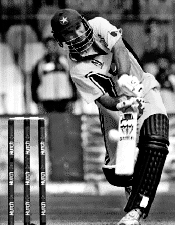
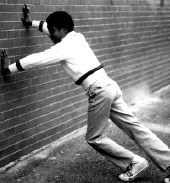
“A force is an agent that moves or tends to move, stops or tends to stop the motion of a body. The force can also change the direction of motion of a body”.
Formula:
F = ma
Quantity:
A force is a vector quantity.
Unit:
S.I unit of force is newton(N)
1N = 1kg×1ms–2
Definition of newton:
“One newton is the force that produces an acceleration of 1ms-2 in a body of mass 1kg.”
Examples:
We can open the door either by pushing or pulling the door.
A man pushes the cart. The push may move the cart or change the direction of its motion or may stop the moving cart.
A batsman changes the direction of a moving ball by pushing it with his bat.
Q3. Define inertia. Explain it with examples. (LHR 2014, 2015, GRW 2017)
INERTIA
Introduction:
Galileo observed that it is easy to move or to stop light objects than heavier ones. Heavier objects are difficult to move or if moving then difficult to stop. Later on Newton concluded that everybody resists to the change in its state of rest or of uniform motion in a straight line. He called this property of matter as inertia. He related the inertia of a body with its mass; greater is the mass of a body greater is its inertia.
Definition:
“Inertia of a body is its property due to which it resists any change in its state of rest or of motion”.
Dependence:
It depends on the mass of the body. Greater the mass of the body greater will be the inertia. Therefore, we can say that mass is the direct measure of inertia.
Examples: (GRW 2017)
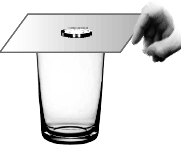
Take a glass cover it with a piece of cardboard. Place a coin on the cardboard. Now flick the card horizontally with a jerk of your finger. The coin does not move with the cardboard due to inertia and falls in to the glass.
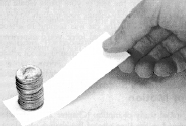
Cut a strip of paper. Place it on the table. Stack a few coins at its on end. Pull out the paper strip under the coins with a jerk. We will succeed in pulling out the paper strip under the stacked coin without letting them to fall due to inertia.
Q4. When a bus takes a sharp turn why do passengers fall in outward direction?

TAKING SHARP TURN
Q5. When a bus takes a sharp turn passengers fall in outward direction. It is due to inertia that they want to continue their motion in a straight line and thus fall outwards. What is momentum? (LHR 2014)
MOMENTUM
Definition:
“Momentum of a body is the quantity of motion it possesses due to its mass and velocity”.
Formula:
The momentum ‘P’ of a body is given by the product of its mass m and velocity v. Thus
P = m x v
Quantity:
Momentum is a vector quantity.
Unit:
SI unit of momentum is kg ms-1 or Ns.
Dependence:
Momentum or quantity of the motion of a body depends on two quantities.
Mass of the body
Velocity of the body
3.2 Newton’S Laws Of Motion
Long Questions
Q1. State and Explain Newton’s First law of motion. (GRW 2011, 2012, 2014)
NEWTON’S FIRST LAW OF MOTION
Introduction:
First law of motion deals with bodies which are either at rest or moving with uniform speed in a straight line. It means no net force acts on them.
Statement:
Newton’s First Law of Motion states that:
“A body continues in its state of rest or of uniform motion in a straight line provided no net force acts on it”.
Explanation For Rest:
Newton’s first law of motion deals with bodies which are either at rest or moving with uniform speed in straight line. According to first law of motion, a body at rest remains at rest provided no net force acts on it. This part of the law is true as we observe that objects do not move by themselves unless someone moves them.
Example:
A book lying on a table remains at rest as long as no net force acts on it.
Explanation For Motion:
Similarly, a moving object does not stop moving by itself. A ball rolled on a rough ground stops earlier than that rolled on smooth ground. It is because rough surface offer greater friction. If there would be no force to oppose the motion of the body would never stop.
Example:
When its engine of a car moving with uniform velocity is turned off it stops gradually because a net force of friction is acting in the opposite direction causes to stop it.
Law of Inertia:
Since Newton’s first law of motion deals with the inertial property of matter, therefore, Newton’s first law of motion is also known as law of inertia.
Example:
Passengers standing in a bus fall forward when its driver applies brakes suddenly. It is because the upper parts of the bodies tend to continue their motion, lower parts of their bodies are in contact with the bus stop with it. Hence, they fall forward. Similarly, when a moving bus takes a sharp turn, passengers fall in the outward direction. It is due to inertia that they want to continue their motion in a straight line and thus fall outwards.
Q2. State and Explain Newton’s Second law of motion. (GRW 2011, LHR 2012, 2013)
NEWTON’S SECOND LAW OF MOTION
Introduction:
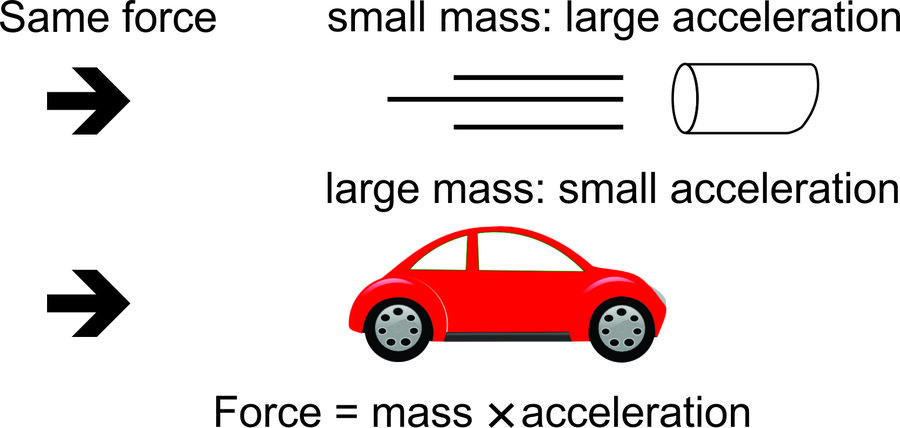
Newton’s Second Law of Motion deals with the situation where a net force acts on the body.
Statement:
Newton’s Second Law of Motion states that:
“When a net force acts on a body, it produces acceleration in the body in the direction of the net force. The magnitude of this acceleration is directly proportional to the net force acting on the body and inversely proportional to its mass.”
Mathematical Form:
If the force ‘F’ is acting on the body of mass ‘m’ then we can write this in the mathematical form as,
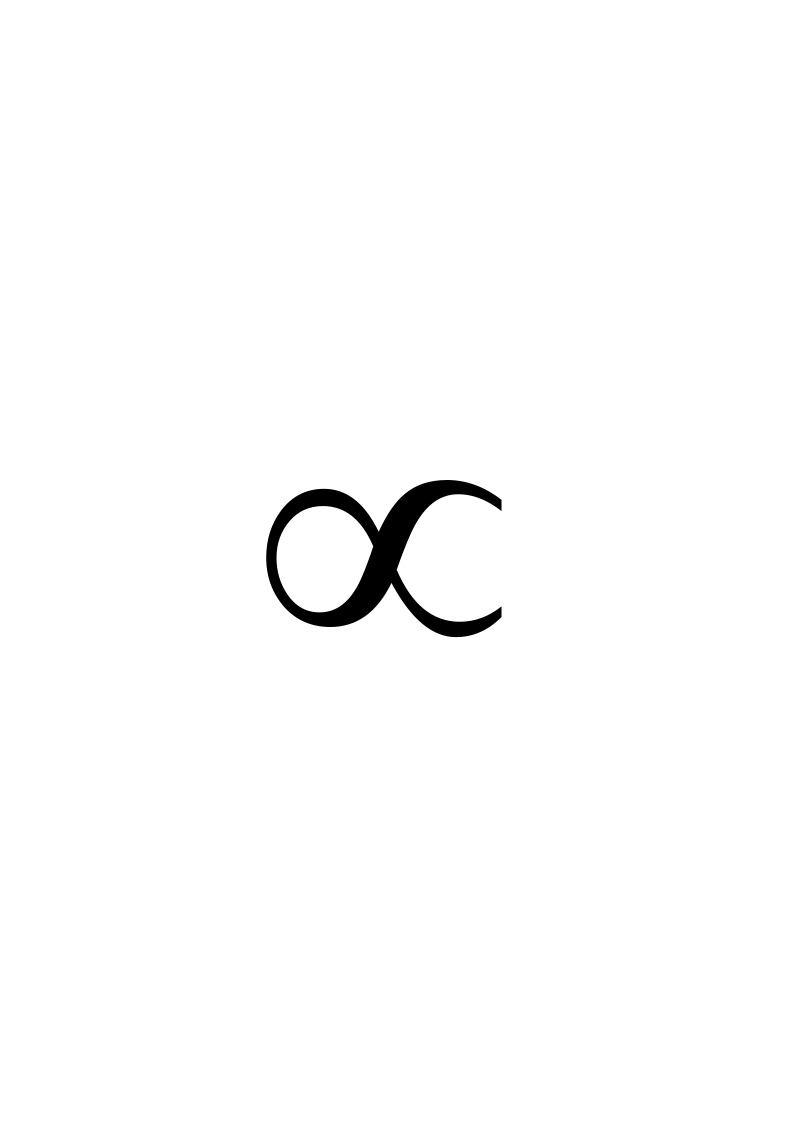
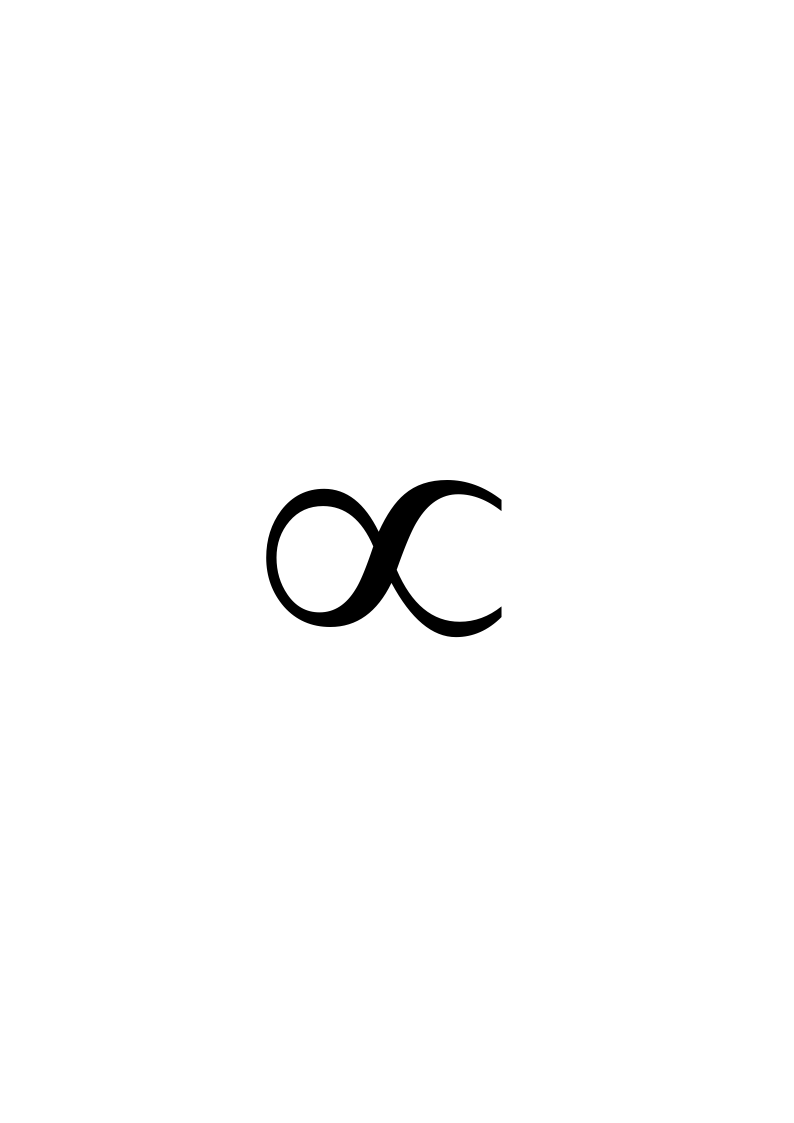
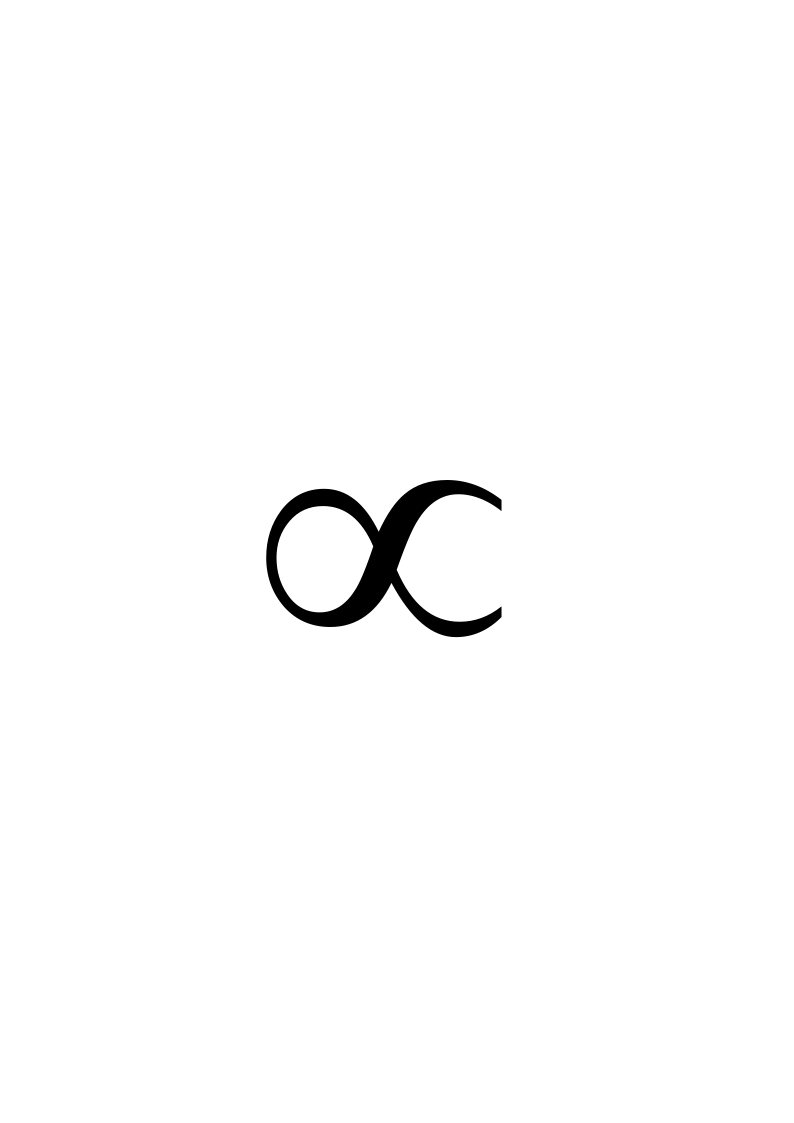
a F …………… (1)
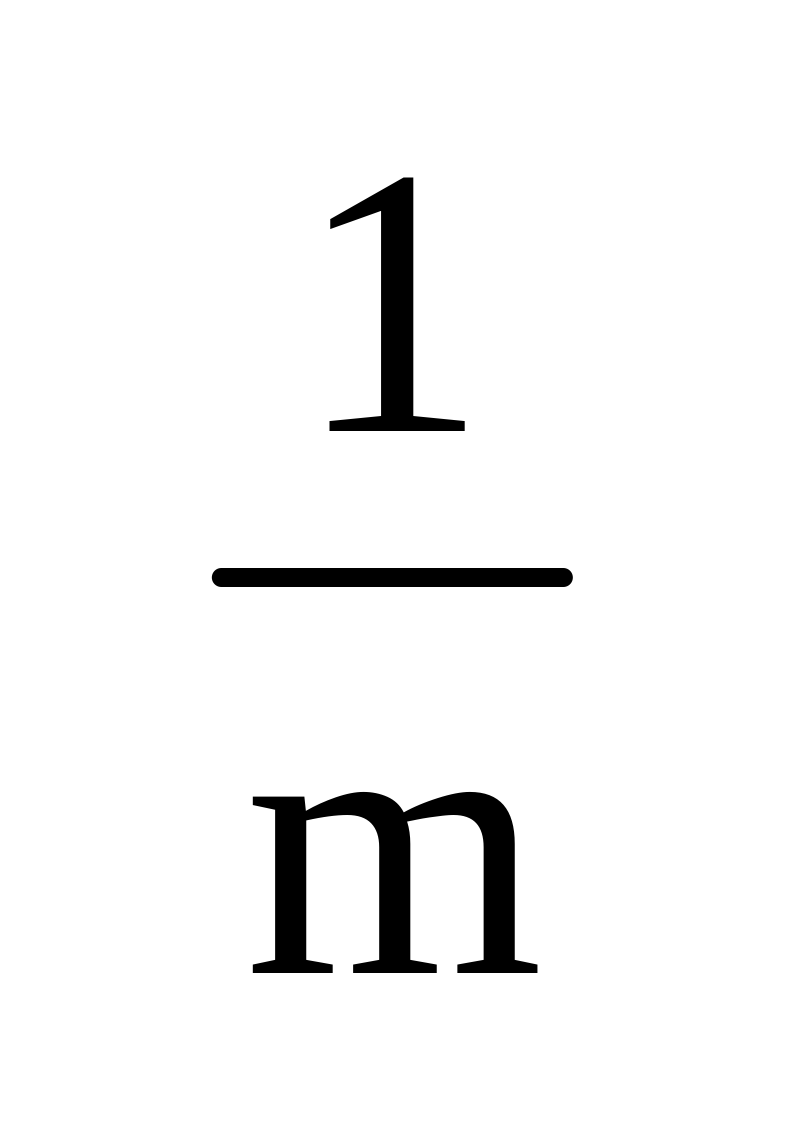
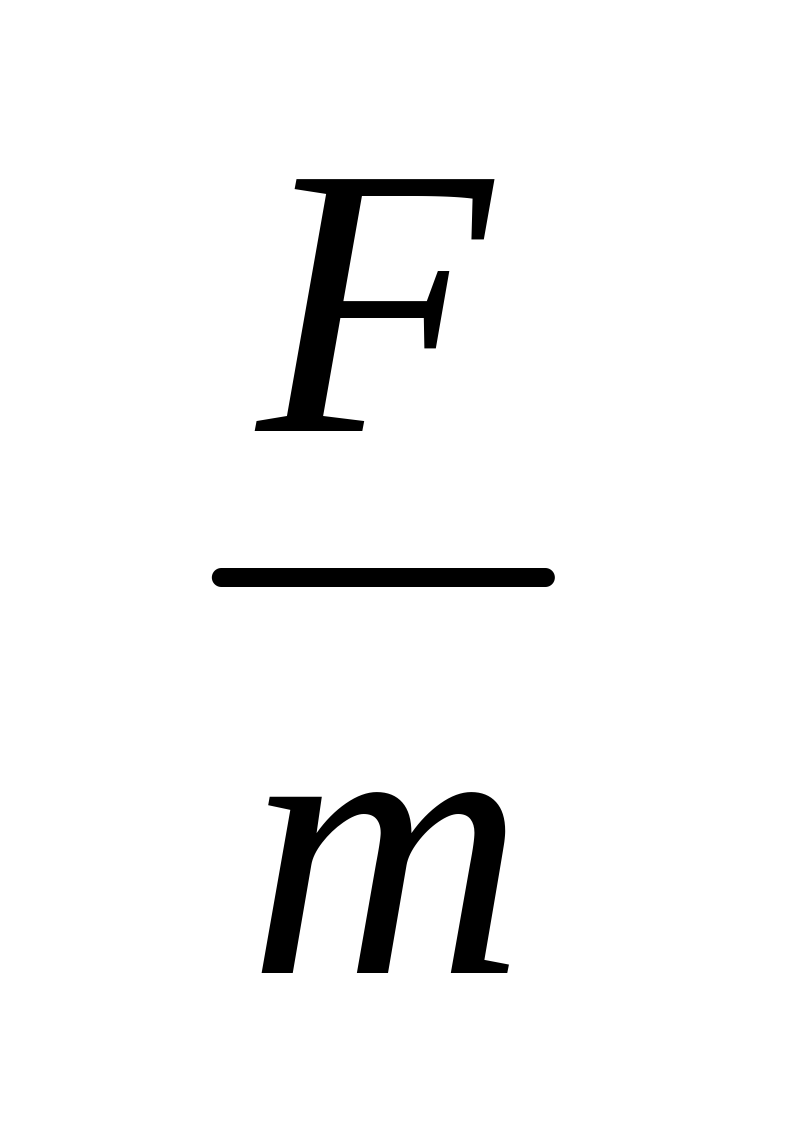
and a ……………. (2)
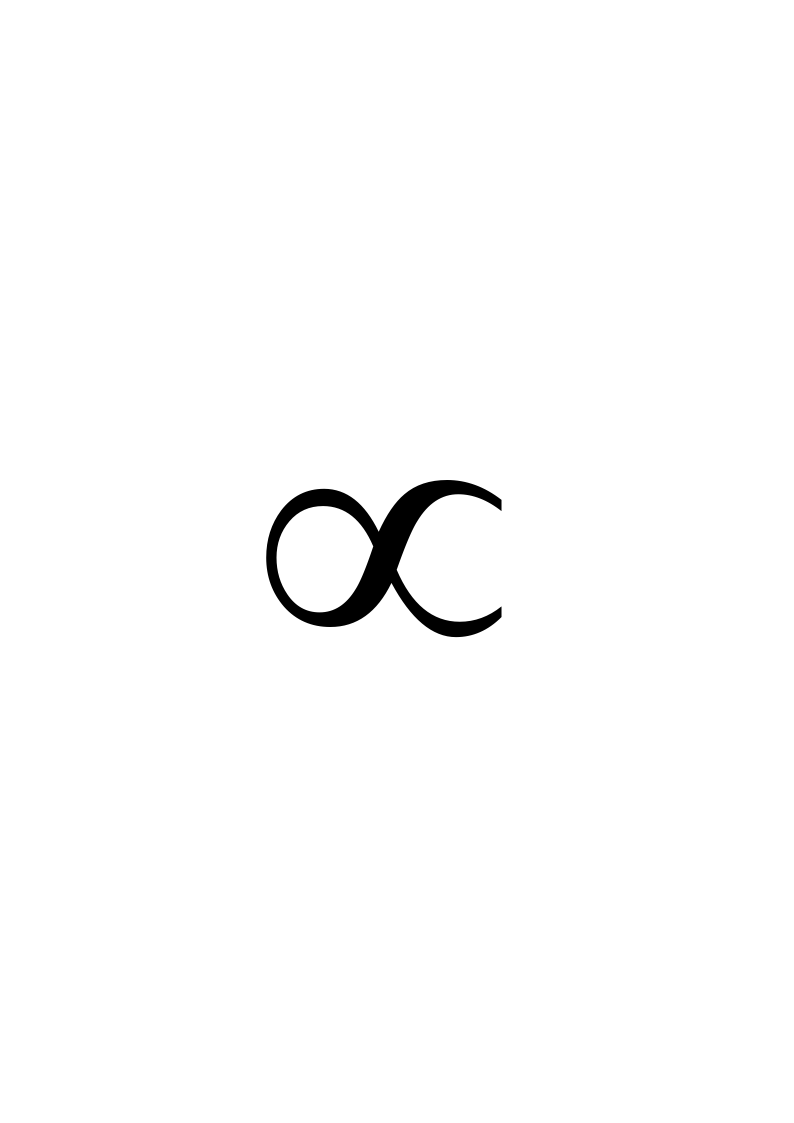
From relation (1) and (2), we have
a
F ma
Changing the sign of proportionality into the sign of equality
F = (constant) ma
Putting k as proportionality constant, we get
F = kma
In above equation, according to international system of units if m = 1Kg,
a = 1ms-2, F = 1N then the value of the constant k will be ‘1’. So the equation can be written as,
F = (1) ma
F = ma
This is the mathematical form of Newton’s Second law of motion.
Unit of Force:
In the System International, the unit of force is newton, which is represented by the symbol ‘N’.
Definition of newton:
“One newton (1N) is the force that produces an acceleration of 1ms-2 in a body of mass 1kg.”
Thus, a force of one newton can be expressed as
1 N = 1 kg x 1 ms-2
or 1 N = 1 Kgms-2
Q3. Differentiate between Mass and Weight. (GRW 2011, 2012, LHR 2014, 2015)
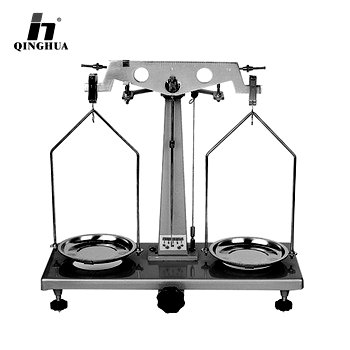
DIFFERENTIATION
Mass and weight can be differentiated as:
| Mass | Weight |
| Definition | Definition |
| Mass of a body is the quantity of matter possessed by the body. | Weight of a body is the force equal to the force with which Earth attracts it. |
| Quantity | Quantity |
| It is a base and scalar quantity. | It is a derived and vector quantity. It is always directed toward the center of the earth. |
| Measurement | Measurement |
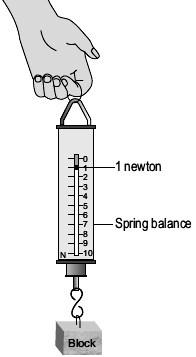
| It is measured by comparison with standard masses using a physical balance (beam balance or electronic balance etc. | It is measured by spring balance. |
| Variations | Variations |
| It remains same everywhere and does not change with change of place. | It does not remain same at all places and varies with the value of ‘g’, acceleration due to gravity. |
| Unit | Unit |
| Unit of mass is kilogram (Kg). | Unit of weight is newton (N). |
| Formula | Formula |
| It can be calculated by using the formula F = ma | It can be calculated by using the formula w = mg |
| Zero Value | Zero Value |
| Mass of a body can never be zero | Weight of body can be zero |
| Measuring Instruments | Measuring Instruments |
Q4. State and Explain Newton’s Third law of motion. (LHR 2011, GRW 2013)
NEWTON’S THIRD LAW OF MOTION
Introduction:
Newton’s Third Law of Motion deals with the situation where action and reaction forces act on the bodies.
Statement:
Newton’s Third Law of Motion states that:
“To every action there is always an equal but opposite reaction”.
Explanation:
According to this law, action is always accompanied by a reaction force and the two forces must always be equal and opposite. Note that action and reaction forces act on different bodies due to this reason they do not cancel each other.
Action Force: The applied force on a body is called action.
Reaction Force: The responsive force to action is called reaction force
Newton’s third law of motion deals with the reaction of a body when a force acts on it. Let a body A exerts a force on another body B, the body B reacts against this force and exerts a force on body A. The force exerted by body A on B is the action force whereas the force exerted by B on A is called the reaction force.
Examples:
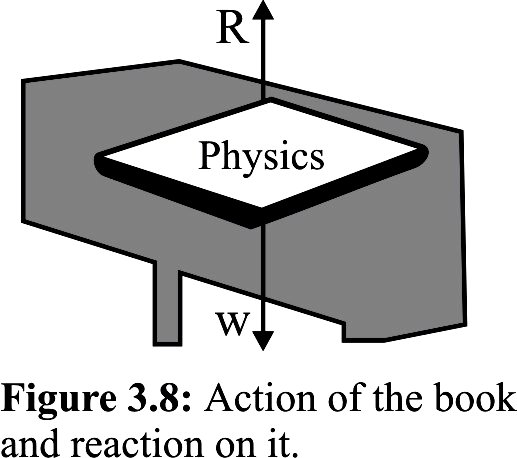
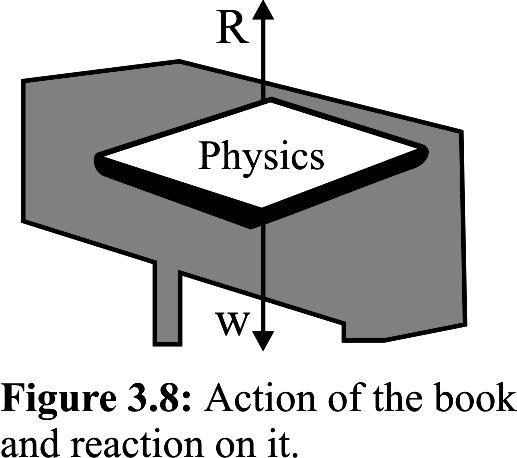
Consider a book lying on a table as shown in figure. The weight of the book is acting on the table in the downward direction. This is the action. The reaction of the table acts on the book in the upward direction.
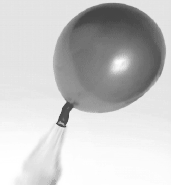
Take an air – filled balloon. When the balloon is set free, the air inside it rushes out and the balloon moves forward. In this example, the action is by the balloon that pushes the air out of it when set free. The reaction of the air which escapes out from the balloon acts on the balloon. It is due to this reaction of the escaping air that moves the balloon forward.
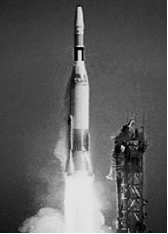
A rocket moves on the same principle. When its fuel burns, hot gases escape out from its tail with a very high speed. The reaction of these gases on the rocket causes it to move opposite to the gases rushing out of its tail.
Short Questions
Q1. State Law of Inertia. OR What is the Law of Inertia? (Ex.3.4)
LAW OF INERTIA
Since Newton’s first law of motion deals with the inertial property of matter, therefore, Newton’s first law of motion is also known as law of inertia.
Statement:
According to Law of Inertia:
“A body continues in its state of rest or of uniform motion in a straight line provided no net force acts on it”.
Example:
A book lying on a table remains at rest as long as no net force acts on it. Similarly, a moving object does not stop moving by itself.
Q2. Why Newton’s First law of motion is also called law of inertia?
LAW OF INERTIA
According to Newton’s first law of motion “A body continues its state of rest or of uniform motion in a straight line provided no net force acts on it”.
The property of a body due to which it resists any change in its state of rest or motion is known as inertia.
On comparing the above two statements we find that statement of Newton’s first law of motion is in accordance with statement of inertia. It means Newton’s first law of motion deals with inertial property of matter that’s why Newton’s first law of motion is also known as law of inertia.
Q3. State Newton’s Second law of motion. (LHR 2012, GRW 2013)
NEWTON’S SECOND LAW OF MOTION
Statement:
Newton’s Second Law of Motion states that:
“When a net force acts upon a body, it produces as acceleration in the body in the direction of the net force. The magnitude of this acceleration is directly proportional to the net force and is inversely proportional to the mass of the body”.
Mathematical Form:
F=ma
Q4. What is the unit of force? Define it. (GRW 2013, LHR 2017)
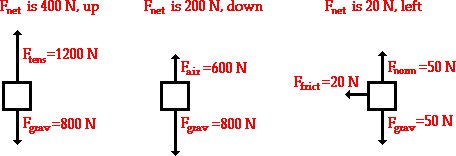
UNIT OF FORCE
In the System International, the unit of force is newton, which is represented by the symbol ‘N’.
Definition of newton:
“One newton (1N) is the force that produces an acceleration of 1ms-2 in a body of mass 1kg”.
Thus, a force of one newton can be expressed as
1 N = 1 kg x 1 ms-2
Q5. or 1 N = 1 Kgms-2 Define net Force
NET FORCE
Definition:
“The resultant of all the forces acting on the body is called Net Force.”
Q6. State Newton’s Third law of motion. (LHR 2017)
NEWTON’S THIRD LAW OF MOTION
Statement:
Newton’s Third Law of Motion states that:
“To every action there is always an equal but opposite reaction”.
Example:
Consider a book lying on a table as shown in figure.
The weight of the book is acting on the table in the downward direction. This is the action. The reaction of the table acts on the book in the upward direction.
Q7. If a moving body has no acceleration; does it mean that no force is acting on it?
ACCELERATION AND NET FORCE
According to Newton’s second law of motion, we have
F = ma
When acceleration = a = 0, we get
F = m x 0
So, F = 0
Result:
Action and reaction are always equal and opposite then why they don’t cancel each other?
Q8. OR Action and reaction are always equal and opposite then how does a body move? (Ex. 3.9)
ACTION AND REACTION DONOT CANCELL EACH OTHER
According to this law, action is always accompanied by a reaction force and the two forces must always be equal and opposite. Note that action and reaction forces act on different bodies due to this reason they do not cancel each other due to which the body will move.
Stretch out your palm and hold a book on it. (Quick Quiz PTB Pg. # 64)
Q9. How much force you need to prevent the book from falling?
PREVENTING BOOK FROM FALLING
Force equal to the weight of the book is needed to prevent the book from falling.
Q10. Which is action?
ACTION
Weight of the book is action in this case.
Q11. Is there any reaction? If yes, then what is its direction?
REACTION
Yes there is a reaction offered by hand. The direction of reaction is opposite to the weight.
EXAMPLE 3.1
Q12. Find the acceleration that is produced by a 20N force in a mass of 8kg.
Given Data:
Force acting on body = F = 20N
Mass of the body = m = 8kg
To Find:
Acceleration = a = ?
Calculations:
We know according to 2nd Law of Motion
F = ma
a = F/m
Putting values
a = 20/8
a = 2.5ms-2
Result:
EXAMPLE 3.2
Q13. A force acting on a body of mass 5 kg produces an acceleration of 10 ms-2. What acceleration the same force will produce in a body of mass 8 kg?
Given Data:
Mass of First Body = m1 = 5 kg
Mass of Second Body = m2 = 8 kg
Acceleration in First body = a1=10ms-2
To Find:
Acceleration in Second body = a2=?
Calculations:
As the same force is acting on both bodies so
m1a1 = m2a2
m1a1/m2 = a2
a2 = m1a1/m2
Putting values
a2 = (5)(10)/8
a2 = 6.25ms-2
Result:
EXAMPLE 3.3
Q14. A cyclist of mass 40 kg exerts a force of 200 N to move his bicycle with an acceleration of 3 ms-2. How much is the force of friction between the road and the tyres?
Given Data:
Mass of cyclist = m = 40 kg
Force exerted = F = 200N
Acceleration = a = 3ms-2
To Find:
Force of friction = f = ?
Calculations:
Before finding force of friction we have to find net force first
So, F = ma
Putting values
F = (40)(3)
F = 120N
We know
Net force = Applied Force – Force of friction
120N = 200N – f
f = 200N-120N
f = 80N
Result:
3.2.1 Tension And Acceleration In String
Long Questions
Q1. Find Acceleration in bodies and tension in the string when both the Bodies Move vertically using Atwood machine. (LHR 2013, GRW 2015)
TENSION IN STRING CASE # 1
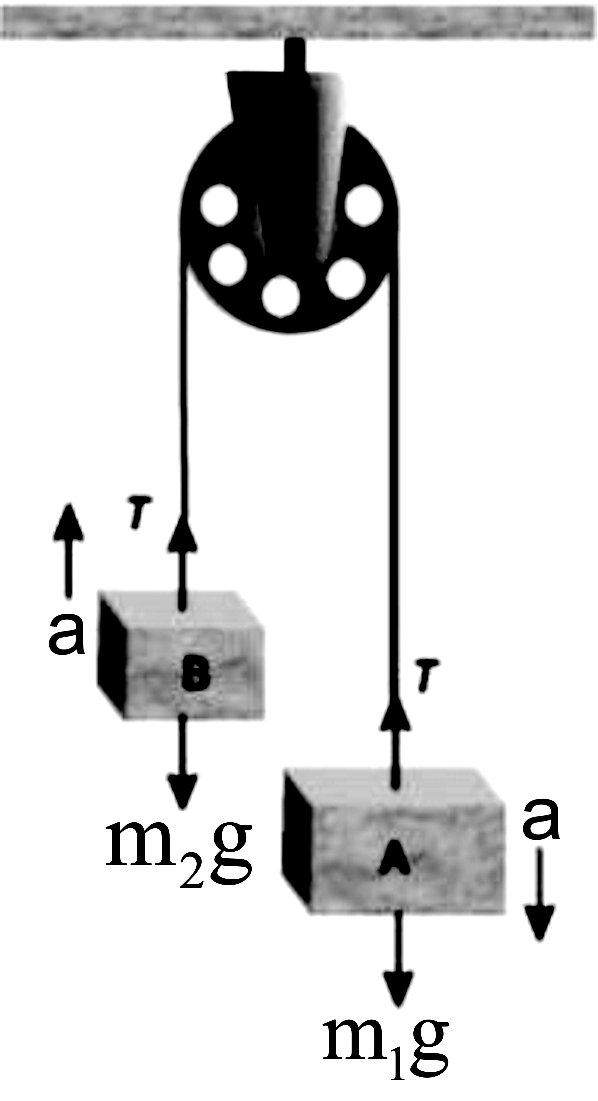
Suppose two bodies A and B having masses m1 and m2 respectively are attached to two ends of an inextensible string which passes over a frictionless pulley. Let m1 is greater than m2, then the body A will move downward and the body B will move upward. The body A being heavier must be moving downwards with some acceleration. Let this acceleration be a. Since the string is inextensible therefore the body B attached to the other end of the string moves up with the same acceleration a. as the pulley is frictionless, hence tension will be the same throughout the string. Let the tension in the string be T.
Forces Acting on Body A:
There are two forces acting on body A
Weight of the body w1=m1g vertically downward
Tension in the string T vertically upward
As the body A is moving downward, It means w1=m1g is greater in magnitude so the resultant force acting on body A is downward due to which acceleration a is produced in it.
Net force acting on body A = m1g–T
F1 = m1g – T
According to Newton’s second law of motion:
m1a =m1g – T …………… (1)
Forces acting on body B:
There are two forces acting on body B
Weight of the body w2=m2g vertically downward
Tension in the string T vertically upward
As the body B is moving upward, It means T force is greater in magnitude so the resultant force acting on body B is upward due to which acceleration a is produced in it.
Net force acting on body B = T – m2g
F2 = T – m2g
According to Newton’s second law of motion:
m2a =T–m2 g …………… (2)
Calculation of Acceleration:
In order to find acceleration in bodies we will add equation (1) and equation (2)
m1a + m2a = m1g – T + T – m2g
m1a + m2a = m1g – m2g
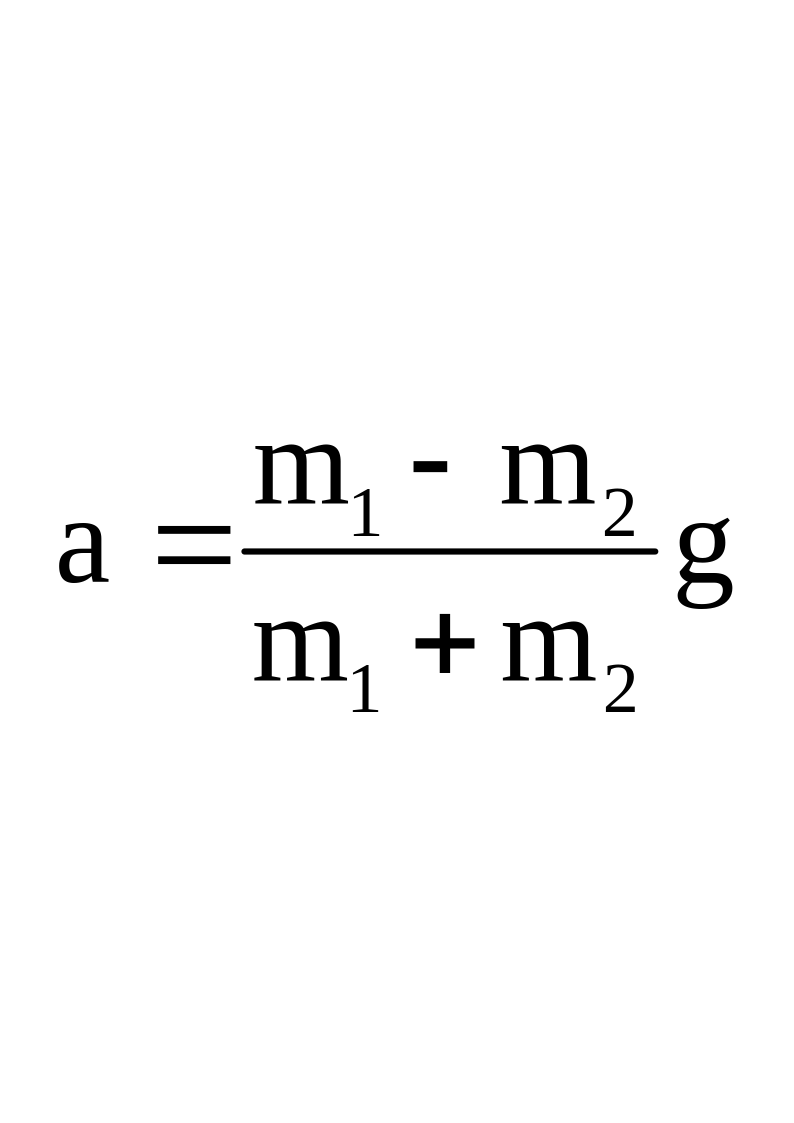
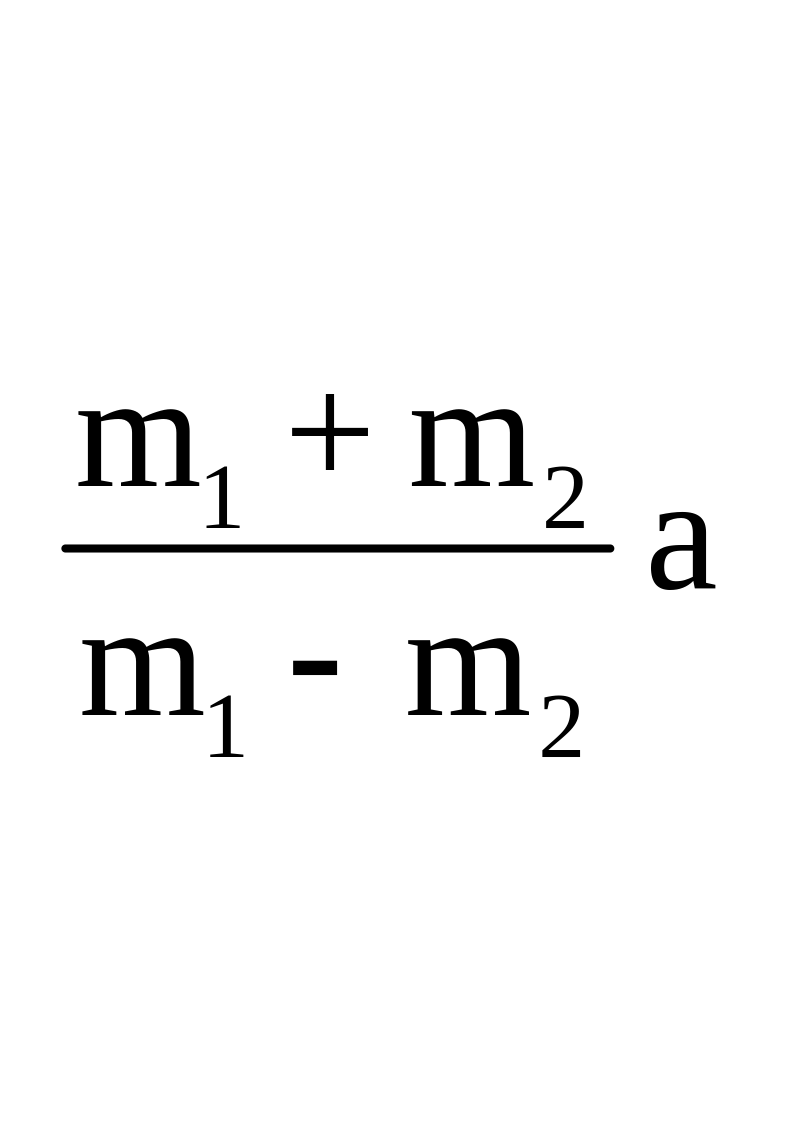
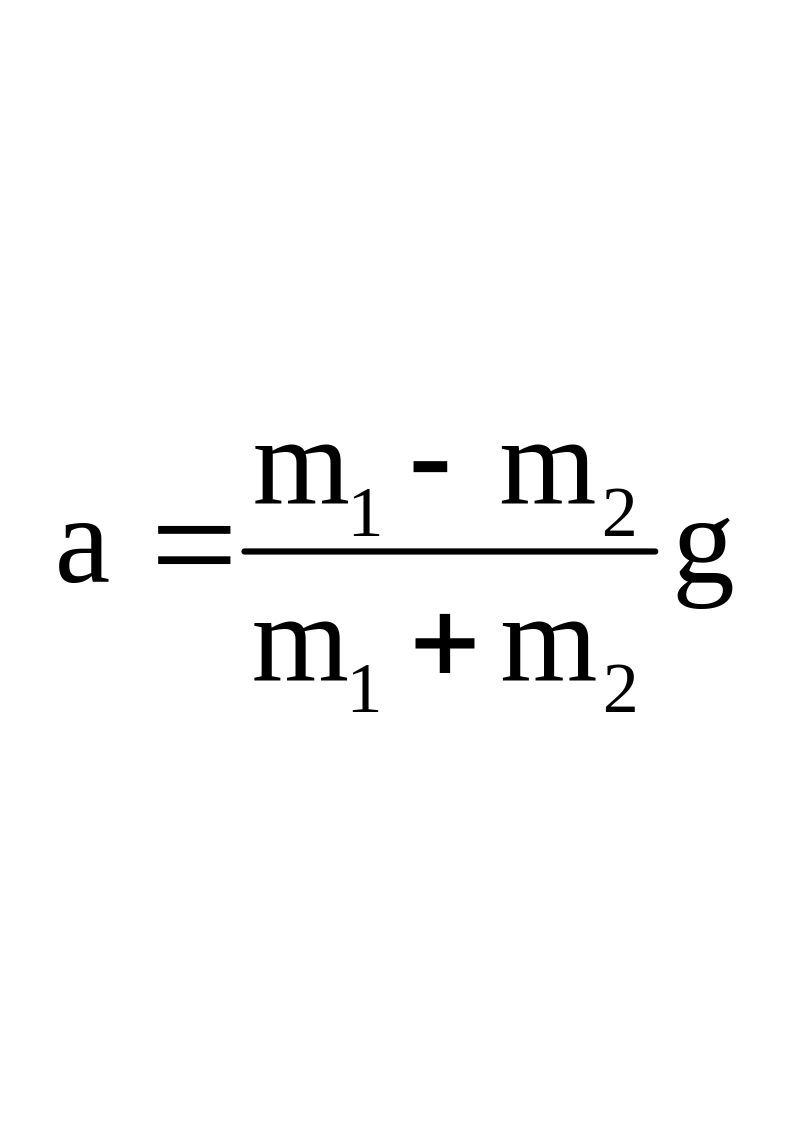
(m1 + m2)a =(m1 – m2)g
Calculation of Tension:
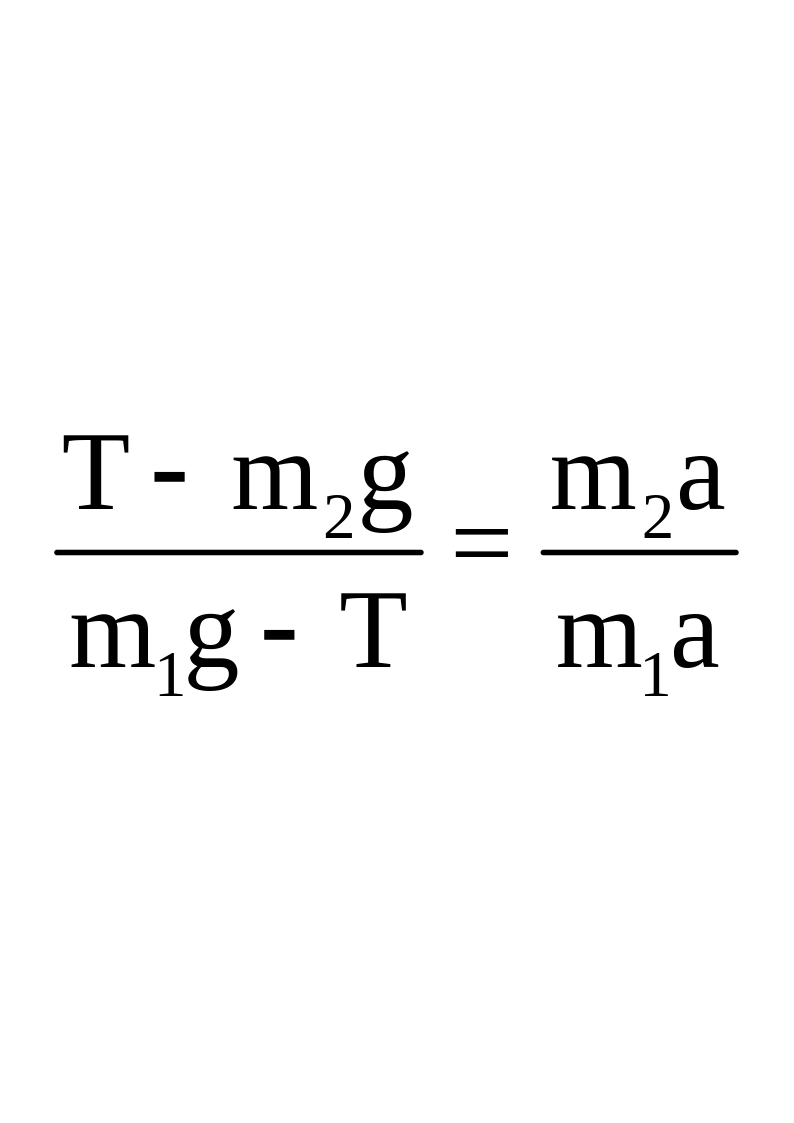
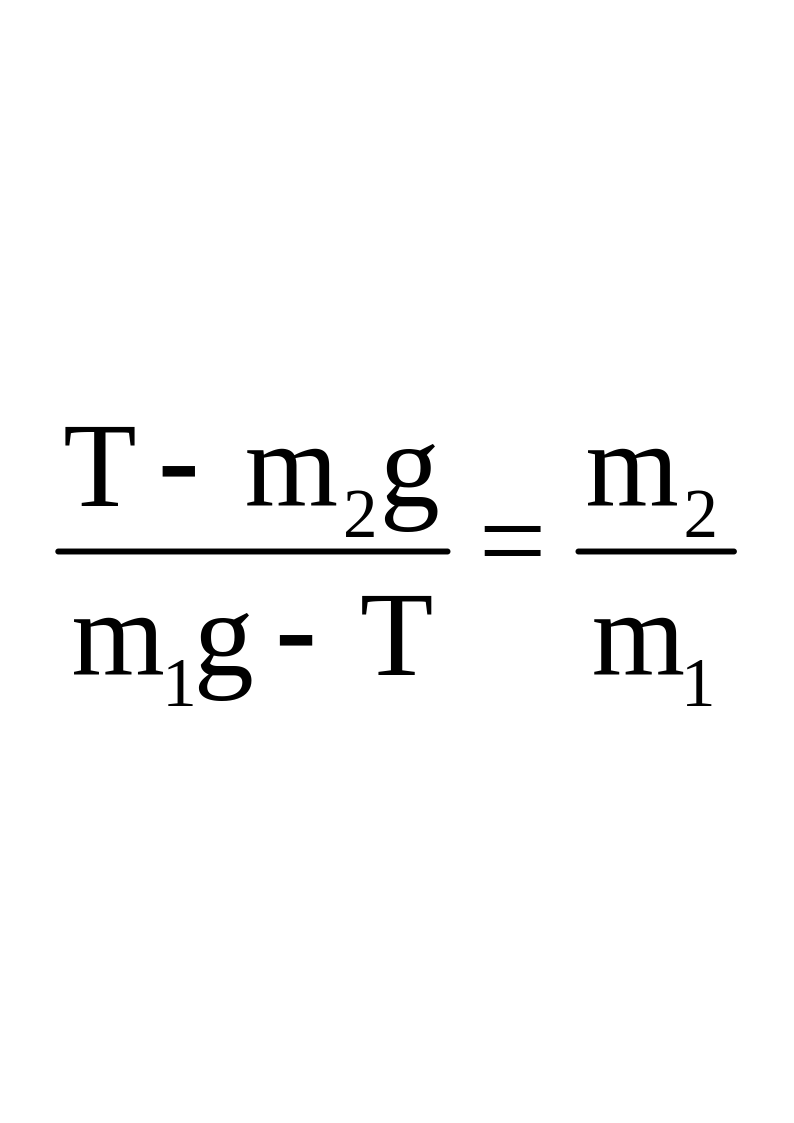
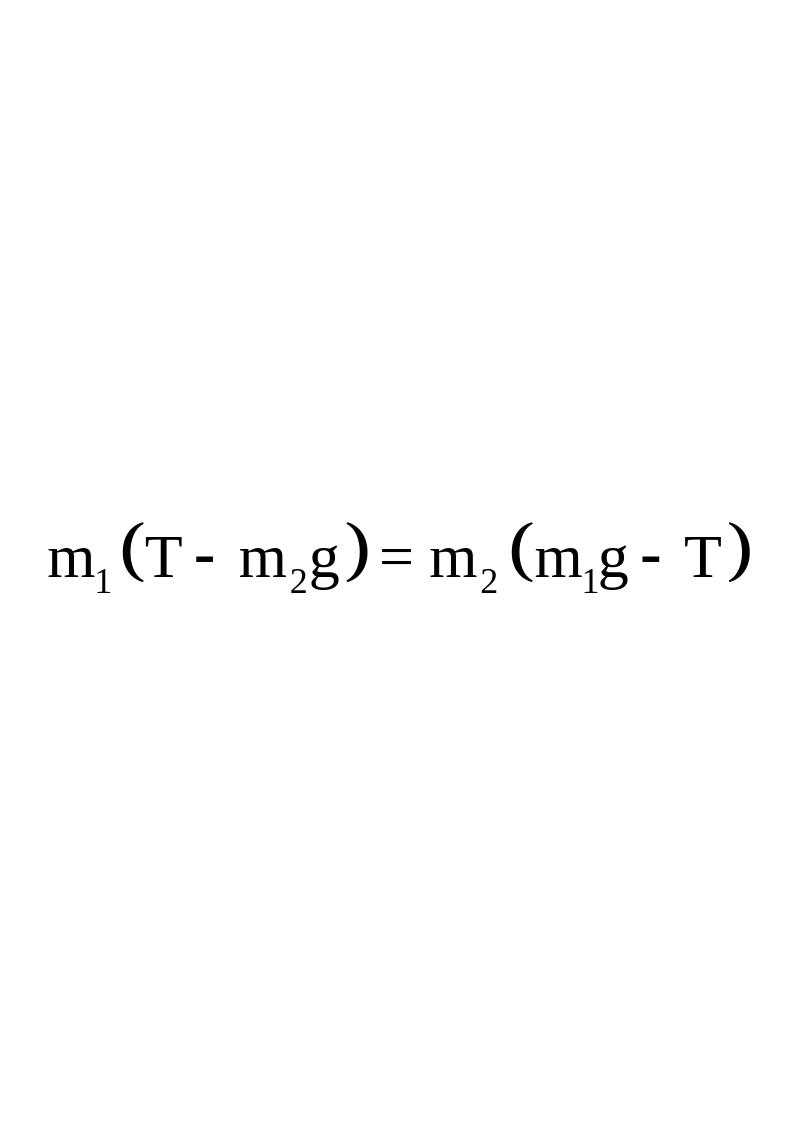
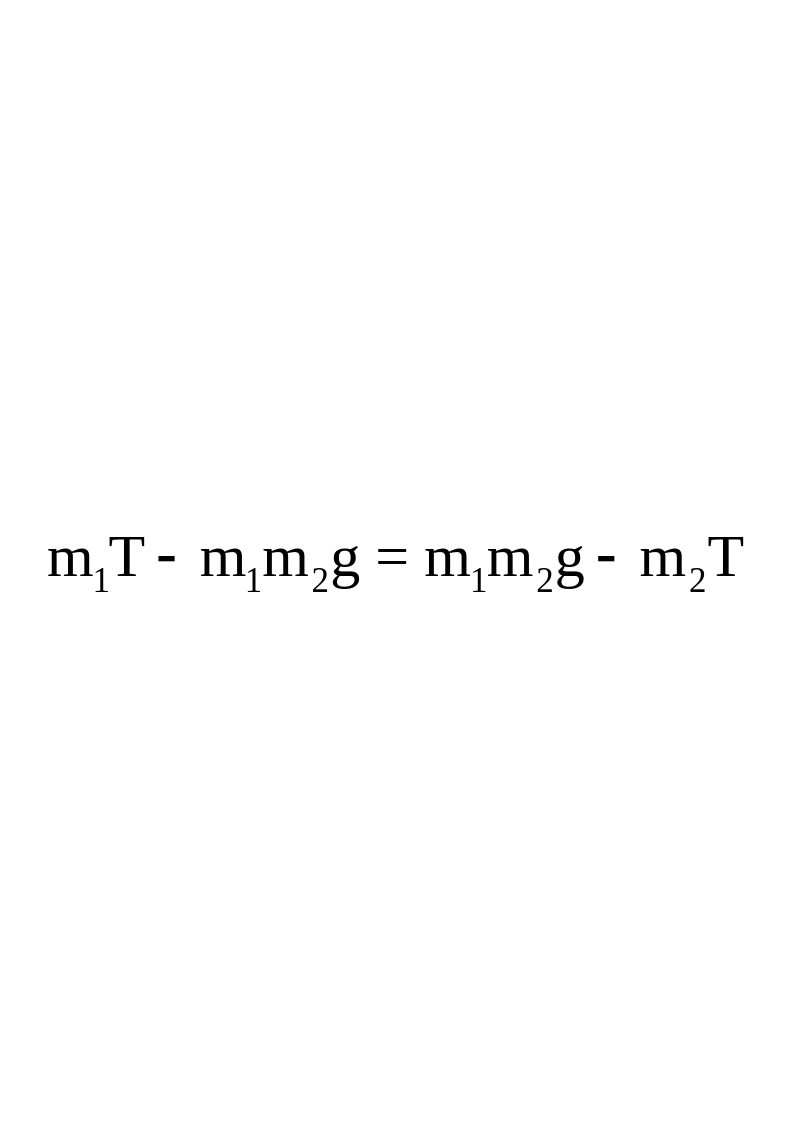
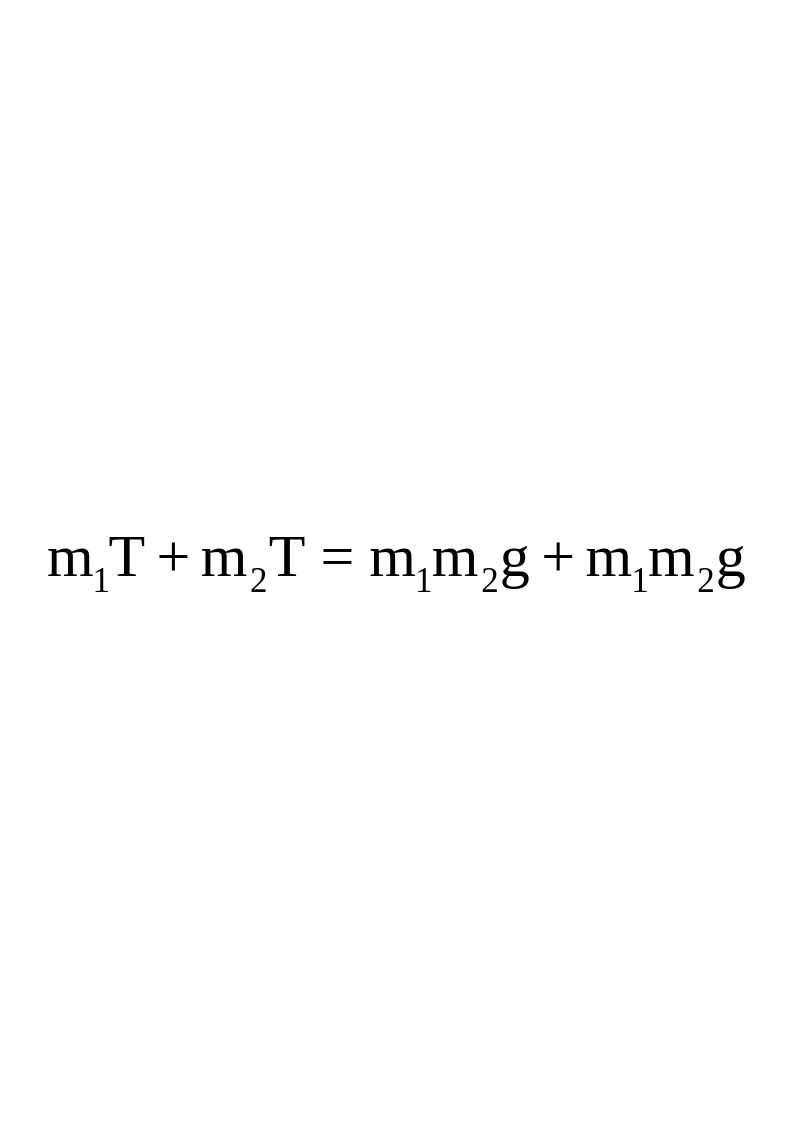
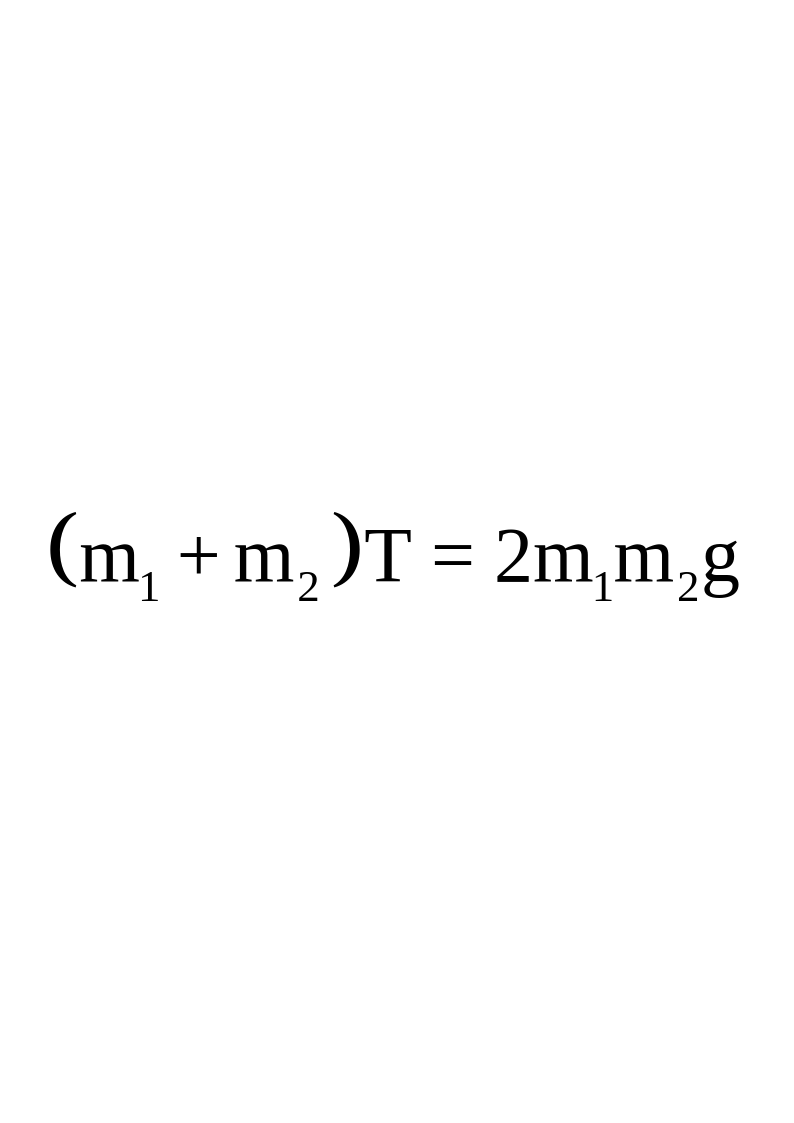
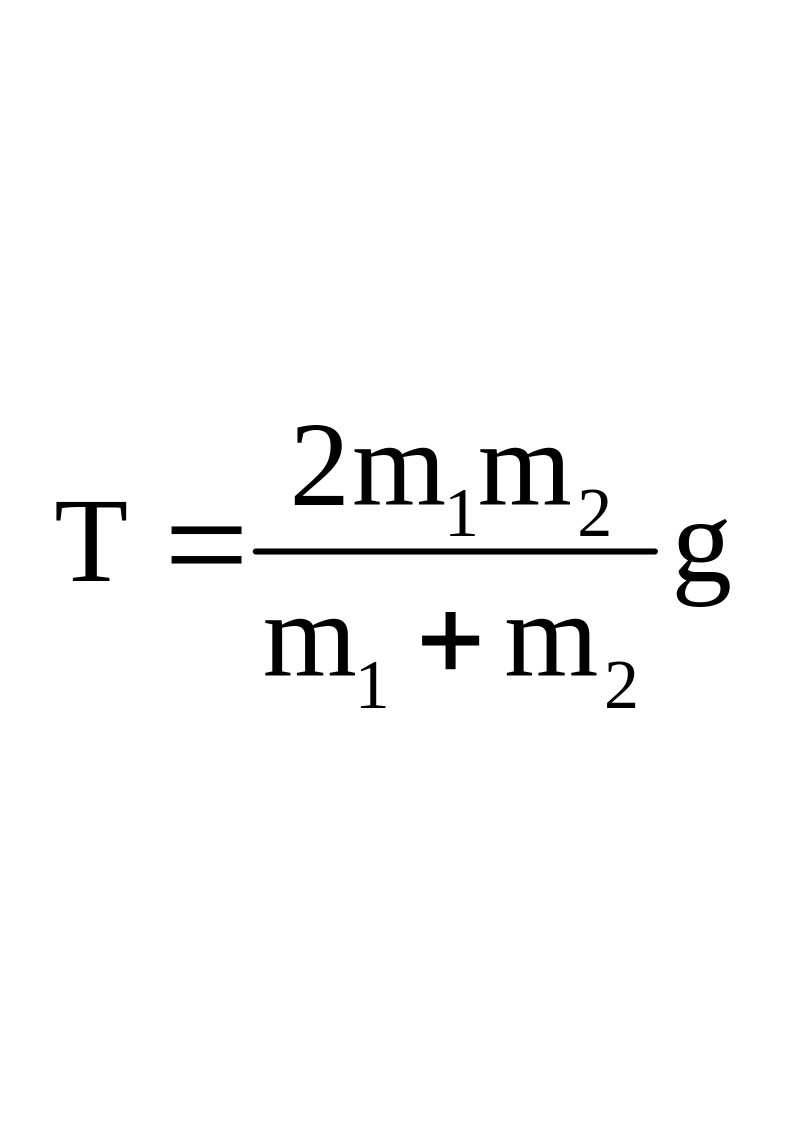
In order to find Tension in bodies we will divide equation (2) by equation (1)
Atwood Machine:
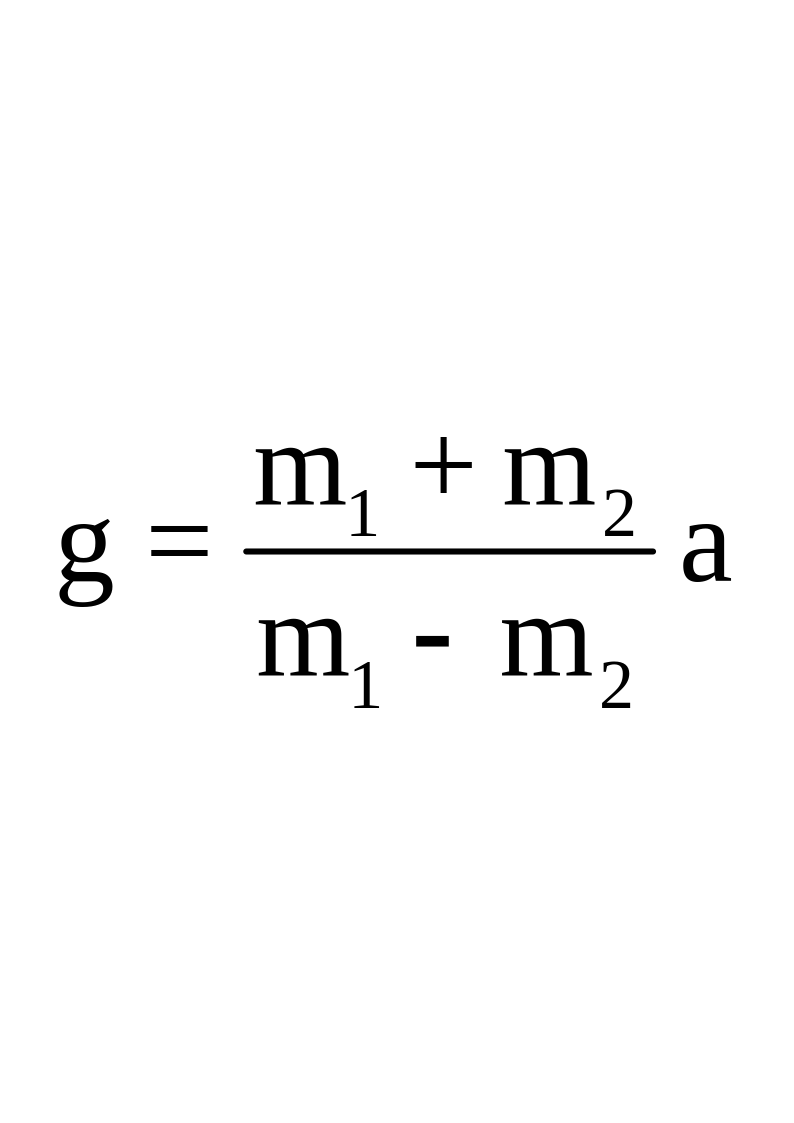
The above arrangements are also known as Atwood machine. Atwood machine is an arrangement of two objects of unequal masses. Both the objects are attached to the ends of a string. The string passes over frictionless pulley. This arrangement is sometimes used to find the acceleration due to gravity by equation as
g =
Result:
Q2. Find Acceleration in bodies and tension in the string, when one body moves vertically and other moves horizontally. OR Describe motion of two bodies attached to the ends of a string that passes over a frictionless pulley such that one body moves vertically and the other moves on smooth horizontal surface.
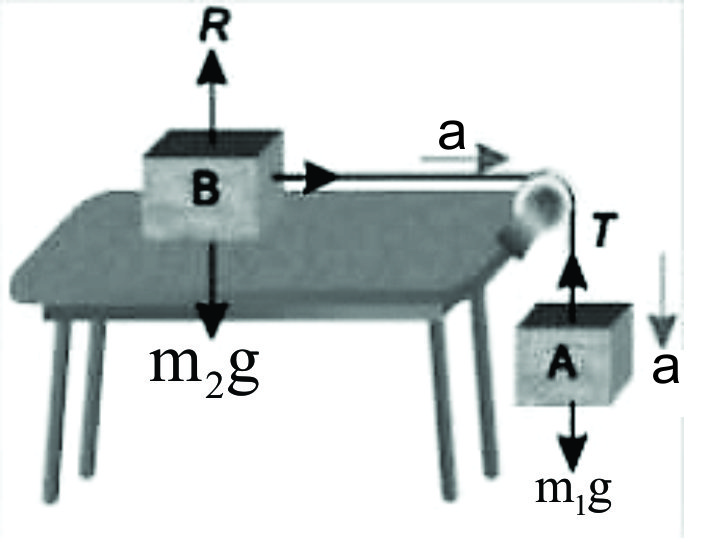
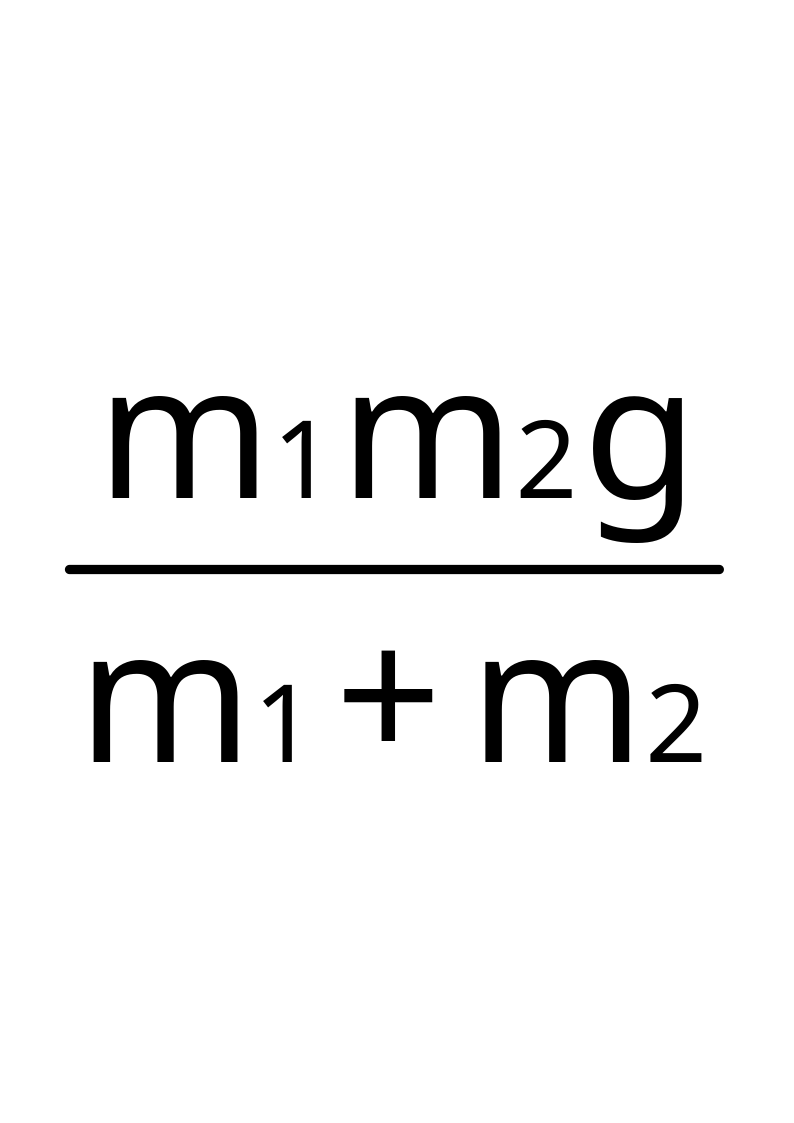
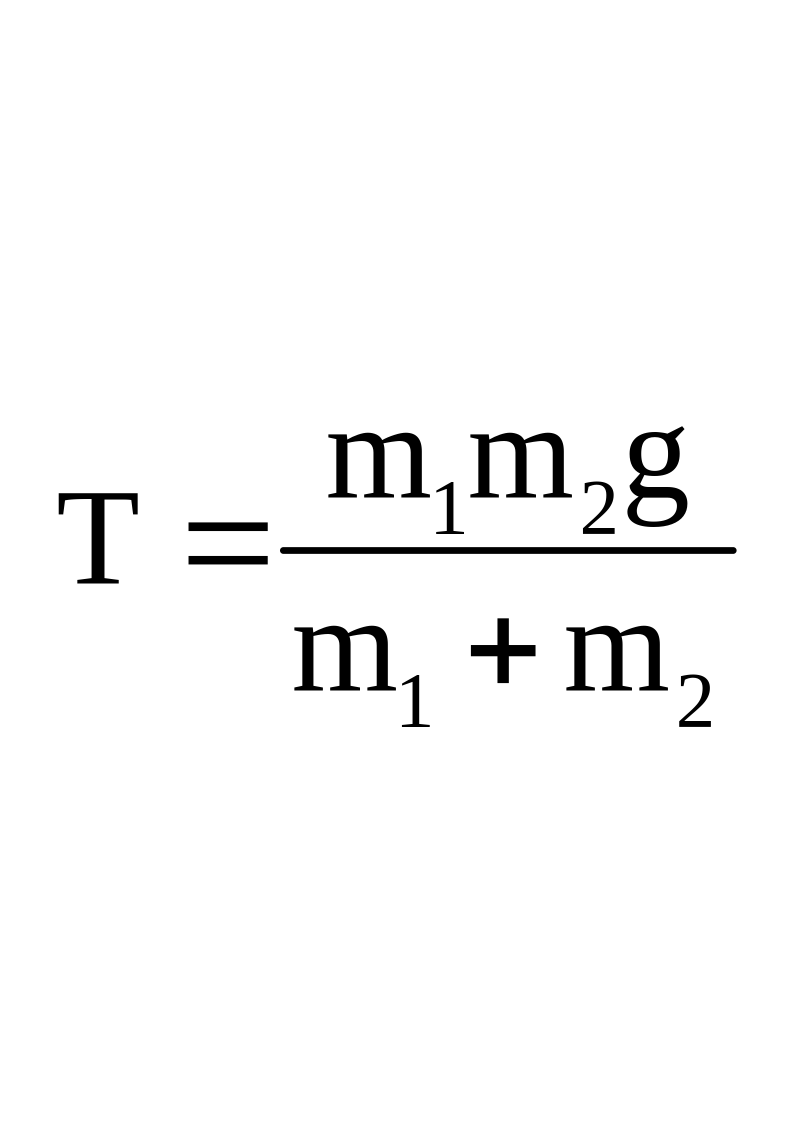
TENSION IN STRING CASE # 2
Consider two bodies A and B having masses m1 and m2 respectively are attached to an inextensible string which passes over the pulley as shown in figure. The body A moves vertically downward with an acceleration a since the string is inextensible therefore the body B moves on the horizontal smooth surface towards the pulley with the same acceleration a. As the pulley is frictionless, hence tension T will be the same throughout the string.
Forces Acting on Body A:
There are two forces acting on body A
Weight of the body w1=m1g vertically downward
Tension in the string T vertically upward
As the body A is moving downward, It means w1=m1g is greater in magnitude so the resultant force acting on body A is downward due to which acceleration a is produced in it.
Net force acting on body A = m1g – T
F1 = m1g – T
According to Newton’s second law of motion:
m1a =m1g – T …………… (1)
Forces Acting on body B:
There are three forces acting on body B
Weight of the body w2=m2g vertically downward
Normal reaction of the surface vertically upward
Tension in the string T along the string pulling the body in the horizontal direction over the smooth surface.
As the body B is not moving vertically, therefore, vertical forces cancel each other and their resultant is zero. The only remaining force T due to which the body B is moving in the horizontal direction with acceleration ‘a’.
Hence according to Newton’s second law of motion,
m2a = T ……………… (2)
Calculation of Acceleration:
In order to find acceleration in bodies we will add equation (1) and equation (2)
m1a + m2a = m1g – T + T
m1a + m2a = m1g
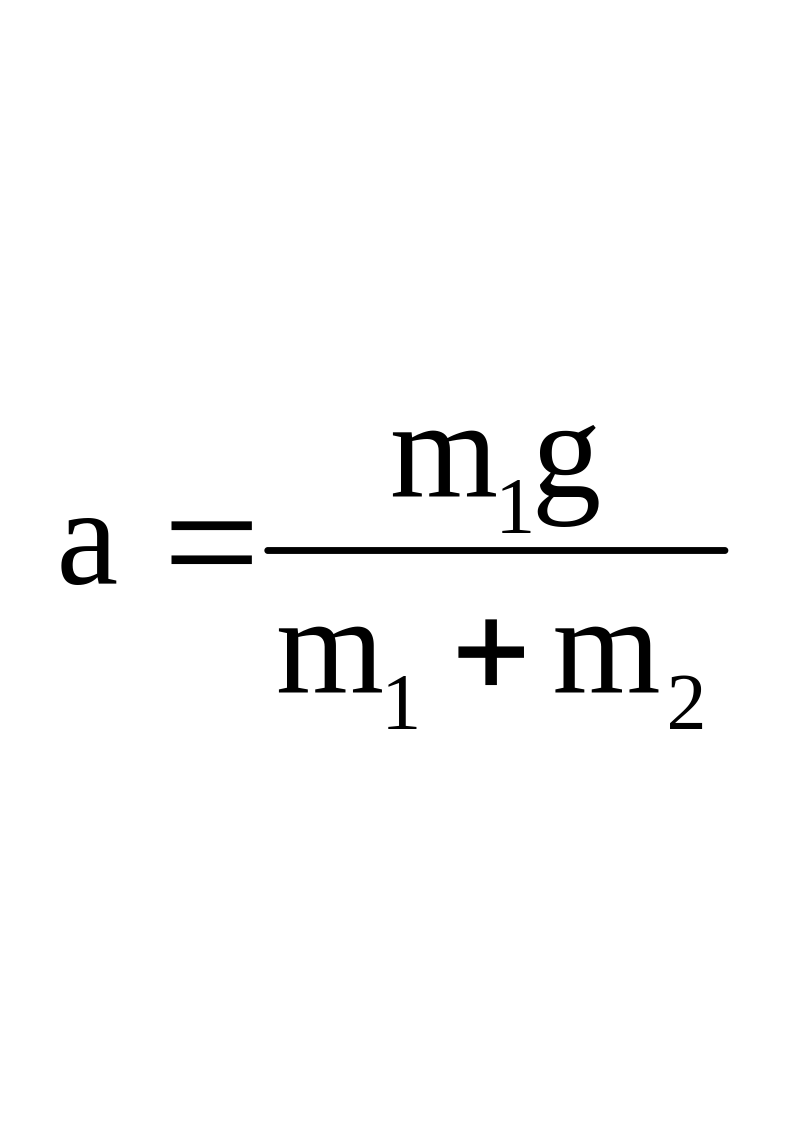
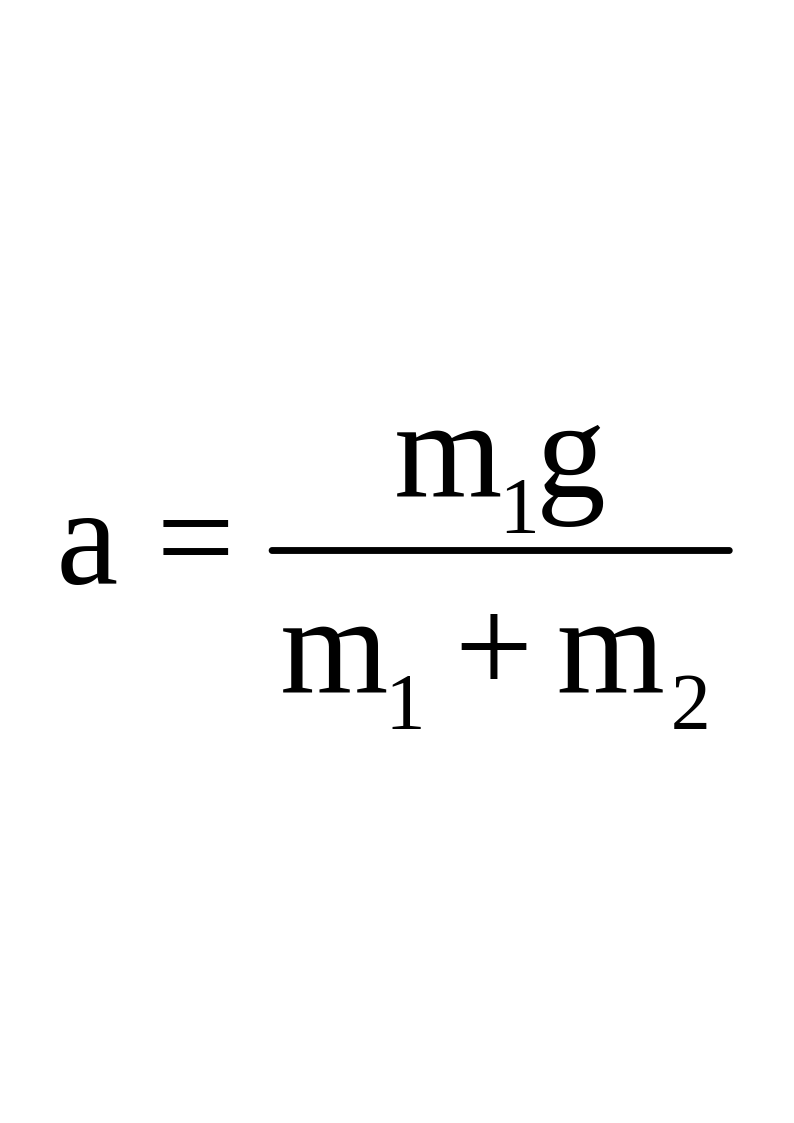
(m1 + m2)a = m1g
We get equation (3) as:
Calculation of Tension:
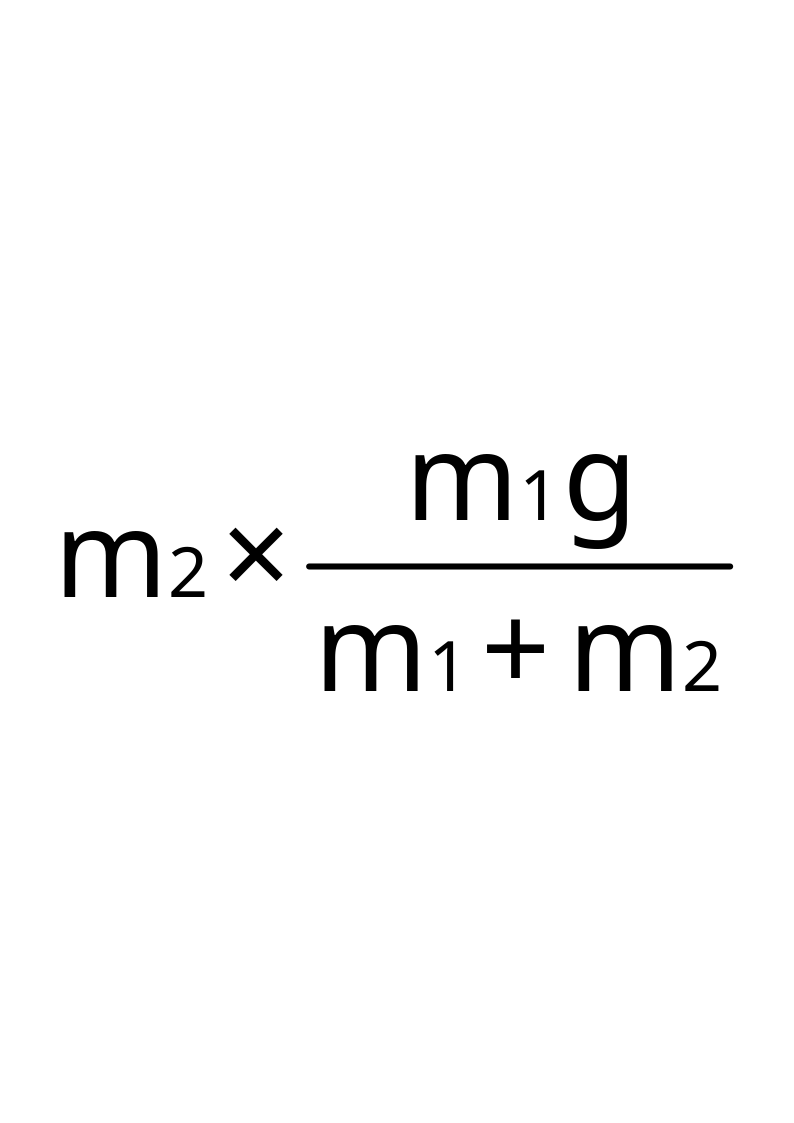
In order to find the value of T, put the value of a in equation (2), we have
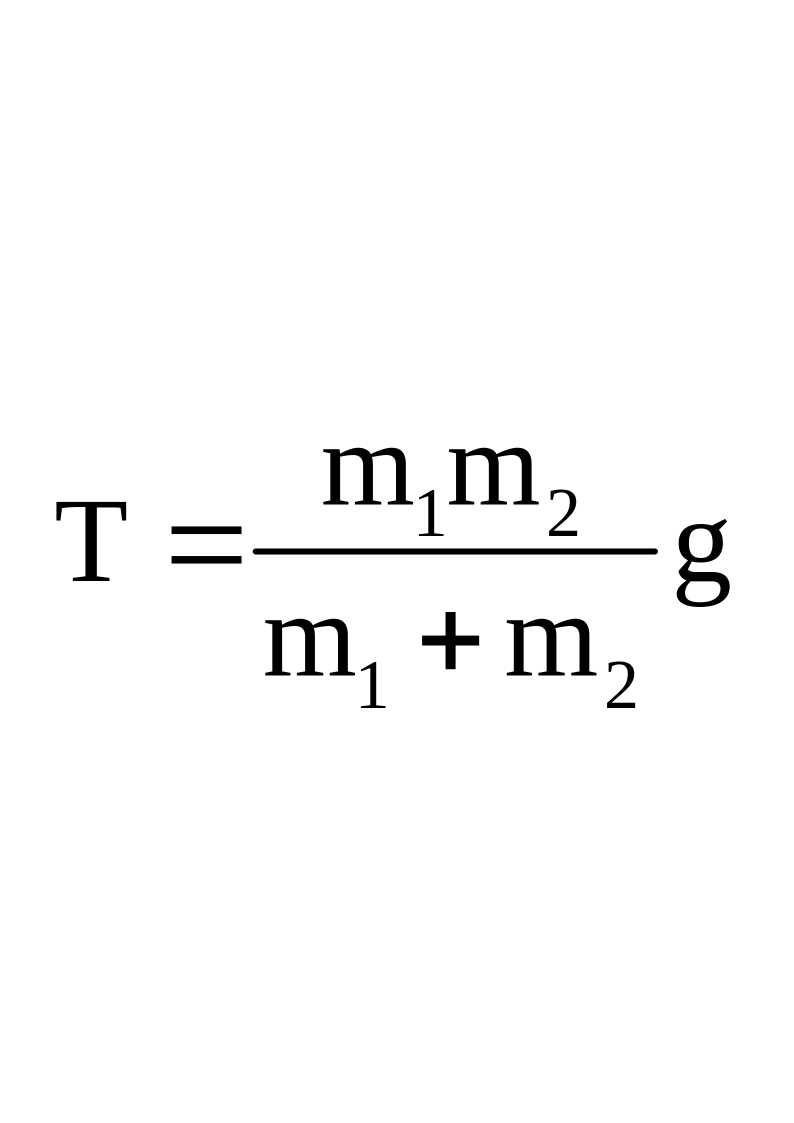
T =
T = …………… (4)
Result:
Short Questions
Q1. Define Tension in the string.
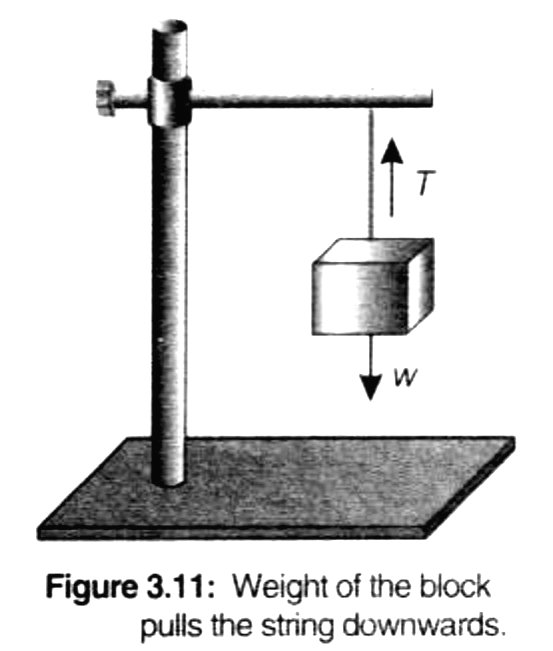
TENSION IN THE STRING
Definition:
“The force which is exerted by the string on the body when it is subjected to a pull is called the tension in the string.”
Formula:
It is a reaction force of the weight and it is usually denoted by T.
T = – w = – mg
Unit:
Tension is a force so its S.I unit is newton (N).
Quantity:
Tension is a derived and vector quantity.
Direction:
The weight acts downwards while tension T in the string is acting upwards at the block. If the object is at rest, the magnitude of tension is equal to weight as shown in the figure:
Q2. What is Atwood Machine? (Do you know PTB Pg. # 65)
ATWOOD MACHINE
Atwood Machine:
The above arrangements are known as Atwood machine. Atwood machine is an arrangement of two objects of unequal masses. Both the objects are attached to the ends of a string. The string passes over frictionless pulley. This arrangement is sometimes used to find the acceleration due to gravity by equation as:
Q3. What will be the tension in a rope that is pulled from its ends by two opposite forces 100 N each? (Ex. 3.8)
TENSION IN THE STRING
The tension in a rope that is pulled from its ends by two opposite forces 100 N each will be 100 N.
Q4. A body of mass 4kg has been hanged vertically with a string what will be tension in the string?
Given Data:
Mass of the body = m = 4kg
Gravitational Acceleration = g = 10ms-2
To Find:
Tension in the string = T = ?
Calculations:
We know,
T = w = mg
Putting values
T = (4)(10)
T = 40 N
Result:
EXAMPLE 3.4
Q5. Two masses 5.2 kg and 4.8 kg are attached to the ends of an inextensible string which passes over a frictionless pulley. Find the acceleration in the system and the tension in the string when both the masses are moving vertically.
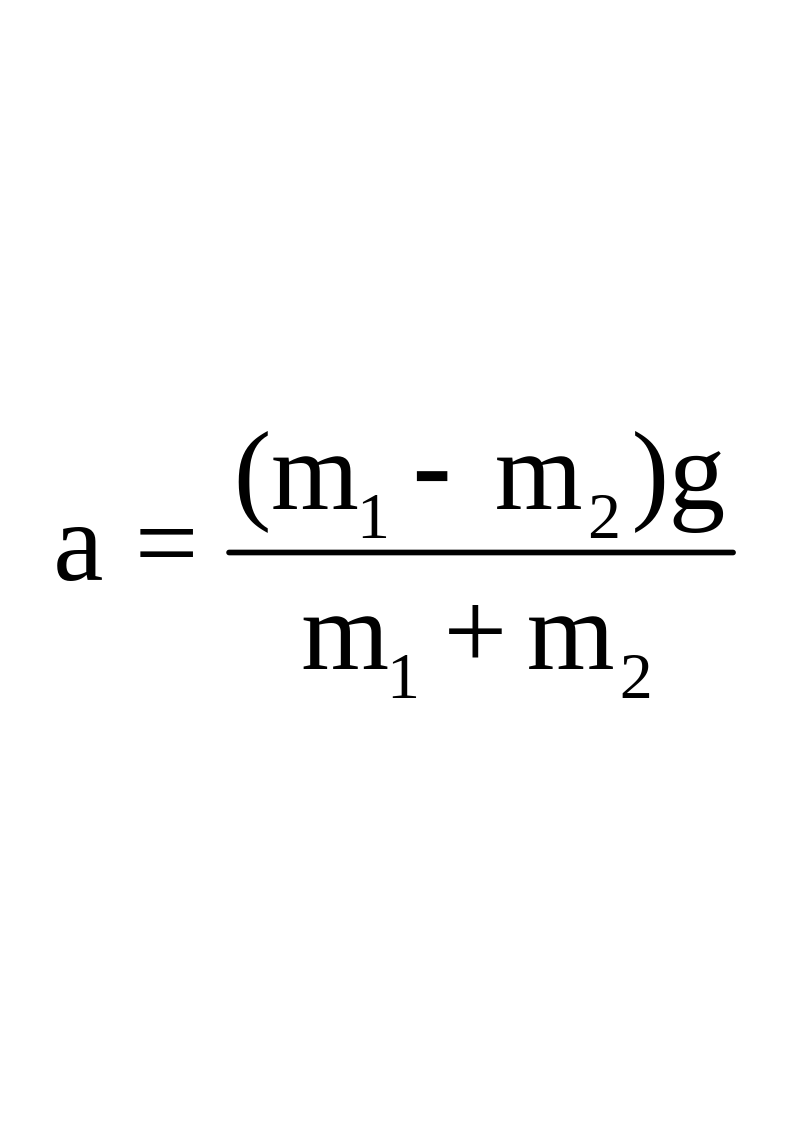
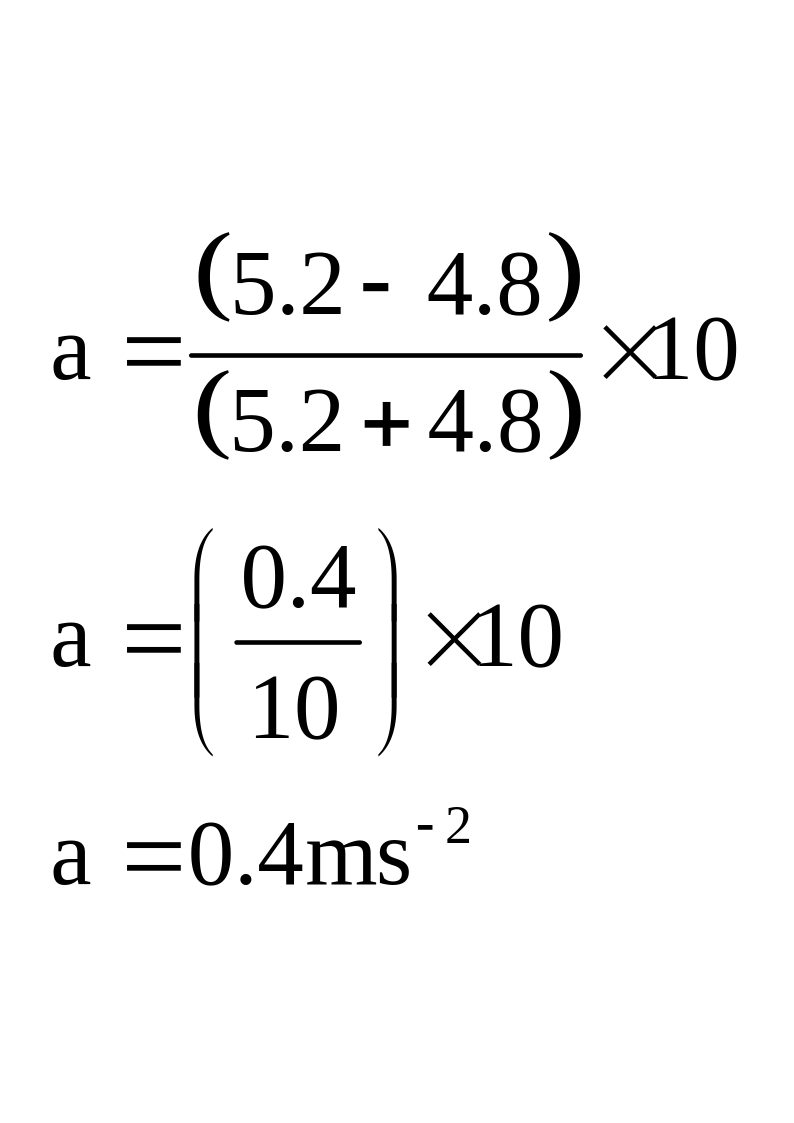
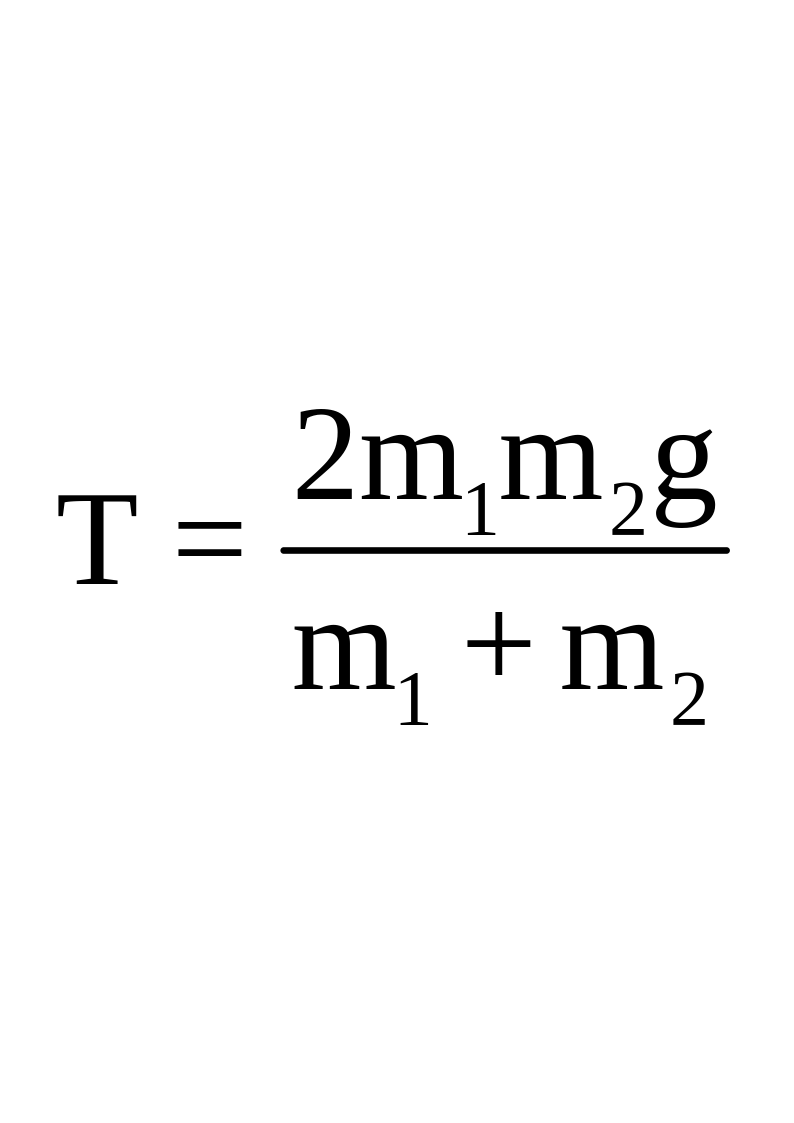
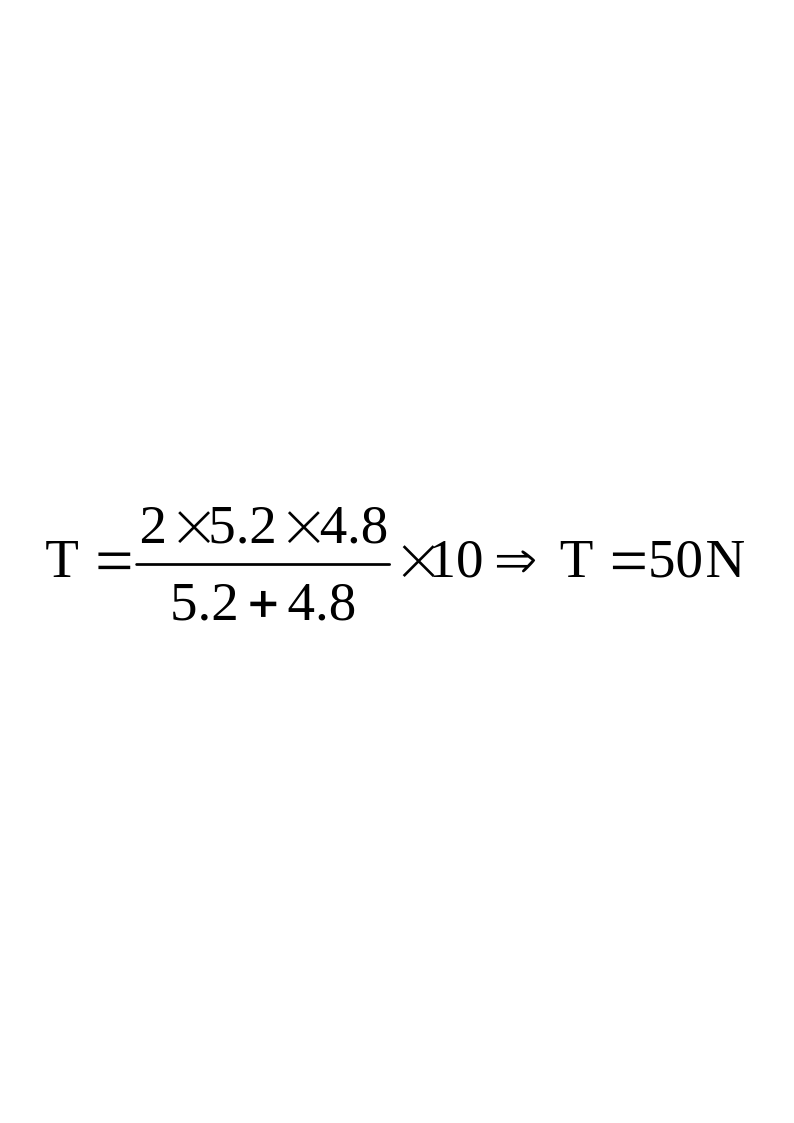
Given Data:
Mass of first body = m1 = 5.2 kg
Mass of second body = m2 = 4.8 kg
Gravitational acceleration = g = 10 ms-2
To Find:
Acceleration of the bodies = a = ?
Tension in the string = T = ?
Calculations:
When the two bodies are moving vertically then acceleration of the bodies is as,
By putting the values in above equation, we have,
When the two bodies are moving vertically then tension in the string is as,
By putting the values in above equation, we have,
Result:
EXAMPLE 3.5
Q6. Two masses 4 kg and 6 kg are attached to the ends of an inextensible string which passes over a frictionless pulley such that mass 6 kg is moving over a frictionless horizontal surface and the mass 4kg is moving vertically downward. Find the acceleration in the system and the tension in the string.
Given Data:
Mass of the block moving vertically = m1 = 4 kg
Mass of the block moving along table = m2 = 6 kg
Gravitational acceleration = g = 10 ms-2
To Find:
Acceleration of the bodies = a =?
Tension in the string = T =?
Calculations:
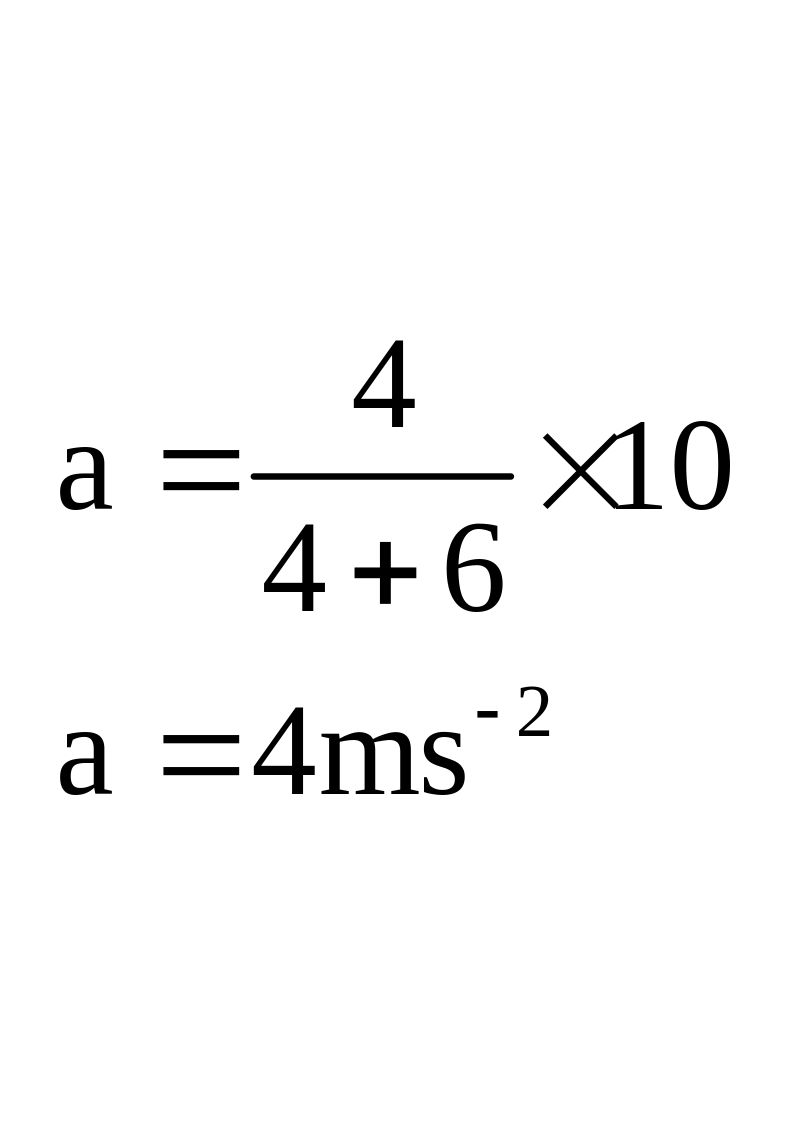
When one body is moving vertically and other body is moving horizontally then acceleration of the bodies is as,
By putting the values in above equation, we have
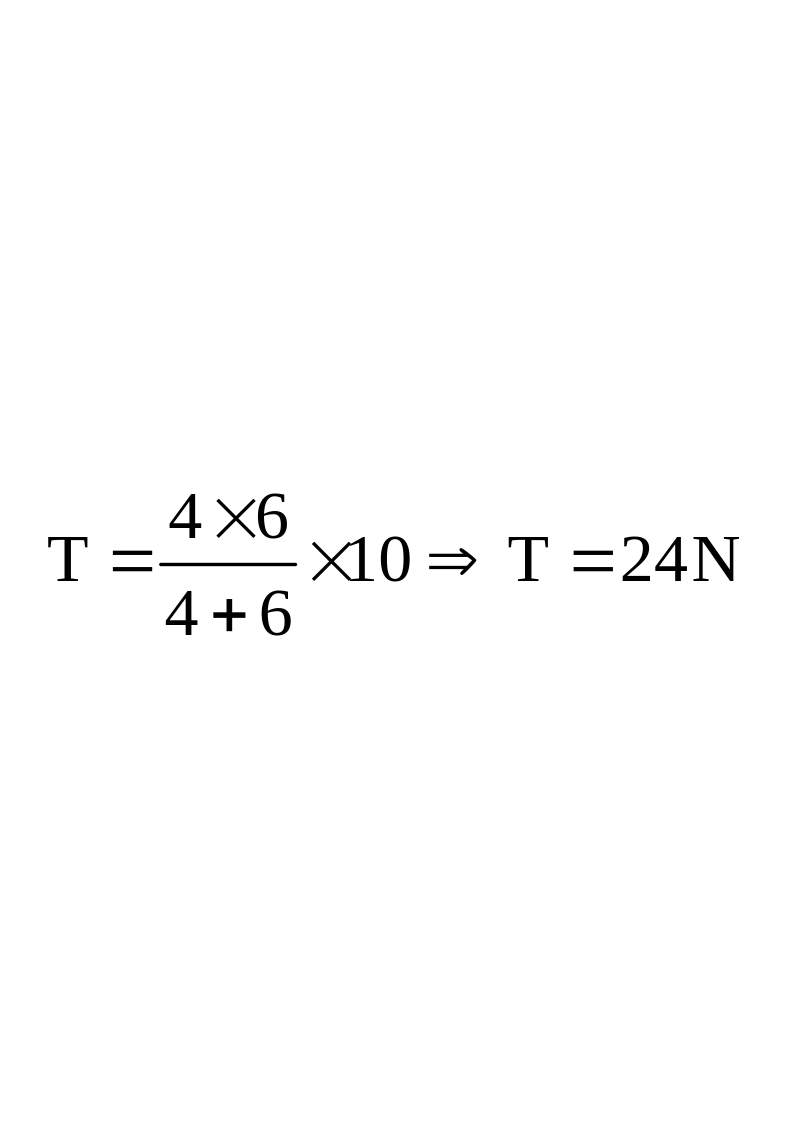
When the two bodies are moving vertically then tension in the string is as,
By putting the values in above equation, we have
Result:
3.2.2 Force And Momentum
3.2.3 Law Of Conservation Of Momentum
Long Questions
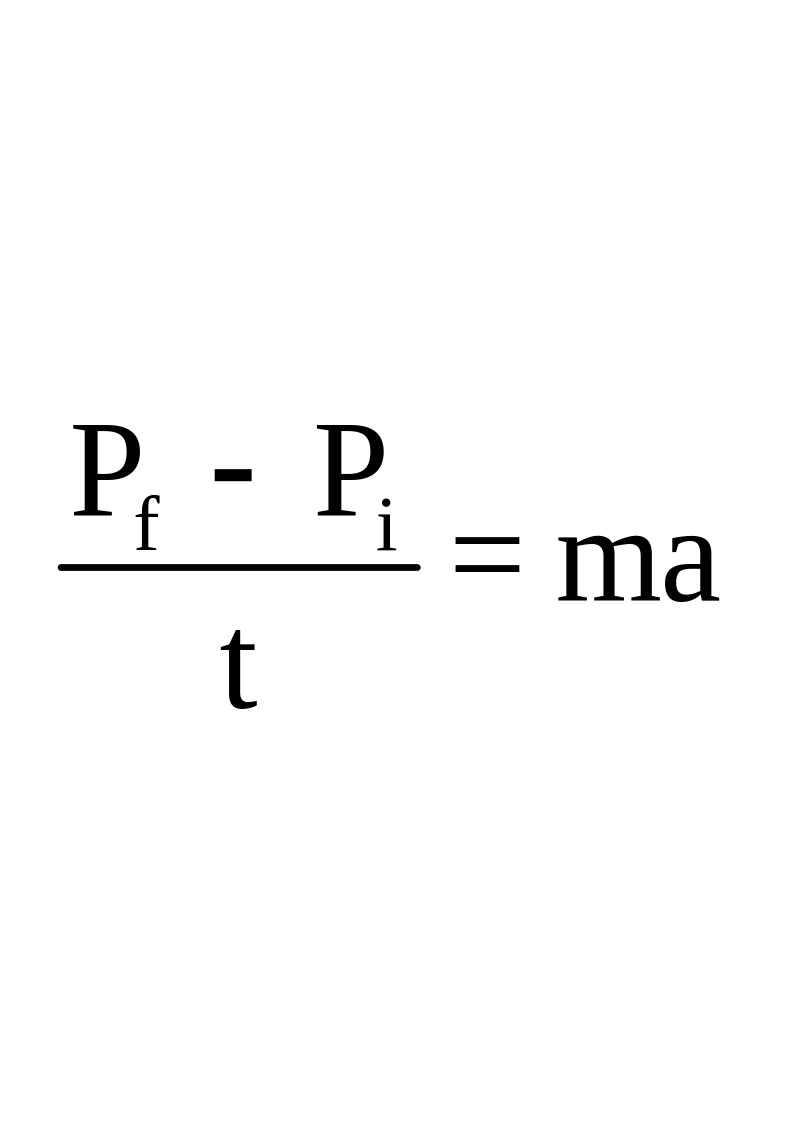
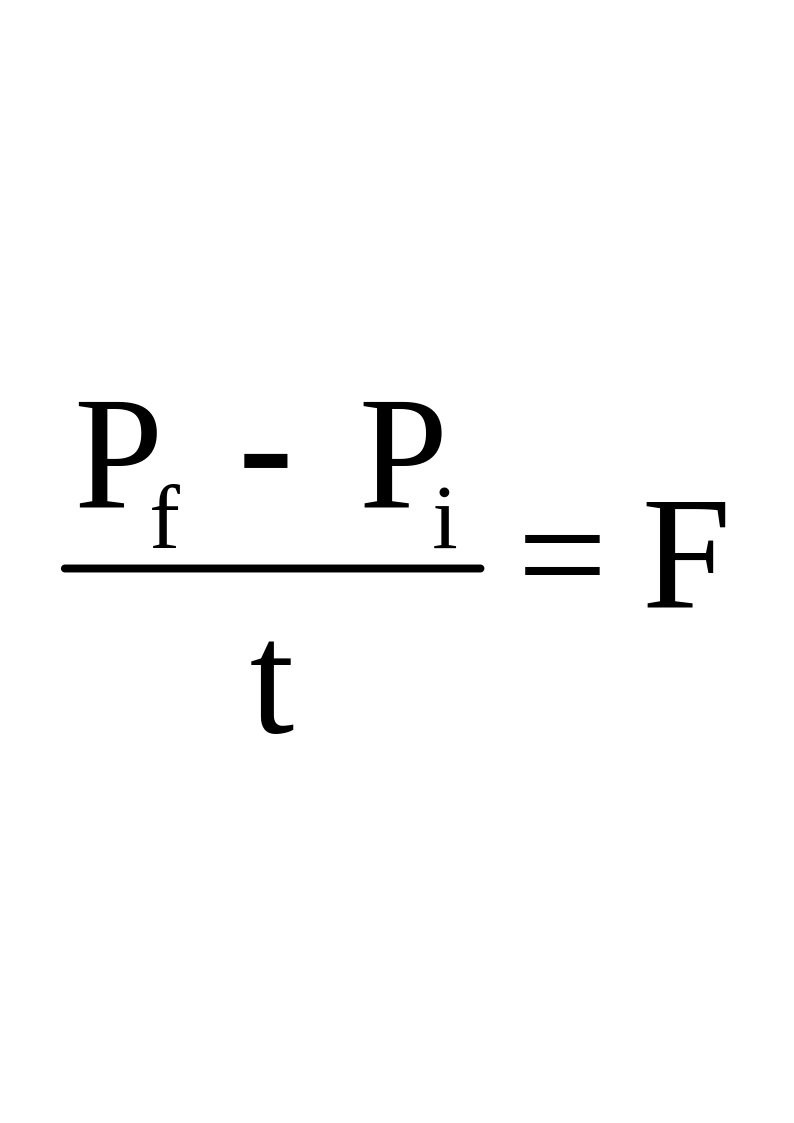
Q1. How you can prove that rate of change in momentum of a body is equal to the applied force? OR Derive the relation between momentum and force. (LHR 2015)
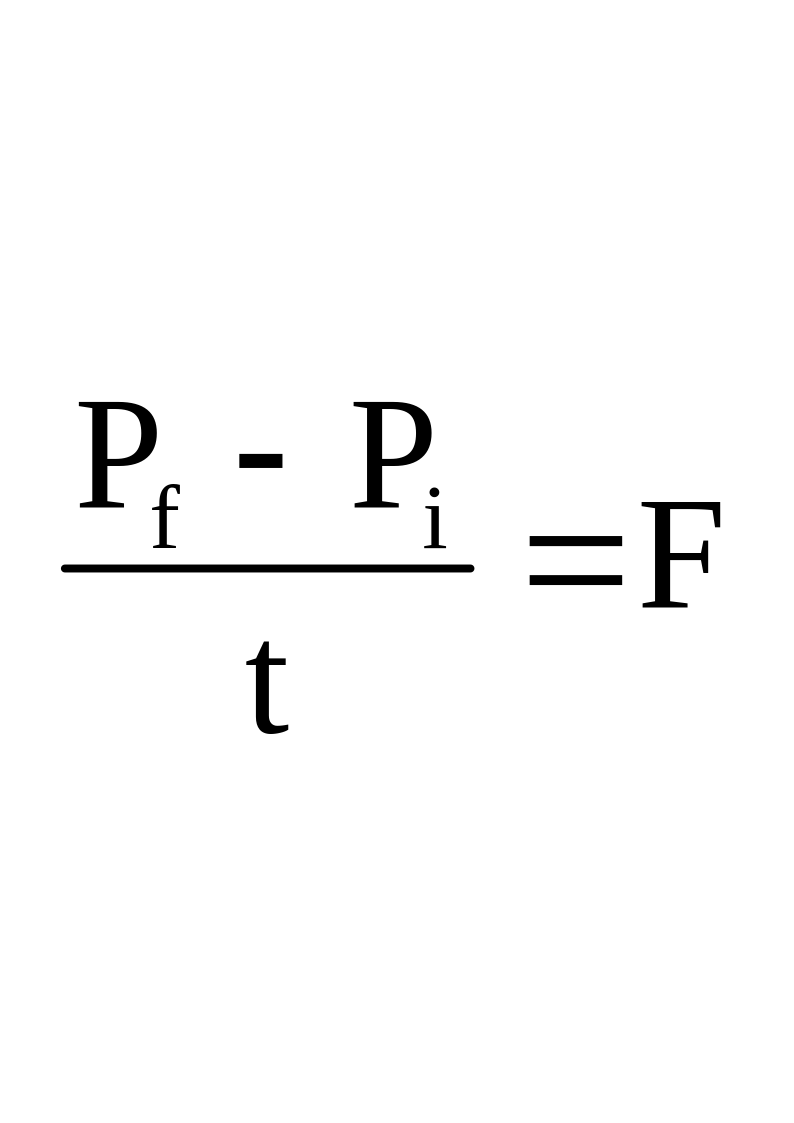
FORCE AND MOMENTUM
Relation:
“Rate of change of Momentum is equal to applied Force”
Mathematically:
Proof:
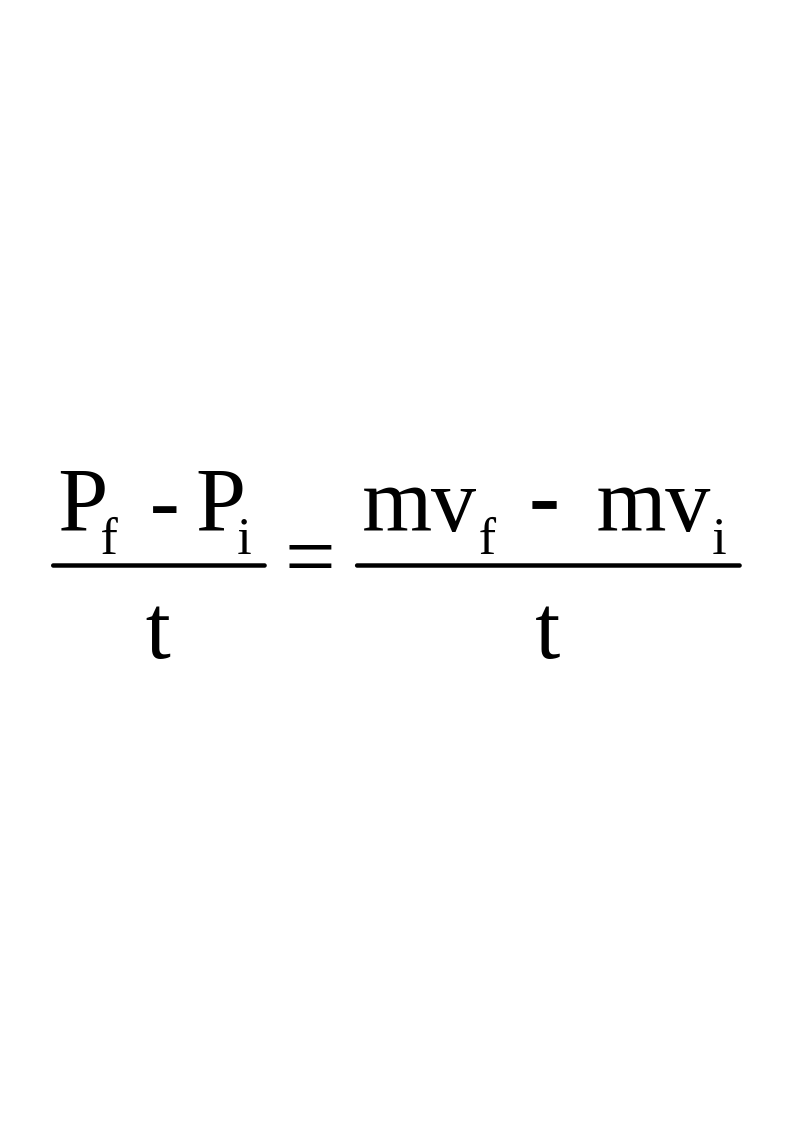
Suppose a force ‘F’ acts on a body of mass ‘m’ moving with initial velocity ‘vi’ which produces an acceleration a in it. This changes the velocity of body to ‘vf’ after time t. If Pi and Pf be the initial momentum and final momentum of the body related to initial and final velocities, then,
Momentum of the body having velocity vi = Pi = mvi
Momentum of the body having velocity vf = Pf = mvf
Change in momentum = final momentum – initial momentum
Pf – Pi = mvf – mvi
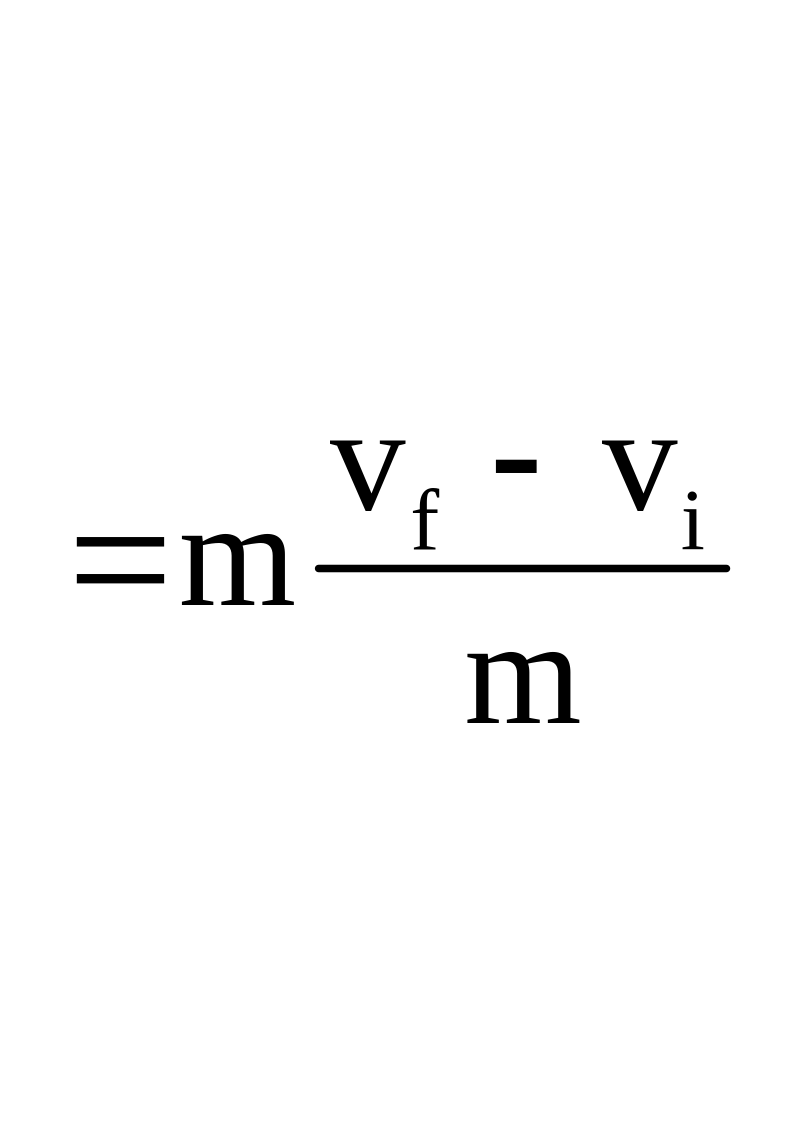
Pf – Pi = m (vf – vi)
Dividing both sides by “t”
Rate of change in momentum =
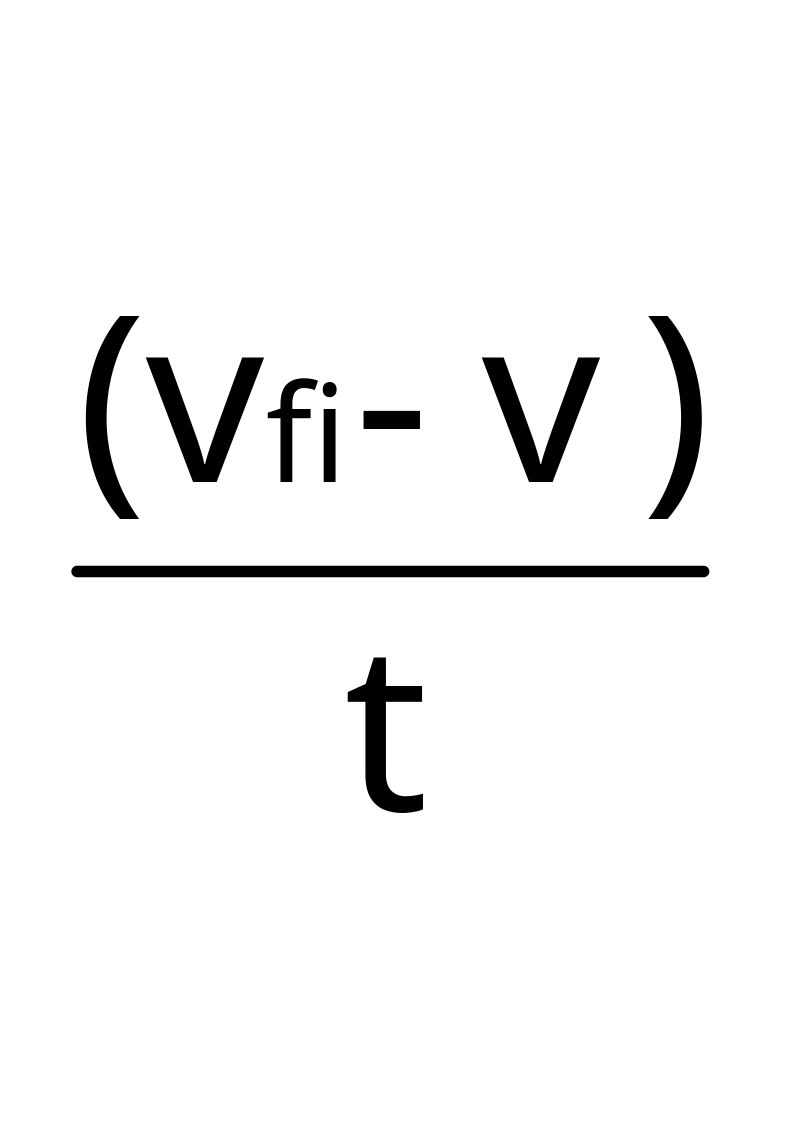
Since a =
Hence,
We know, F = ma
SI unit of momentum defined by above equation is newton-second (Ns) which is the same as kgms-1.
Conclusion:
Newton’s Second Law of Motion in Term of Momentum:
From above conclusion we can state Newton’s Second law of motion in terms of momentum as
Statement:
“When a net force acts on a body, it produces acceleration in the body and the net force will be equal to the rate of change of momentum of the body.”
Q2. State and explain Law of conservation of Momentum. (GRW 2013, LHR 2014)
LAW OF CONSERVATION OF MOMENTUM
Introduction:
Momentum of a system depends upon mass and velocity. As
P = mv
System:
A system is a group of interacting bodies with in certain boundaries.
Isolated system:
An isolated system is a group of interacting bodies on which no external force is acting. If no unbalanced or net force acts on a system then its momentum remains constant thus, momentum of an isolated system remains constant.
Statement:
According to Law of Conservation of Momentum:
“The momentum of an isolated system of two or more than two interacting bodies remains constant”
Example:
Consider the example of an air-filled balloon. In this case, balloon and the air inside it form a system. Before releasing the balloon, the system was at rest and hence the initial momentum of the system was zero. As soon as the balloon is set free, air escapes out of it with some velocity. The air coming out of it possesses momentum. To conserve momentum, balloon moves in the direction opposite to the air coming out of it.
Mathematical Explanation:
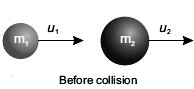
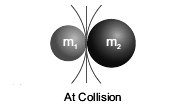
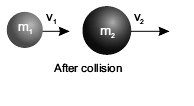
Consider an isolated system of two spheres of masses m1 and m2 as shown figure. They are moving in a straight line with initial velocities u1 and u2 respectively. As shown in the figure:
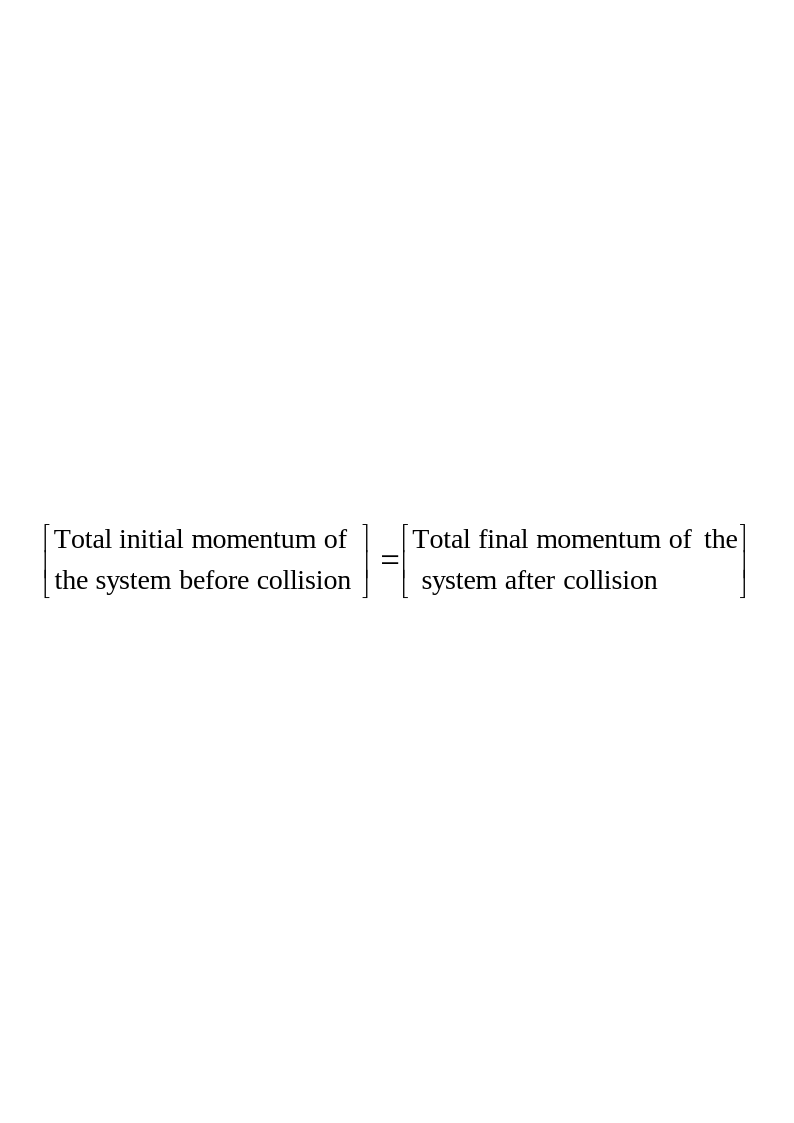
Momentum Before Collision:
Initial momentum of mass m1 = m1u1
Initial momentum of mass m2 = m2u2
Total momentum of the system before collision = m1u1 + m2u2
Suppose u1 is greater than u2. Sphere of mass m1 approaches the sphere of mass m2 as they move. After sometimes mass m1 hits m2 with some force. According to Newton’s third law of motion, m2 exerts an equal and opposite reaction force on m1. Let their velocities become v1 and v2 respectively after collision.
Momentum After Collision:
Final momentum of mass m1 = m1v1
Final momentum of mass m2 = m2v2
Total momentum of the system after collision = m1v1 + m2v2
According to law of conservation of momentum:
m1u1 + m2u2 = m1v1 + m2v2
Result:
Q3. Write a note on applications of Law of Conservation of Momentum
APPLICATIONS OF LAW OF CONSERVATION OF MOMENTUM
Law of Conservation of Momentum is an important law and has vast applications. This law is applicable universally i.e. true not only for bigger bodies but also for atoms and molecules.
Some applications are given below
To Find Velocity of The Gun:
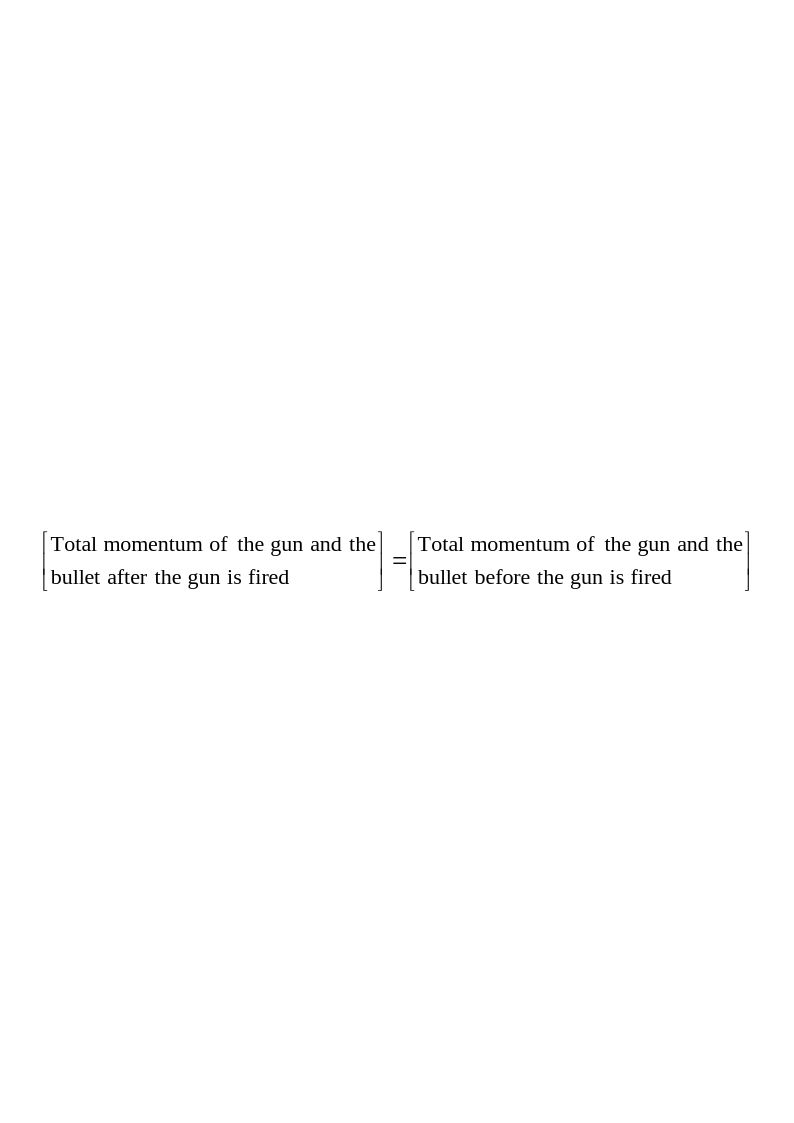
Consider a system of gun and a bullet. Before firing, the velocity of the bullet as well as that of gun was zero. Therefore, the total momentum of both the objects was also zero. We can write it as,
Total momentum of gun and bullet before firing = 0
When the gun is fired, bullet shoots out of the gun and acquire momentum. To conserve momentum the gun recoils backward. Now according to the law of conservation of momentum, the total momentum of the gun and bullet will also be zero after the gun is fired. Let m be the mass of the bullet and v be its velocity on firing the gun; M be the mass of the gun and V be the velocity with which it recoils. Thus the total momentum of the gun is fired will be:
Total momentum of the gun and bullet after the gun is fired = M V + m v
According to the law of conservation of momentum:
M V + m v = 0
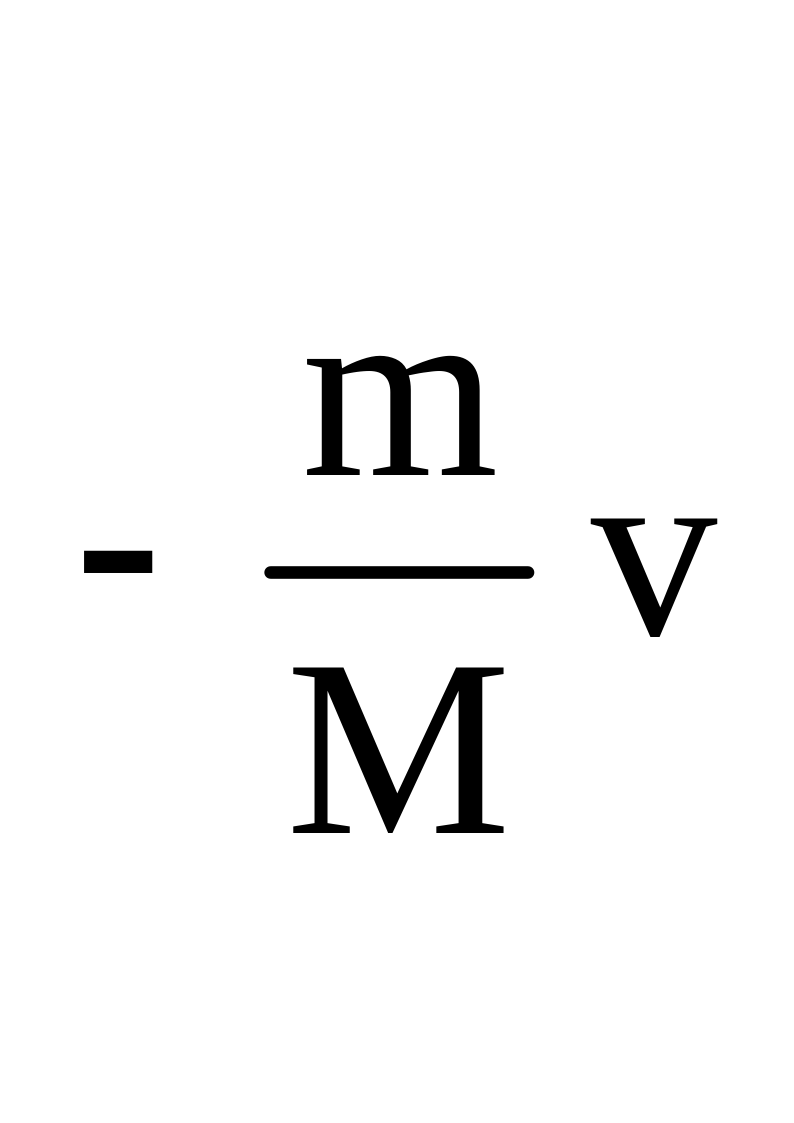
OR M V = – m v
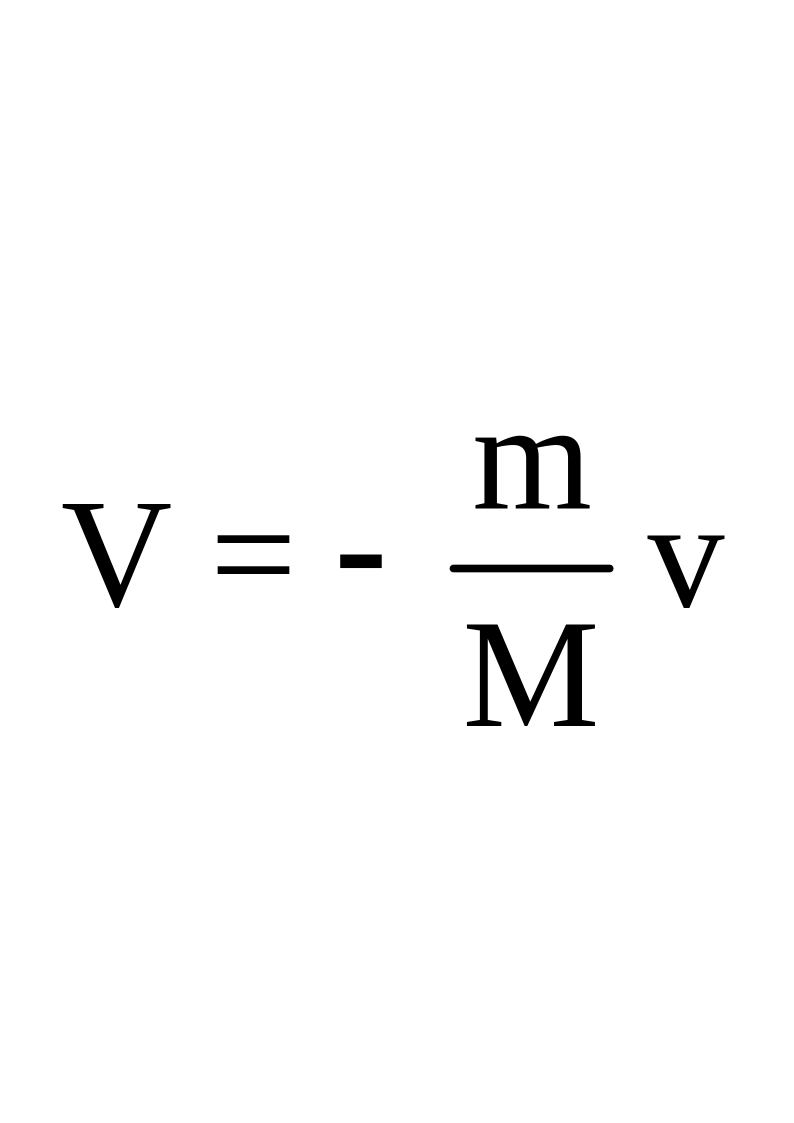
Hence V =
The above equation gives the velocity V of the gun. Here negative sign indicates that velocity gun is opposite to the velocity of bullet i.e. the gun recoils. That is why the shoulder pressed hard during firing. Since mass of the gun is much larger than the bullet, therefore, the recoil is much smaller than the velocity of the bullet.
To Understand Working of Rockets or Jet Engines:
Rocket or Jet engine also works on this same principle. In both of them, hot gases are produced due to the burning of fuel. These gases rush out with large momentum. Therefore the rockets or jet engines gain an equal and opposite momentum. This enables them to move with very high velocities.
Short Questions
Q1. Momentum of a body depends on which factors?
DEPENDENCE OF MOMENTUM
We know
P = mv
This formula is showing that:
Momentum of a body depends on two factors:
Mass of the body
Velocity of the body
Q2. Define an isolated system?
ISOLATED SYSTEM
Definition:
An isolated system can be defined as:
“An isolated system is a group of interacting bodies on which no external force is acting. If no unbalanced or net force acts on a system then its momentum remains constant thus, momentum of an isolated system remains constant.”
Q3. State Law of Conservation of Momentum.
LAW OF CONSERVATION OF MOMENTUM
Statement:
According to Law of Conservation of Momentum:
“The momentum of an isolated system of two or more than two interacting bodies remains constant”
Mathematical Form:
m1u1 + m2u2 = m1v1 + m2v2
Q4. Why is the law of conservation of momentum important?
IMPORTANCE OF LAW OF CONSERVATION OF MOMENTUM
Law of conservation of momentum is very important in our daily life. It has vast applications and is applicable universally on bigger bodies as well as on atoms and molecules. It helps us to understand:
Working of a system of gun and bullet,
Working of rockets and jet engines etc.
Q5. When a gun is fired, it recoils. Why?
GUN RECOILS
Total momentum of the gun and the bullet is zero before the firing. When gun is fired, bullet moves in forward direction and attains momentum as a result the gun recoils to conserve momentum according to Law of Conservation of Momentum.
Q6. Write relation between Force and Momentum.
FORCE AND MOMENTUM
Relation:
“Rate of change of Momentum is equal to applied Force”
Mathematically:
Q7. State Newton’s Second Law of Motion in terms of Momentum.
NEWTON’S SECOND LAW OF MOTION IN TERMS OF MOMENTUM
We can state Newton’s Second law of motion in terms of momentum as
Statement:
“When a net force acts on a body, it produces acceleration in the body and the net force will be equal to the rate of change of momentum of the body.”
Mathematically:
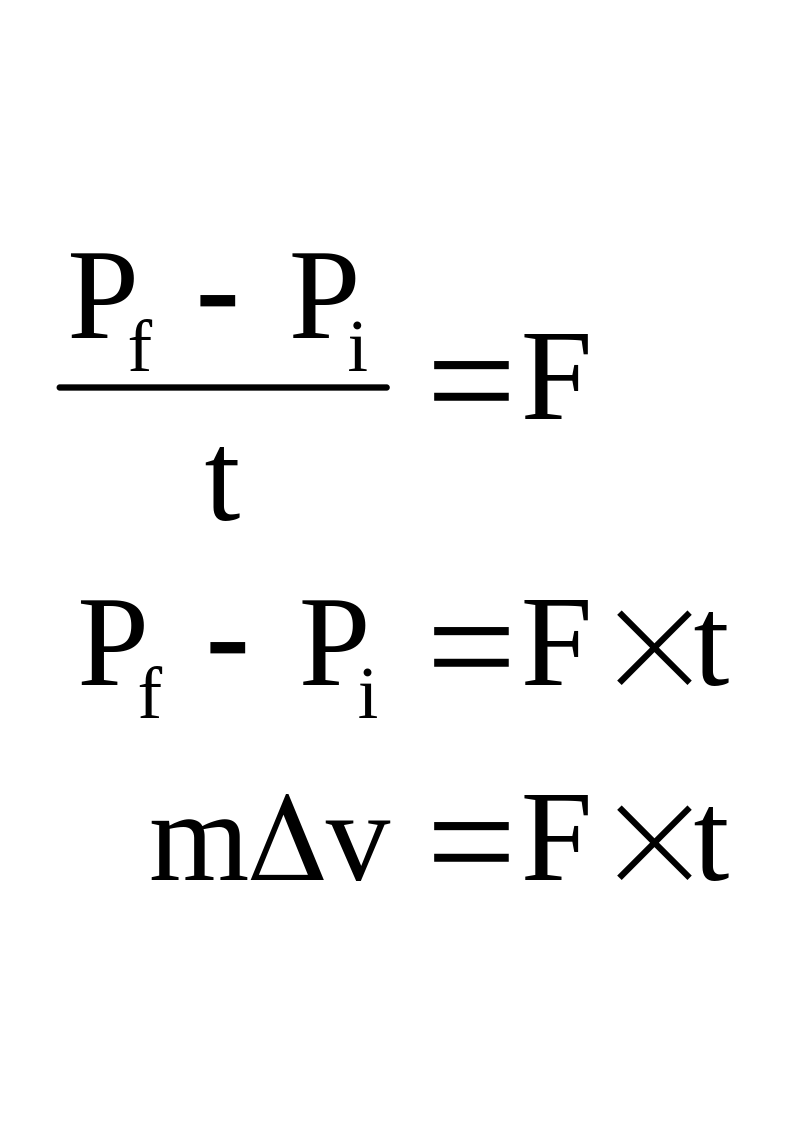
Q8. Prove that kgms-1 =Ns
PROOF
As we know that
“Rate of change of Momentum is equal to applied Force”
Putting units, kgms-1 = Ns
Hence Proved
Q9. Why are fragile objects packed in Styrofoam rings or polythene sheets with air cavities in it? (Useful Information Pg. # 68)
IMPACT TIME
Fragile objects such as glass wares etc. are packed with suitable materials such as Styrofoam rings, balls, polythene sheets with air sacks etc Air enclosed in the cavities of these materials makes them flexible and soft. During any mishap, they increase the impact time on fragile objects. An increase in impact time lowers the rate of change of momentum and hence lessens the impact of force. This lowers the possible damage due to an accident.
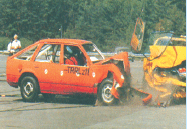
Q10. What is role of crumple zones in front and rare part of vehicles?
ROLE OF CRUMPLE ZONES
In an accident at high speed, the impact force is very large due to the extremely short stopping time. For safety purposes, vehicles have rigid cages for passengers with crumple zones at their front and rear ends. During an accident, crumple zones collapse. This increases the impact time by providing extra time for crumpling. Impact of force is highly reduced and saves the passengers from severe injuries.
Q11. Write role of seat belts. (Useful Information Pg. # 69, Ex. 3.18)
ROLE OF SEAT BELTS
In case of an accident, a person not wearing seatbelt will continue moving until stopped suddenly by something before him. This something may be a windscreen, another passenger or back of the seat in front of him/her. Seatbelts are useful in two ways:
They provide an external force to a person wearing seatbelt.
The additional time is required for stretching seat belts. This prolongs the stopping time for momentum to change and reduces the effect of collision.
EXAMPLE 3.6
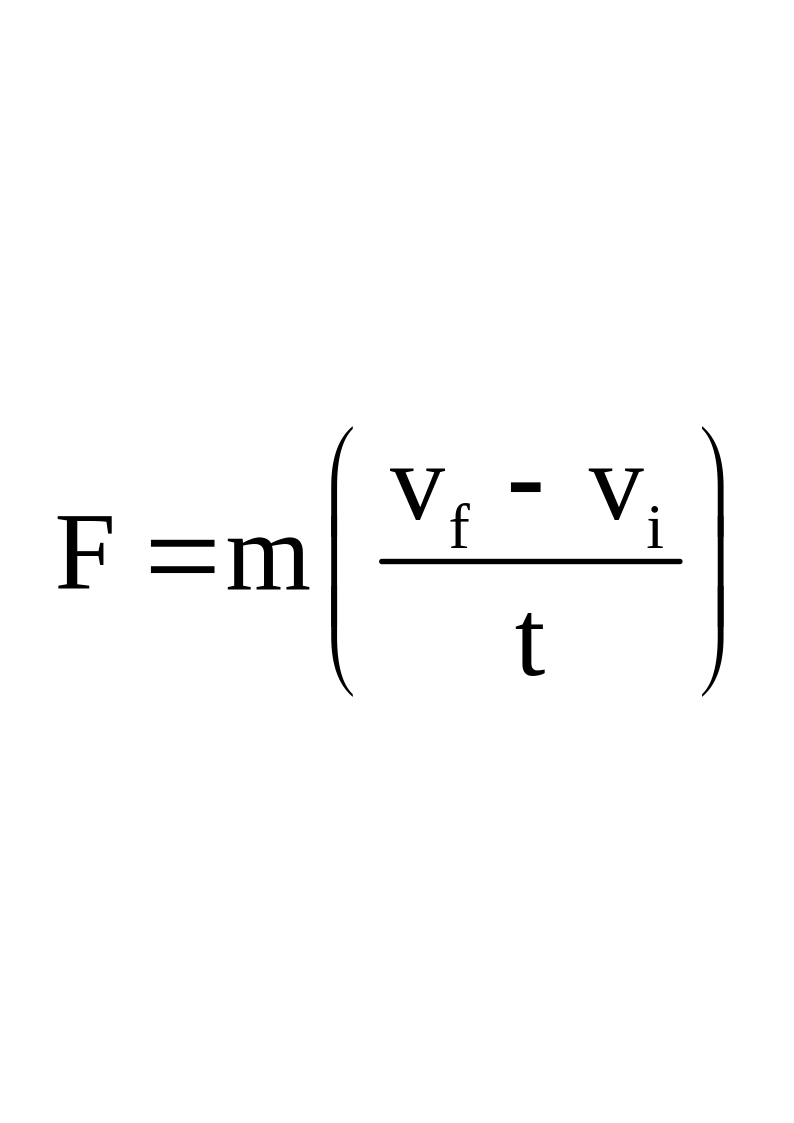
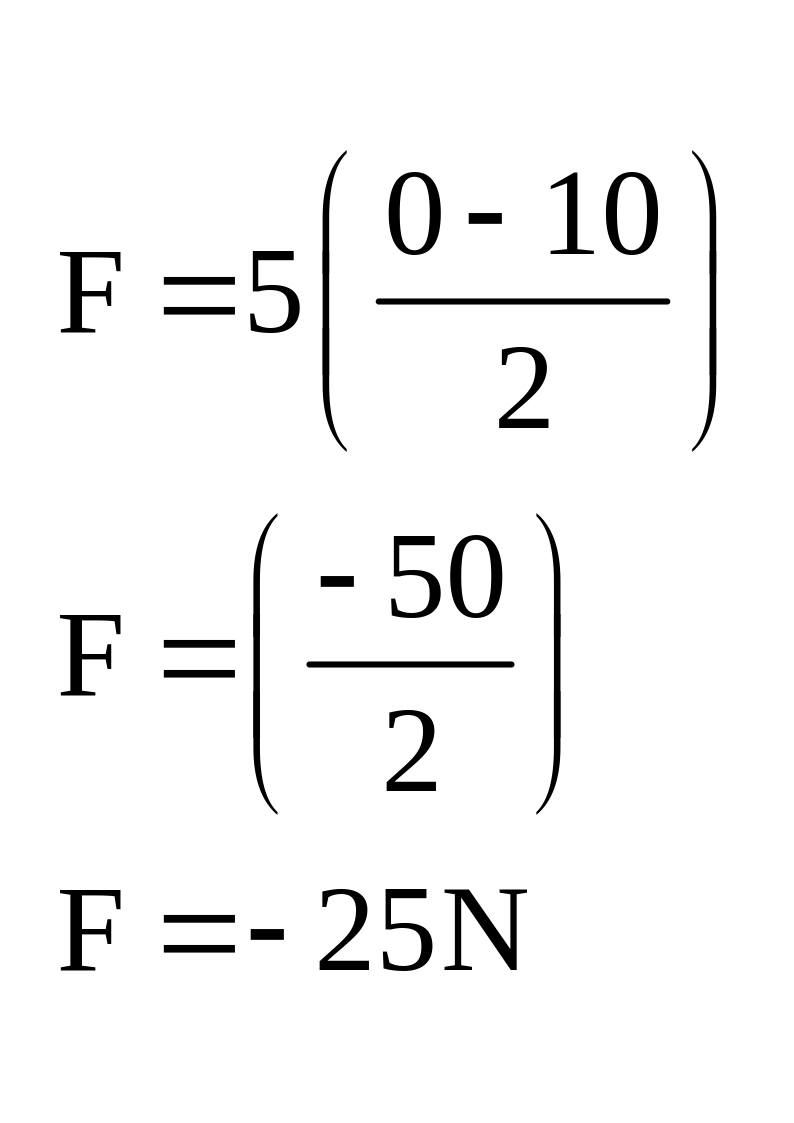
Q12. A body of mass 5 kg is moving with a velocity of 10ms-1. Find the force required to stop it in 2 seconds.
Given Data:
Mass of the body = m1 = 5kg
Initial velocity of the body = vi = 10ms-1
Final velocity of the body = vf = 0 ms-1
Time to stop the body = t = 2 s
To Find:
Force required to stop = F = ?
Calculations:
We know that,
Putting values in formula
Result:
EXAMPLE 3.7
Q13. A bullet of mass 20 g is fired from a gun with a muzzle velocity 100 ms-1. Find the recoil of the gun if its mass is 5 kg.
Given Data:
Mass of the bullet = m = 20g =0.02kg
Velocity of the bullet = v = 100ms-1
Mass of the Gun = 5kg
To Find:
Recoil of the Gun = V = ?
Calculations:
As we know that
V =
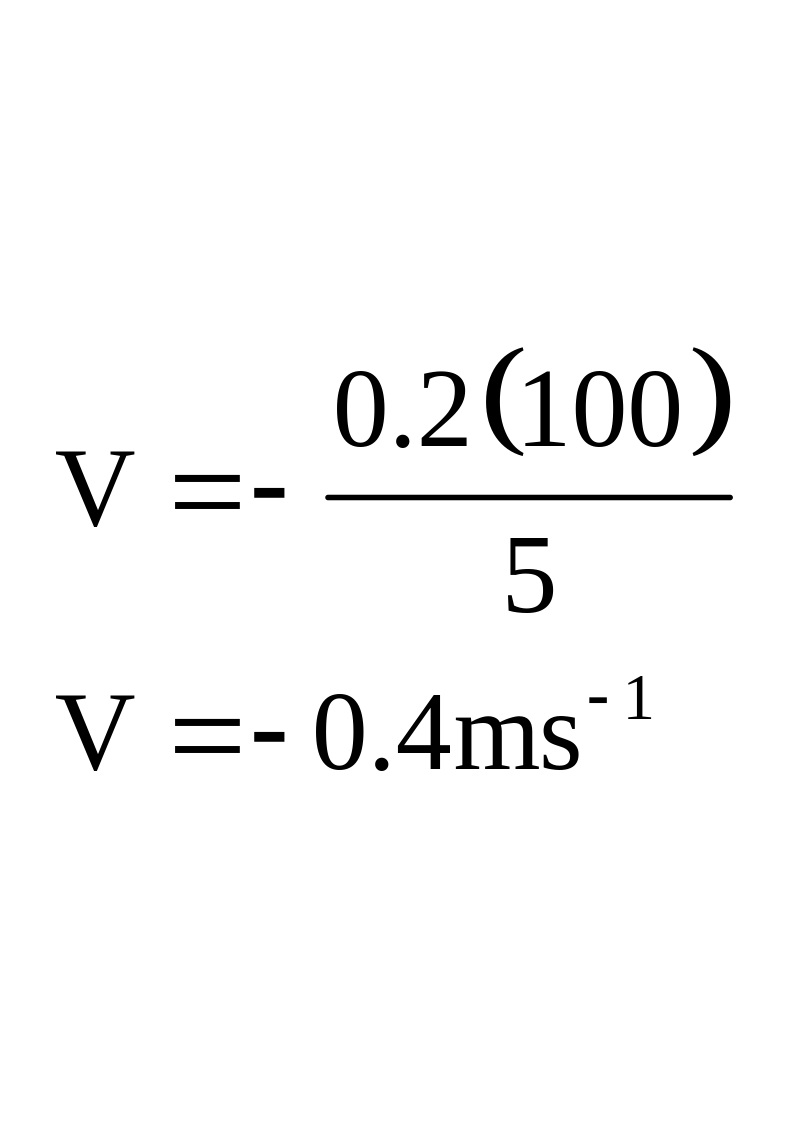
By putting the values, we have
Result:
3.3 Friction
Long Questions
Q1. Define and explain friction? Write cause of friction and derive its mathematical formula.
FRICTION
Definition:
“The force which opposes the motion of moving objects is called friction.”
Cause of Friction:
Friction is a force that comes into action as soon as a body is pushed or pulled over a surface. In case of solids, the force of friction between two bodies depends upon many factors such as nature of the two surfaces in contact and the pressing force between them.
Example:
Rub your palm over different surfaces such as table, carpet, polished marble surface, brick, etc. You will find smoother is the surface, easier it is to move over the surface. Moreover, harder you press your palm over the surface, more difficult would it be to move.
Explanation:
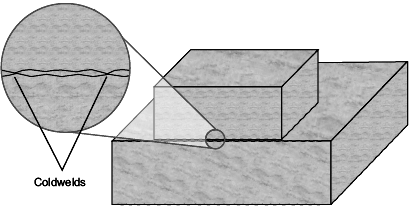
No surface is perfectly smooth. A surface that appears smooth has pits and bumps that can be seen under microscope. A magnified view of a surface in contact shows the gaps and contacts between them. The contact points between the two surfaces form a sort of cold welds. These cold welds resist the surfaces from sliding over each other. Adding weight over the upper block increases the force pressing the surfaces together which increases the resistance. Thus greater is the pressing force greater will be the friction between sliding surfaces.
Mathematical Derivation:
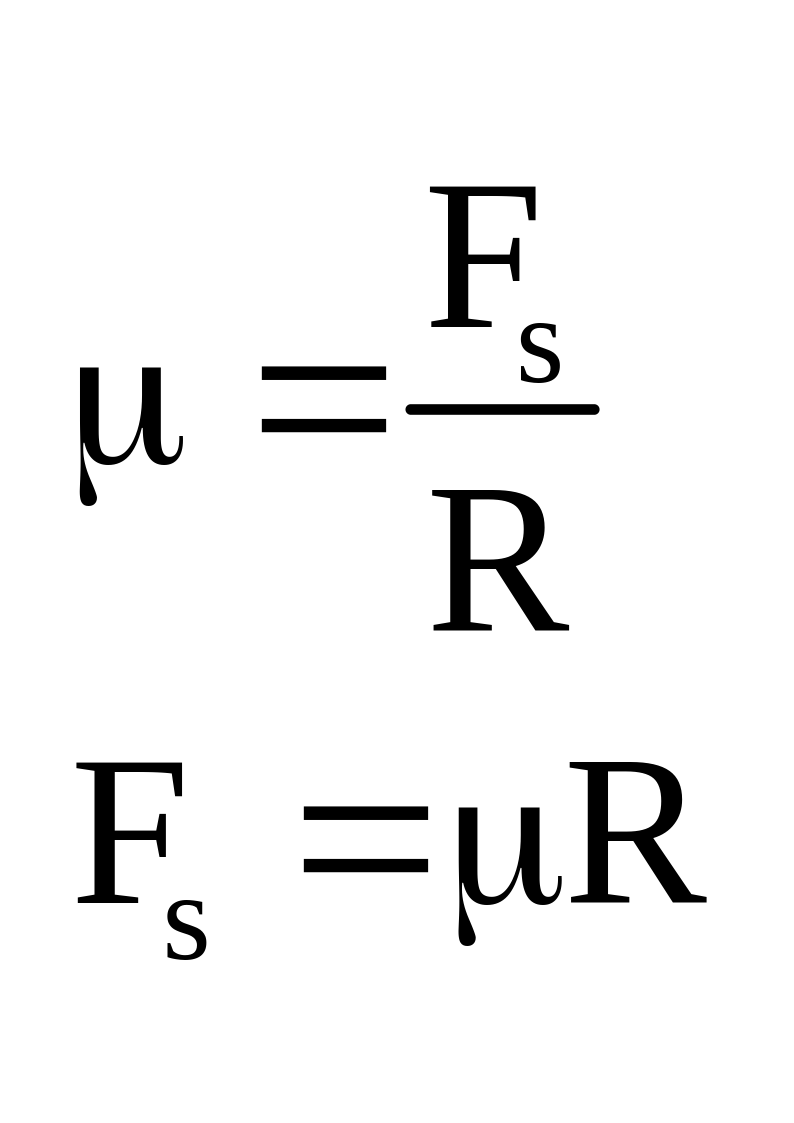
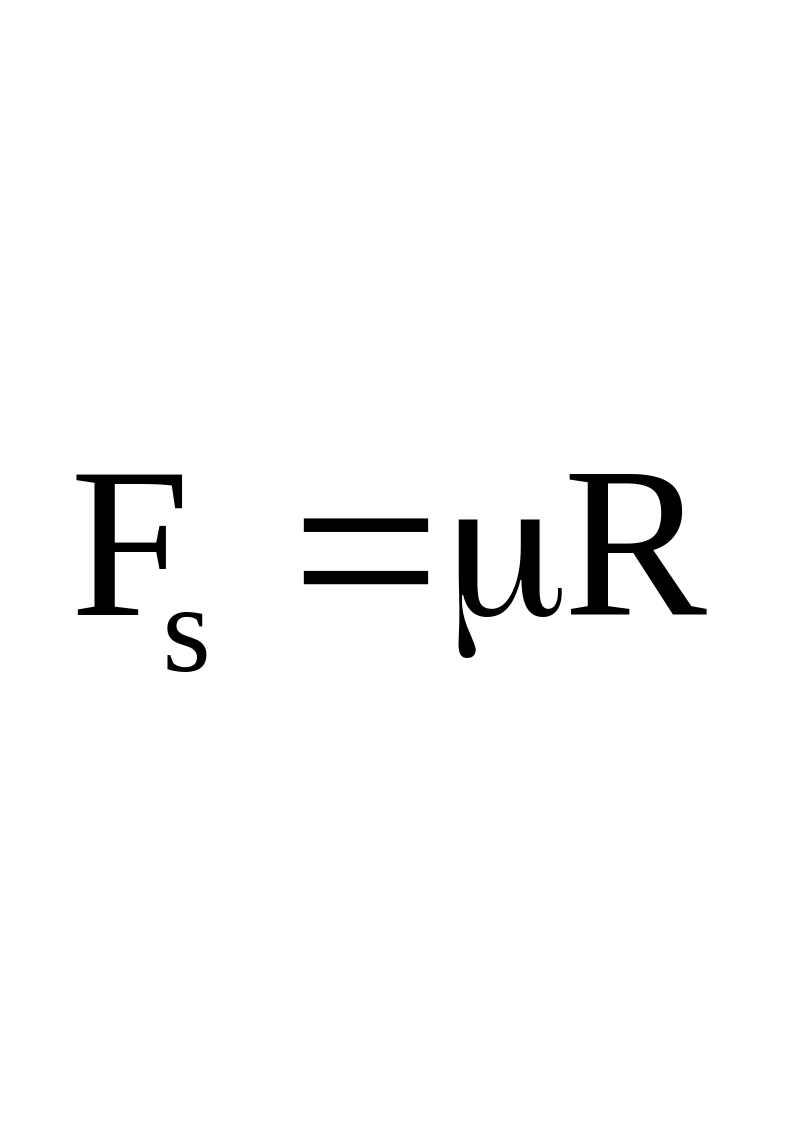
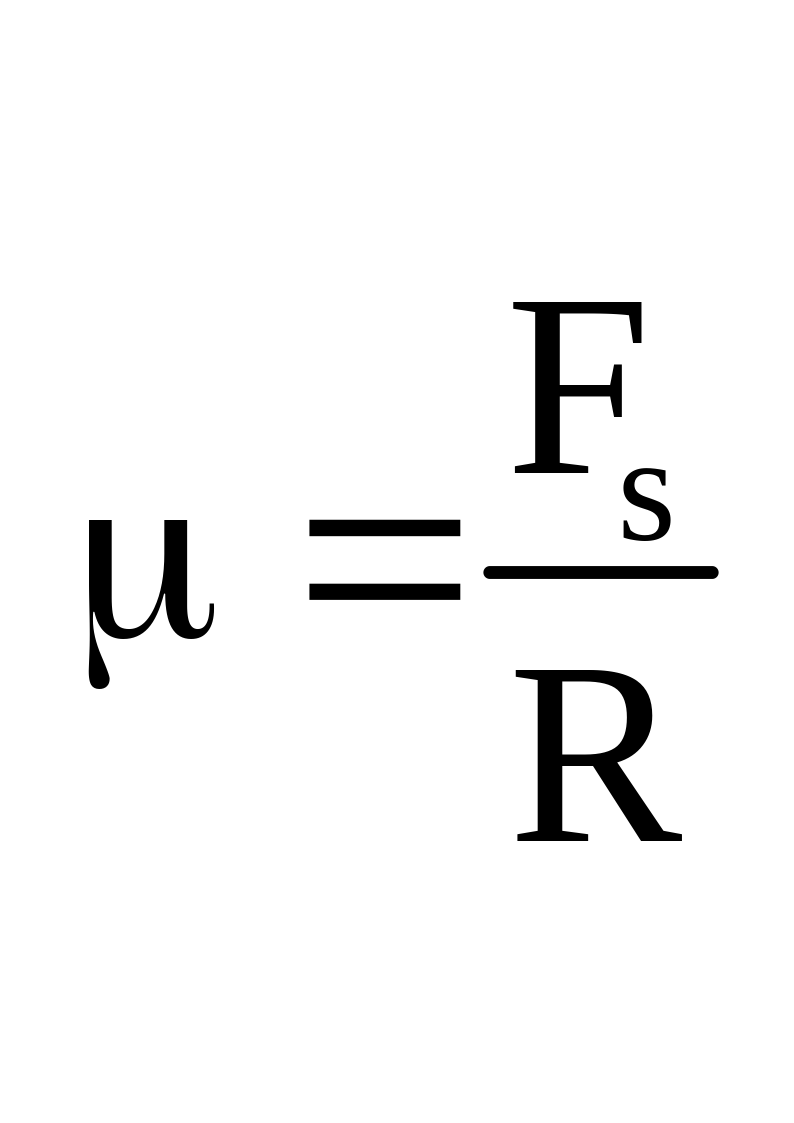
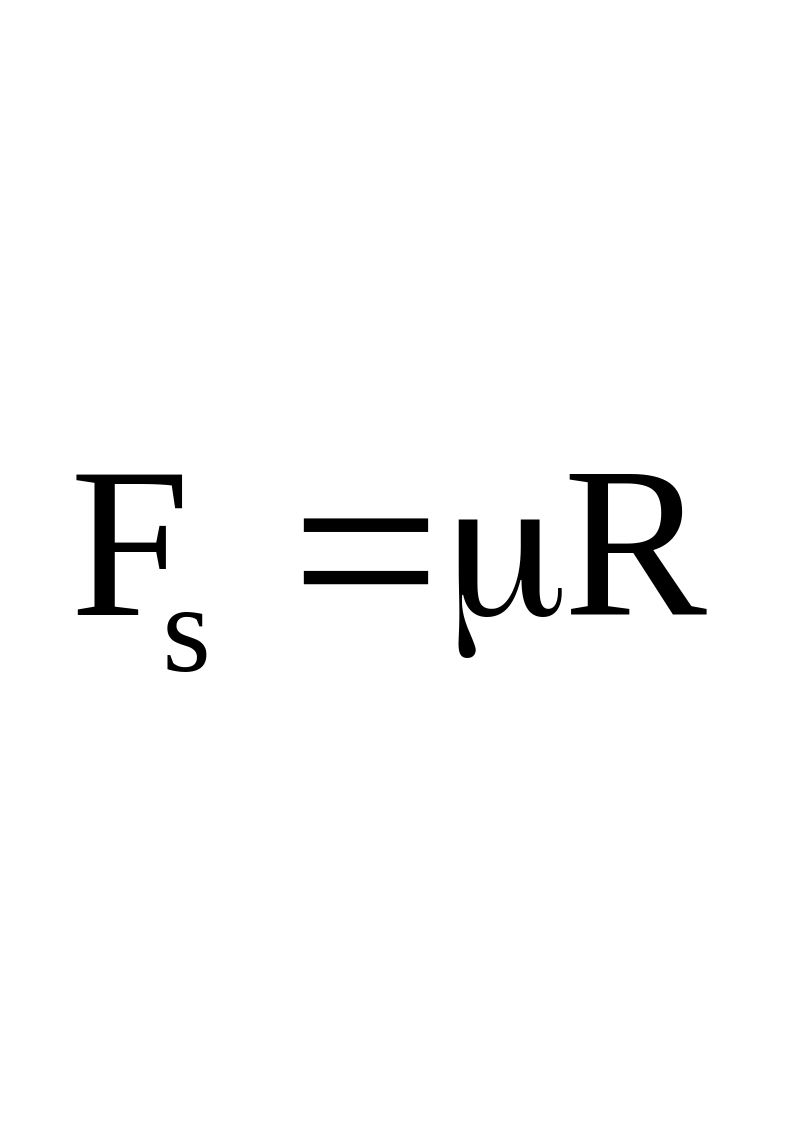
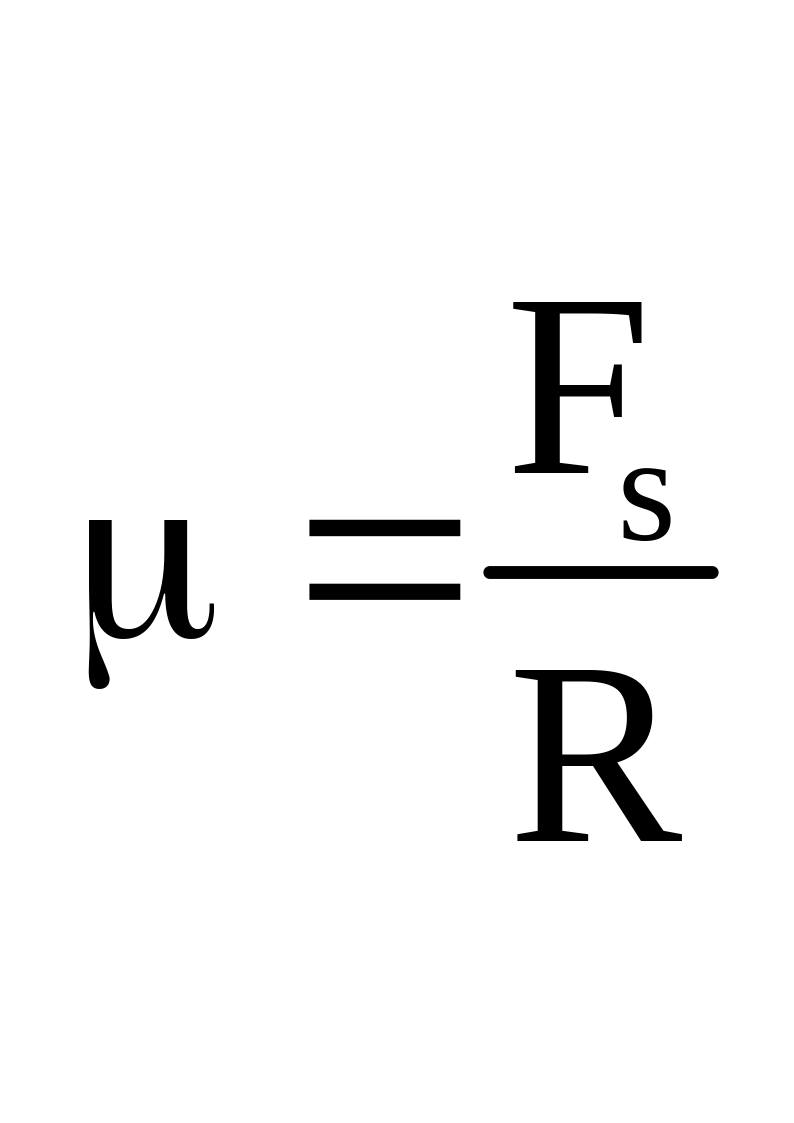
Friction is equal to the applied force that tends to move a body at rest. This friction between surfaces at rest is called the static friction. It increases with the applied force. Friction can also be increased to a certain maximum value. It does not increase beyond this. This maximum value of friction is known as force of limiting friction (Fs). It depends on the normal reaction (pressing force) between the two surfaces in contact. The ratio between the force of limiting friction Fs and the normal reaction R is constant. This constant is called the coefficient of friction and is represented by µ.
If m is the mass of the block, then for horizontal surface;
R = mg
Hence Fs = µ mg
Here “µ” is constant of proportionality and it is called coefficient of Limiting Friction.
Coefficient of Friction:
As we know,
And
Hence we can define coefficient of friction as:
“The ratio between Limiting Friction (Fs) and Normal Reaction (R) of the surface is constant, this constant is called coefficient of Friction”.
Unit:
As it is ratio between two similar quantities so it has no unit.
Value:
Its value depends upon nature of the material.
Q2. Explain the rolling friction.
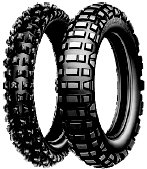
ROLLING FRICTION
Definition:
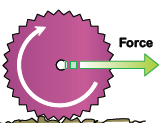
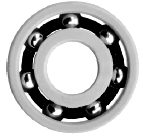
“Friction between surfaces being rolled on each other by using wheel, tyre or ball bearings is called rolling friction.”
Wheel as Greatest Invention:
The most important invention in the history of mankind was a wheel. By using wheel we can reduce friction because wheel converts sliding friction into rolling friction.
Less Friction in Rolling Bodies:
When axle of a wheel is pushed, the force of friction between the wheel and the ground at the point of contact provides the reaction force. The reaction force acts at the contact points of the wheel in a direction opposite to the direction to the applied force. Rolling friction is extremely less than sliding friction due to less in contact surface area and less cold-weld regions between surfaces. The wheel rolls without rupturing the cold welds. The fact that rolling friction is less than sliding friction is applied in ball bearing to reduce losses due to friction.
Necessary Road Grip:
The wheel would not roll on pushing it if there would be no friction between the wheel and the ground that is provided by threads of the tyres. Thus, friction is desirable for wheels to roll over a surface. It is dangerous to drive on a wet road because the friction between the road and the tyres is very small. This increases the chance of slipping the tyres from the road. The threading of tyres is designed to increase friction. Thus, threading improves road grip and make it safer to drive even on wet road.
Sliding Friction in Brakes:
A cyclist applies brakes to stop his/her bicycle. As soon as brakes are applied, the wheels stop rolling and begin to slide over the road. Since sliding friction is much greater than rolling friction, the cycle stops very quickly.
Q3. Explain the roll of friction in Braking and explain the Skidding.
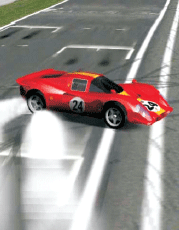
BRAKING AND SKIDDING
The wheels of a moving vehicle have velocity components:
Motion of wheel along the road
Rotation of wheels about their axis
To move a vehicle on the road as well as to stop a moving vehicle requires friction between its tyres and the road.
Example:
If the road is slippery or the tyres are worn out then the tyres instead of rolling, slip over the road. The vehicle will not move if the wheels start slipping at the same point on the slippery road. Thus for the wheels to roll, the force of friction (gripping force) between the tyres and the road must be enough that prevents them from slipping.
Similarly, to stop a car quickly, a large force of friction between the tyres and the road is needed. But there is a limit to this force of friction that tyres can provide.
Skidding:
If the brakes are applied too strongly, the wheels of the car will lock up (stop turning) and the car will skid due to its large momentum. It will lose its directional control that may result in an accident. In order to reduce the chance of skidding, it is advisable not to apply brakes too hard that lock up their rolling motion especially at high speeds. Moreover, it is unsafe to drive a vehicle with worn out tyres.
Short Questions
Q1. Define friction? Write cause of friction its formula, unit and direction.
FRICTION
Definition:
“The force which opposes the motion of moving objects is called friction.”
Unit:
Being a Force its unit is newton
Quantity:
It is a vector and derived quantity
Formula:
It formula is given below:
Direction:
Its direction is opposite to the direction of motion.
Cause of Friction:
Roughness of the surface offers pits and bumps that makes cold-welds. These cold welds resist the surfaces from sliding over each other and hence friction produces.
Dependence:
Friction depends on two factors
Nature of the surface
Pressing Force
Q2. Define coefficient of friction. Write its formula and unit (if any)?
COEFFICIEFNT OF FRICTION
Definition:
“The ratio between Limiting Friction (Fs) and Normal Reaction (R) of the surface is constant, this constant is called coefficient of Friction.”
Formula:
Formula for coefficient of friction is given below:
Unit:
As it is ratio between two similar quantities so it has no unit.
Value:
Its value depends upon nature of the material.
Q3. Write some situations where friction is desirable OR Describe two situations in which force of friction is needed. (Ex. 3.14)
FRICTION IS DESIRABLE
Friction plays very important role in our daily life. It is desirable in following situations:
Friction is needed to walk on the ground. It is risky to run on wet floor with shoes that have smooth soles. Athletes use special shoes that have extraordinary ground grip. Such shoes prevent them from slipping while running fast.
Friction is desirable for stopping bicycle for that purpose we apply brakes. The rubber pads pressed against the rims provide friction. It is the friction that stops the bicycle.
Friction is desirable while writing.
Friction is highly desirable while climbing a hill.
Q4. Write some situations where friction is undesirable
FRICTION IS UNDESIRABLE
Friction is undesirable in following situations:
Where we have to move with high speed e.g. while skating we do not need friction.
Friction is not desirable in those situations, where we have to conserve energy.
Q5. Write down the advantages and disadvantages of friction.
ADVANTAGES AND DISADVANTAGES
Friction has both advantages and disadvantages. Some of them are given below:
Disadvantages:
Friction is undesirable when moving at high speed because it opposes the motion and thus limits the speed of the moving objects.
Most of our useful energy is lost as heat and sound due to the friction between various moving parts of machines.
In machines, friction also causes wear and tear of their moving parts.
Advantages:
We write due to presence of friction between paper and pencils.
Friction enables us to walk on the ground.
We can tie a knot due to friction
A nail stays in the wood due to friction.
Birds can fly, due to air resistance. The reaction of pushed air enables the birds to fly.
Q6. Write down the methods to reduce friction. OR Describe ways to reduce friction. (Ex. 3.16, LHR 2013)
METHODS TO REDUCE FRICTION
The friction can be reduced by:
Making the sliding friction smooth
Making the fast moving objects a streamline shape (fish shape) such as car, aero-planes, etc. this causes the smooth flow of air and thus minimizes air resistance at high speeds.
Lubricating the sliding surfaces.
Using ball bearings or roller bearings. Because the rolling friction is lesser than the sliding friction.
Q7. Define Sliding and rolling friction?
SLIDING FRICTION
Definition:
“The frictional force opposing the sliding or dragging of one solid body over another solid body is called sliding friction.”
ROLLING FRICTION
Definition:
“Friction between surfaces being rolled on each other by using wheel, tyre or ball bearings is called rolling friction”.
Q8. Why Rolling friction is always less than sliding friction why? (Ex. 3.17, LHR 2013, 2014)
REASON FOR BEING LESS
Rolling friction is always less than sliding friction due to less in contact surface area and less cold-weld regions between surfaces. The wheel rolls without rupturing the cold welds. The fact that rolling friction is less than sliding friction is applied in ball bearing to reduce losses due to friction.
Example:
It is easy to roll a cylindrical eraser on a paper sheet than to slide it because rolling friction is less than sliding friction.
Q9. Suppose you are running and want to stop at once. Surely you will have to produce negative acceleration in your speed. Can you tell from where does the necessary force come?
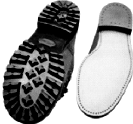
FORCE NEEDED TO STOP
While running when we want to stop at once, we press the ground firmly with our feet. Thus friction comes into play due to relative motion of our feet and ground which acts opposite direction to our motion and it reduces our speed and ultimately we come to stop.
Have a look on the figure and answer given Questions. (Quick Quiz Pg. # 74)
Q10. Which shoe offer less friction?
LESS FRICTION
Shoe with flat sole will offer less friction
Q11. Which shoe is better for walking on dry track?
BETTER FOR WALKING
On dry track, shoe with flat sole is batter for walking.
Q12. Which shoe is better for jogging?
BETTER FOR JOGGING
Shoe which has not flat sole is batter for jogging.
Q13. Which sole will wear out early?
WEARING OUT
Shoe with flat sole will wear out early.
(Quick Quiz PTB Pg. # 75)
Q14. Why is it easy to roll a cylindrical eraser on a paper sheet than to slide it?
ROLLING CYLINDER
It is easy to roll a cylindrical eraser on a paper sheet than to slide it because rolling friction is less than sliding friction.
Q15. Do we roll or slide the eraser to remove the pencil work from our notebook?
SLIDING ERASER
We slide the eraser to remove the pencil work from our notebook because we need more friction to remove the work and sliding friction is greater than rolling friction.
In which case it is easy for the tyre to roll over? (MINI EXERCISE PG#75)
(i) rough ground (ii) smooth ground
Rough Ground: In case of rough ground it is difficult for the tyre to roll over because rough surface offer more friction.
Smooth Ground: In case of smooth ground it is easier for the tyre to roll over because smooth surface offer less friction.
In which case do you need smaller force and why? (MINI EXERCISE PG#75)
(i) rolling (ii) sliding
Rolling:
In case of rolling friction we need smaller force because there is contact with earth on only a single point.
Sliding:
In case of sliding friction we need greater force because all the body is in contact with the earth.
3.4 Uniform Circular Motion
Long Questions
Q1. Define Centripetal force Derive its formula. (GRW 2015, LHR 2015, 2017)
CENTRIPETAL FORCE
Definition:
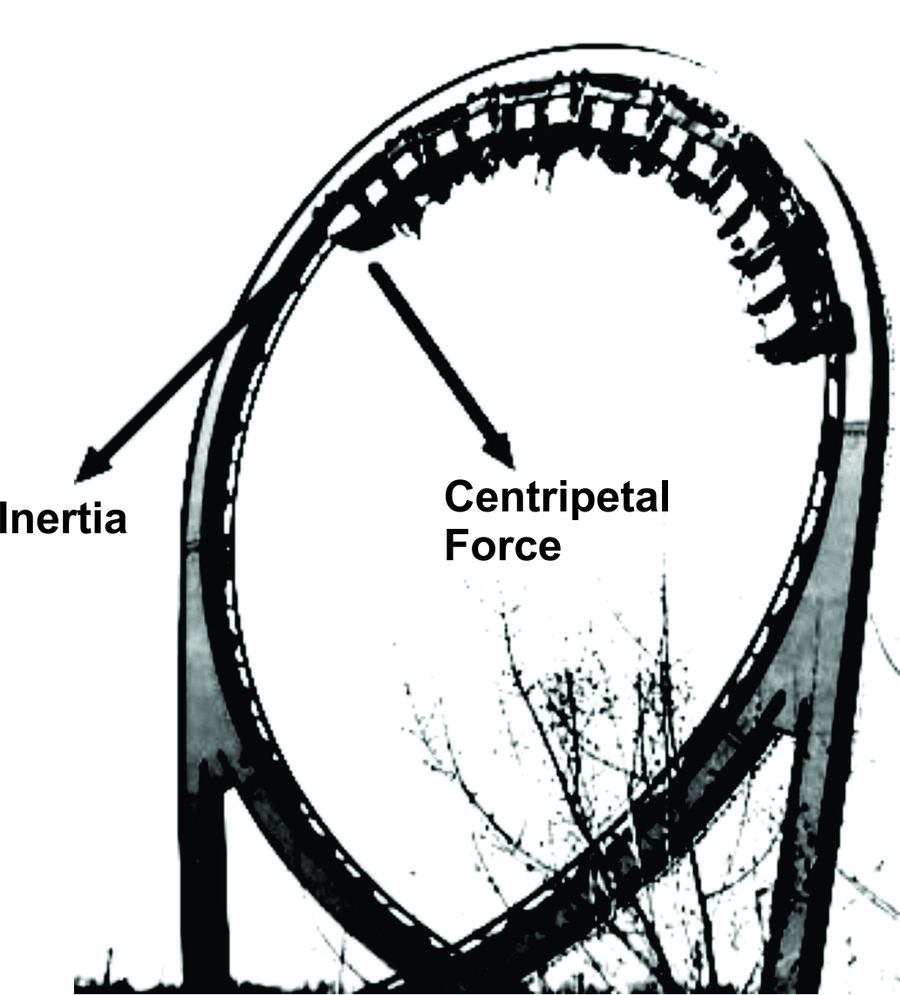
“Centripetal force is a force that keeps a body to move in circle.”
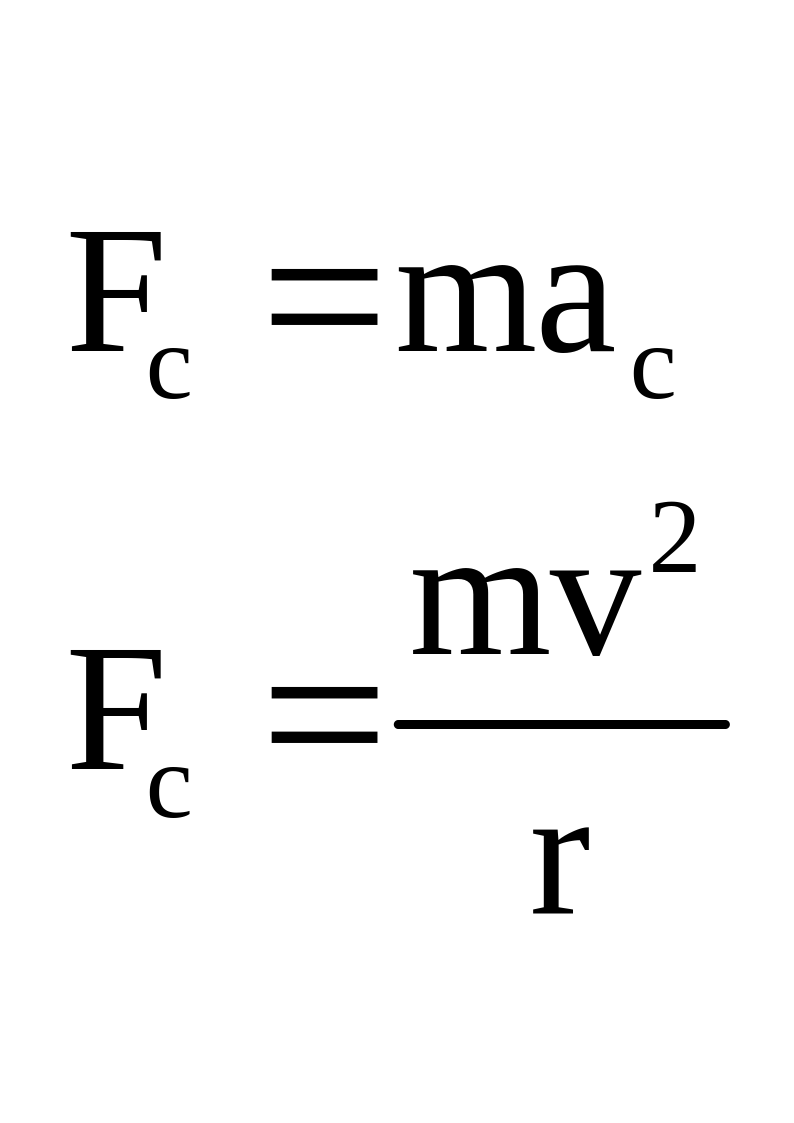
Formula:
Formula of centripetal is given below:
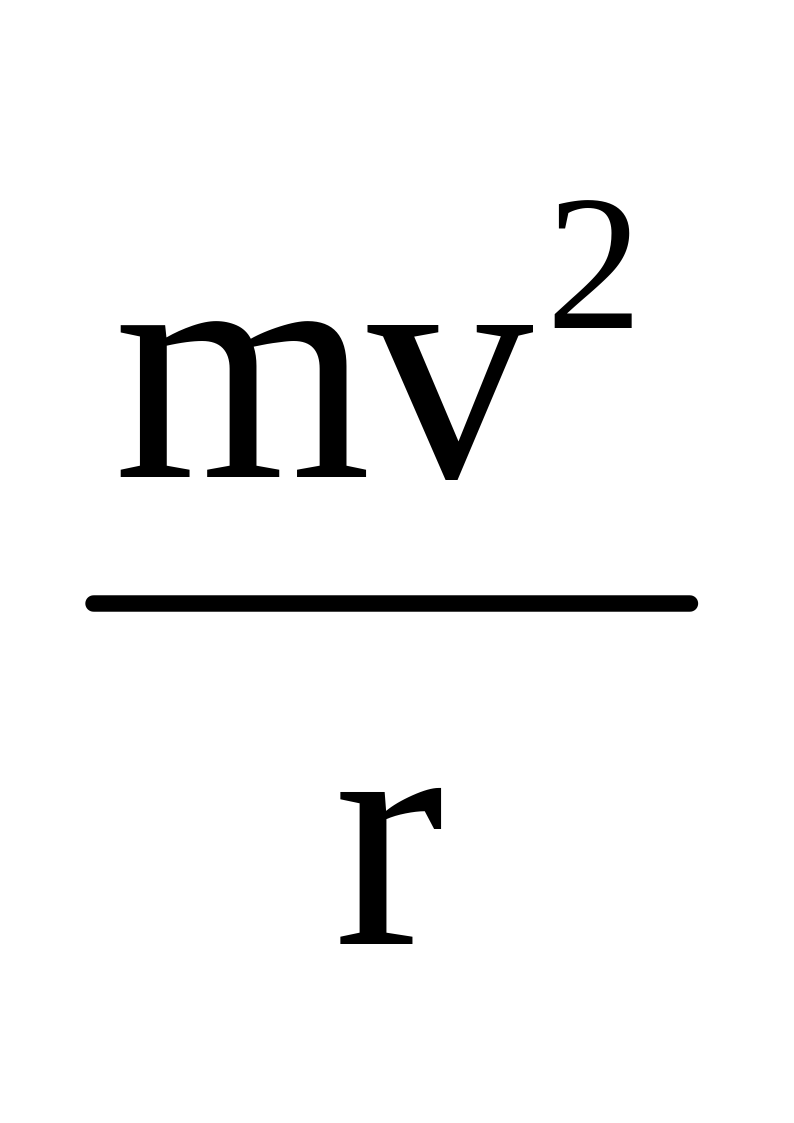
Fc =
Unit:
Unit of centripetal force is newton (N)
Quantity:
It is a vector and derived quantity
Direction:
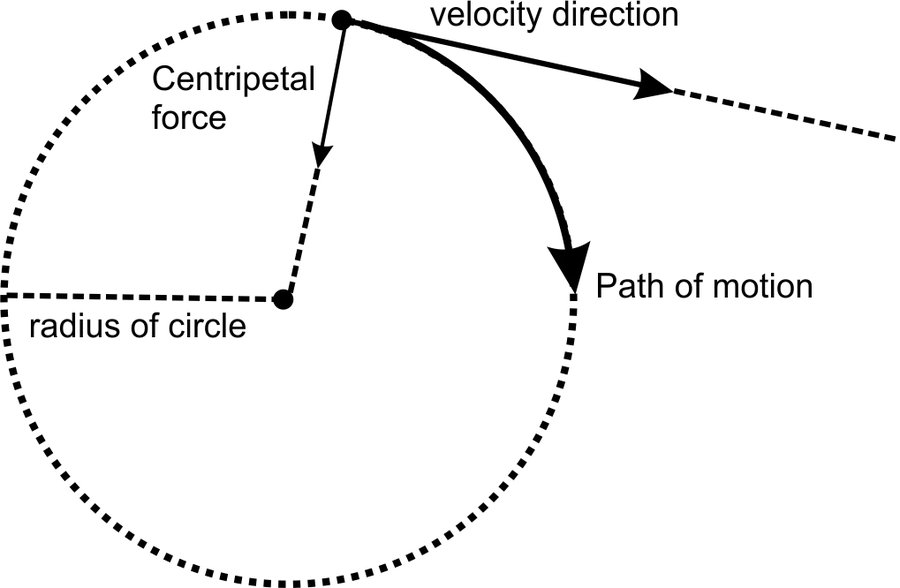
It is directed towards centre of the circle perpendicular to the direction of the motion of the body at any point.
Derivation of Formula:
Let a body of mass m moves with uniform speed v in a circle of radius r as shown in the figure:
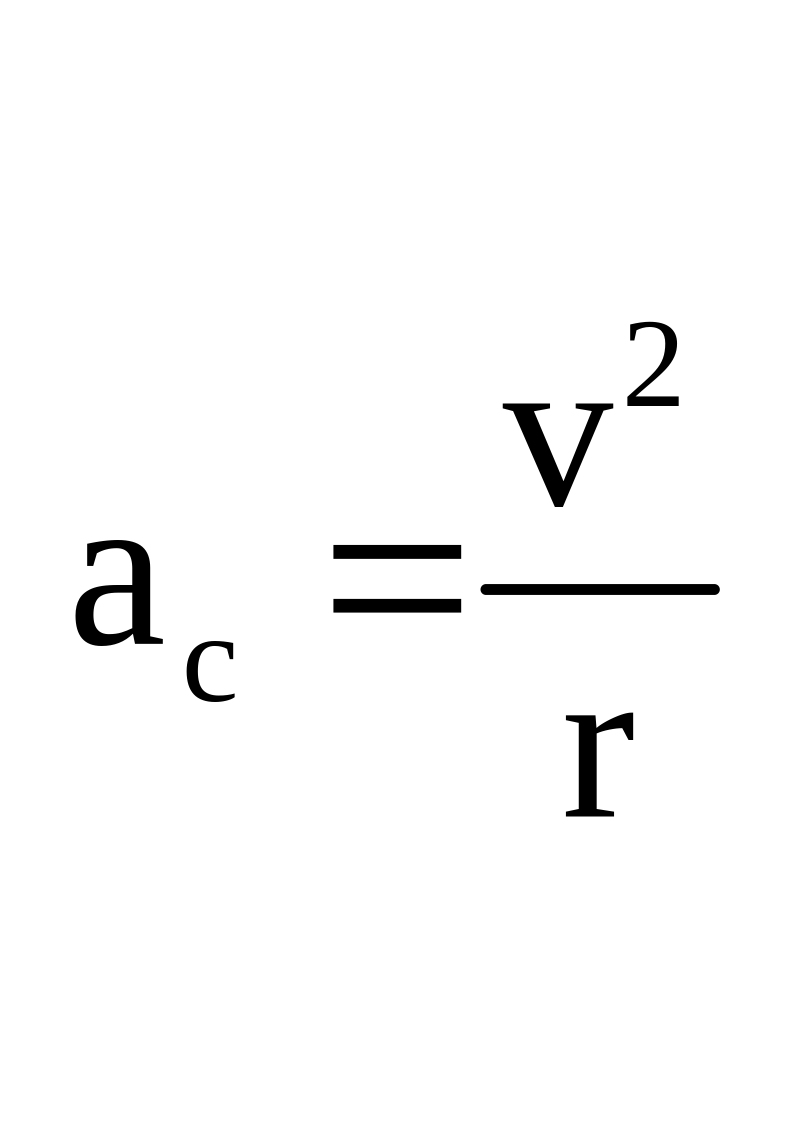
The acceleration ac produced by the centripetal force Fc is given by
Centripetal acceleration
According to Newton’s second law of motion, the centripetal force Fc is given by,
Factors:
Centripetal force depends upon following factors
Mass of the Object:
If we double the mass of the body, required centripetal force to compel it to move in circular path will become double.
Radius of the Circular:
If we double the radius of the circle, required centripetal force to compel the body to move in circular path will become half.
Speed of the body:
If we double the speed of the body, required centripetal force to compel the body to move in circular path will become four times greater.
Examples:
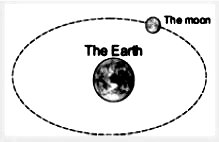
The moon revolves around the Earth in circular path, the required centripetal force is provided by the gravitational pull of the Earth.
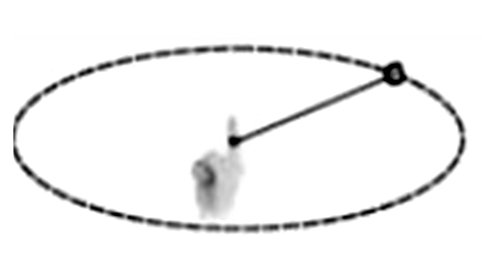
A stone tied with string, whirled in circular path is compelled to move in circular path by centripetal force provided by our muscles via string.
While the coaster cars move around the loop, the track provides centripetal force preventing them to move away from the circle.
Q2. Define and explain Centrifugal force. Is it a reaction of centripetal force? (GRW 2014)
CENTRIFUGAL FORCE
Definition:
“A force which compels the body to move away from circular path is known as centrifugal force”.
Formula:
It is reaction of centripetal force.
Formula of centripetal is given below:
Fr =
Unit:
Unit of centrifugal force is newton (N)
Quantity:
It is a vector and derived quantity
Direction:
It is directed away from the centre of the circle perpendicular to the direction of the motion of the body at any point.
Example:
Consider a stone tied with a string moving in a circle. The necessary centripetal force acts on the stone through the string that keeps it in the move in a circle. According to Newton’s third law of motion, there exists a reaction to centripetal force. Centripetal reaction that pulls the string outward is sometimes the centrifugal force.
Short Questions
Q1. Define circular motion.
CIRCULAR MOTION
Definition:
“Motion of the body moving in the circular path is known as circular motion.”
Examples:
The motion of the moon around the Earth is nearly in circular orbit.
The paths of electrons moving around the nucleus in an atom are also nearly circular.
Motion of the stone tied with the string
Q2. Can a body move with uniform velocity in a circle? If not, why?
NO UNIFORM VELOCITY IN CIRCLE
Q3. When a body is moving in circle it may have uniform speed but its velocity is non-uniform because direction of the body is changing at every instant Define centripetal acceleration.
CENTRIPETAL ACCELERATION
Definition:
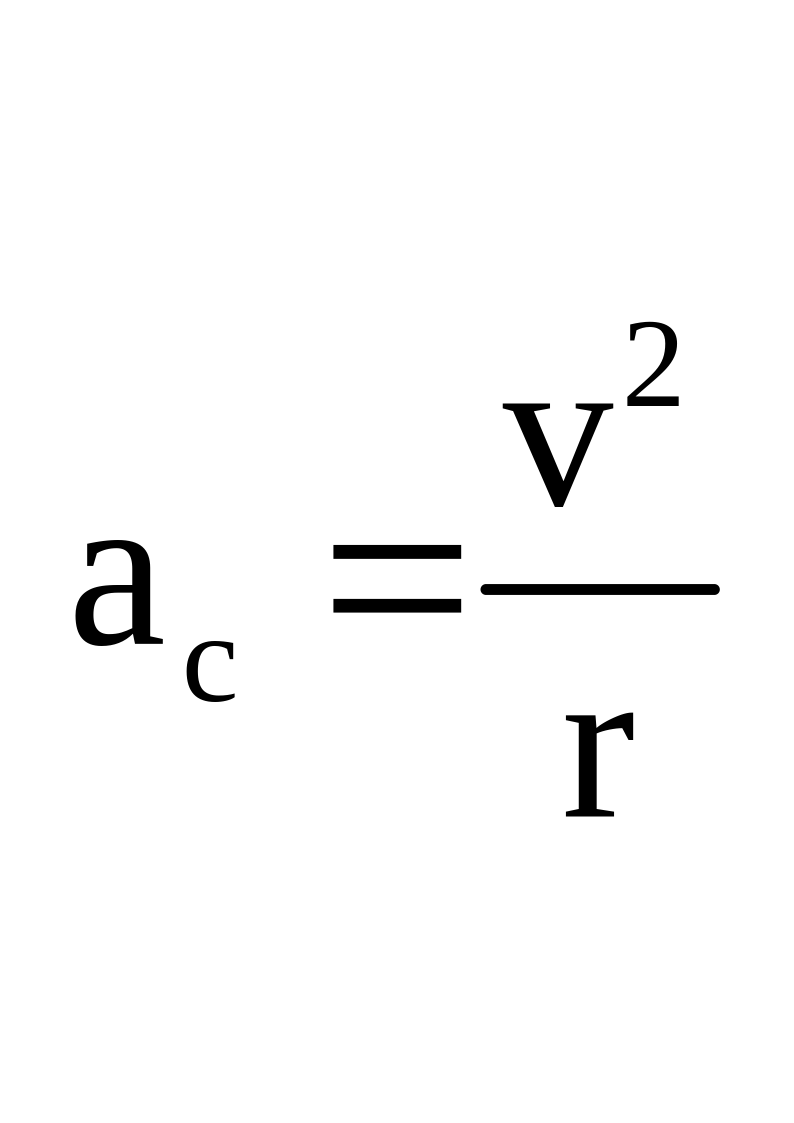
“The acceleration produced by the centripetal force in a body moving in circular path is known as centripetal acceleration.”
Formula:
It is represented by ac. and its formula can be derived as:
We know,
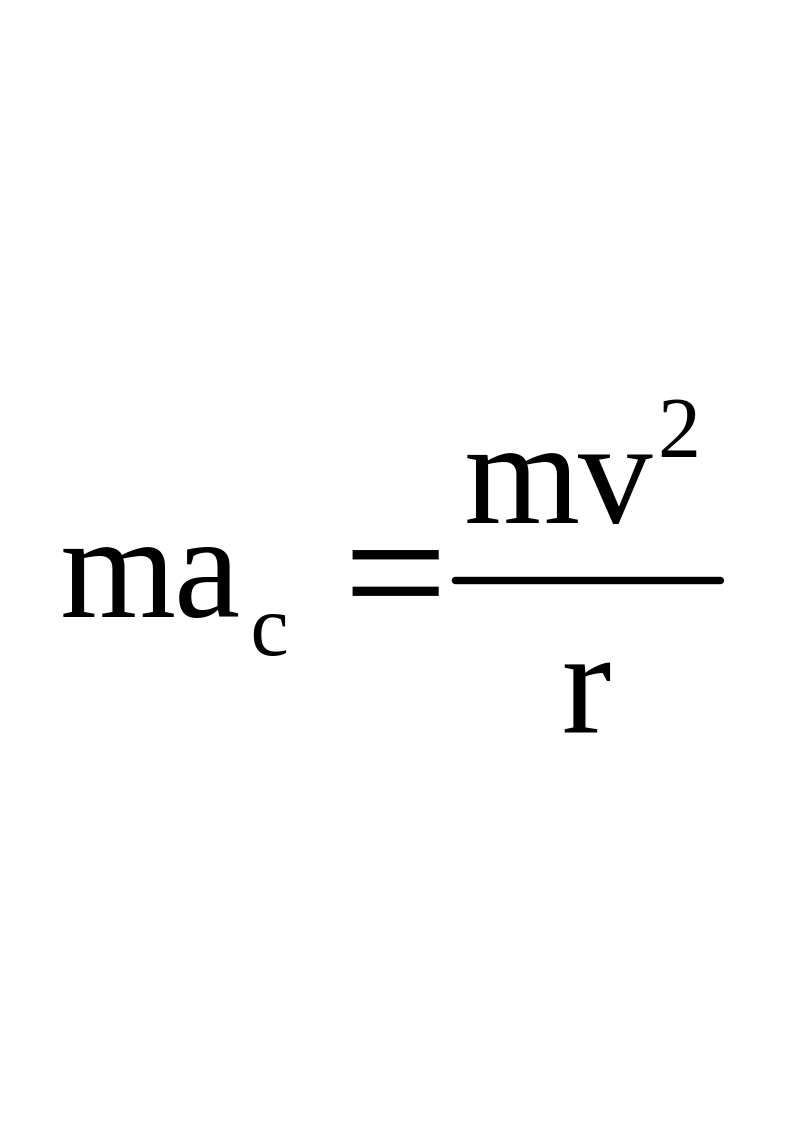
Fc =
According to Newton’s 2nd Law of Motion F= ma
So, Fc = mac
So, Centripetal Force is given by,
Unit:
Its unit is ms-2
Q4. Why outer edge of the road is kept higher than inner edge (banking of road)? Explain. (LHR 2013)
BANKING OF THE ROADS
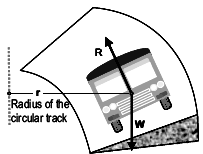
When a car takes a turn, centripetal force is needed to keep it in its curved track. The friction between the tyres and road provides the necessary centripetal force. The car would skid away if the force of friction between the tyres and the road is not sufficient enough particularly when the roads are wet. This problem is solved by banking of curved roads.
Banking of a road means that the outer edge of a road is raised. Banking causes a component of vehicle’s weight to provide the necessary Centripetal force while taking a turn. Thus banking of road prevents skidding of vehicle and thus makes the driving safe.
Q5. Why cyclists bend himself toward the inner side of the curved path while taking turn with high speed?
BENDING OF CYCLISTS
A cyclist bend himself toward the inner side of the curved path while taking turn with high speed to provide necessary centripetal force with his weight to take turn in circular path to avoid slipping.
Q6. Can a body move along a circle without the centripetal force?
CIRCULAR MOTION AND CENTRIPETAL FORCE
Q7. When a body moves in a circular path, it does so under the action of centripetal force. This force is directed towards the center along the radius of the circle. As the radius is perpendicular to the tangent of the circle, the centripetal force keeps the body in circular path. Thus, in absence of centripetal force, the body cannot move in a circular path. Moon revolves around the earth, from where it gets necessary centripetal force?
CENTRIPETAL FORCE ON MOON
The gravitational force between the earth and the moon provides the necessary centripetal force to moon for revolving around the earth.
Q8. Define centrifuge?
CENTRIFUGE
Definition:
“All devices that work on the principle of centrifugal force is called centrifuge.”
Examples:
Following are important centrifuge machines:
Washing machine dryer
Cream separator
Q9. Explain the function of washing machine (dryer). OR Why the spinner of washing machine is made to spin at very high speed? (Ex. 3.20)
WASHING MACHINE DRYER
Construction:
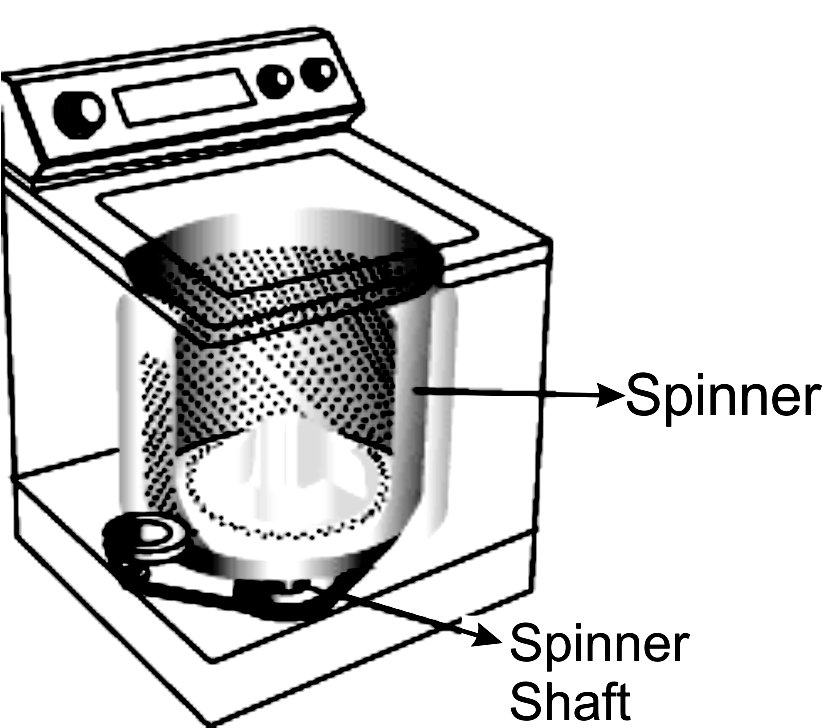
The dryer of a washing machine is basket spinner. They have perforated wall having large numbers of fine holes in the cylindrical rotor. The lid of the cylindrical container is closed after putting wet clothes in it.
Working:
It works on the principle of centrifuge Machine.
Q10. When it spins at high speed, the water from wet clothes is forced out through these holes due to lack of centripetal force. Explain the function of cream separator.
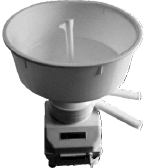
CREAM SEPARATOR
Construction:
Most modern plants use a separator to control the fat contents of various products. A separator is a high – speed spinner. It consists of a bowl.
Working:
It acts on the same principle of centrifuge machine.
The bowl spins at very high speed causing the heavier contents of the milk to move outwards in the bowl pushing the lighter contents inwards towards the spinning axis. Cream or butterfat is lighter than other components in the milk. Therefore, skimmed milk, which is denser than cream is collected at outer wall of the bowl. The lighter part (cream) is pushed towards the center from where it is collected through a pipe.
EXAMPLE 3.8
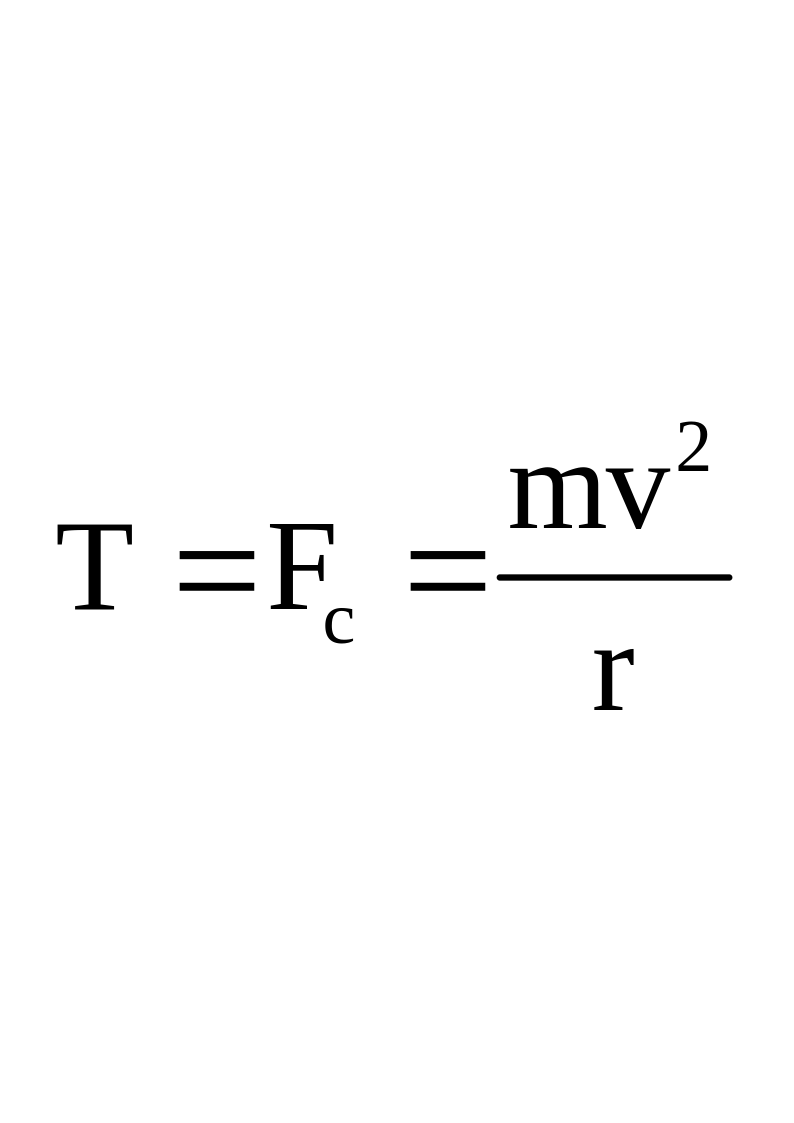
Q11. A stone of mass 100 g is attached to a string 1m long. The stone is rotating in a circle with a speed of 5 ms-1. Find the tension in the string.
Given Data:
Mass of the body = m = 100g = 0.1 kg
Radius of the circle = r = 1 m
Speed of the body = v = 5 ms-1
To Find:
Tension in the string = T= Fc =?
Calculations:
In this case tension in the string will provide necessary centripetal force.
As we know that,
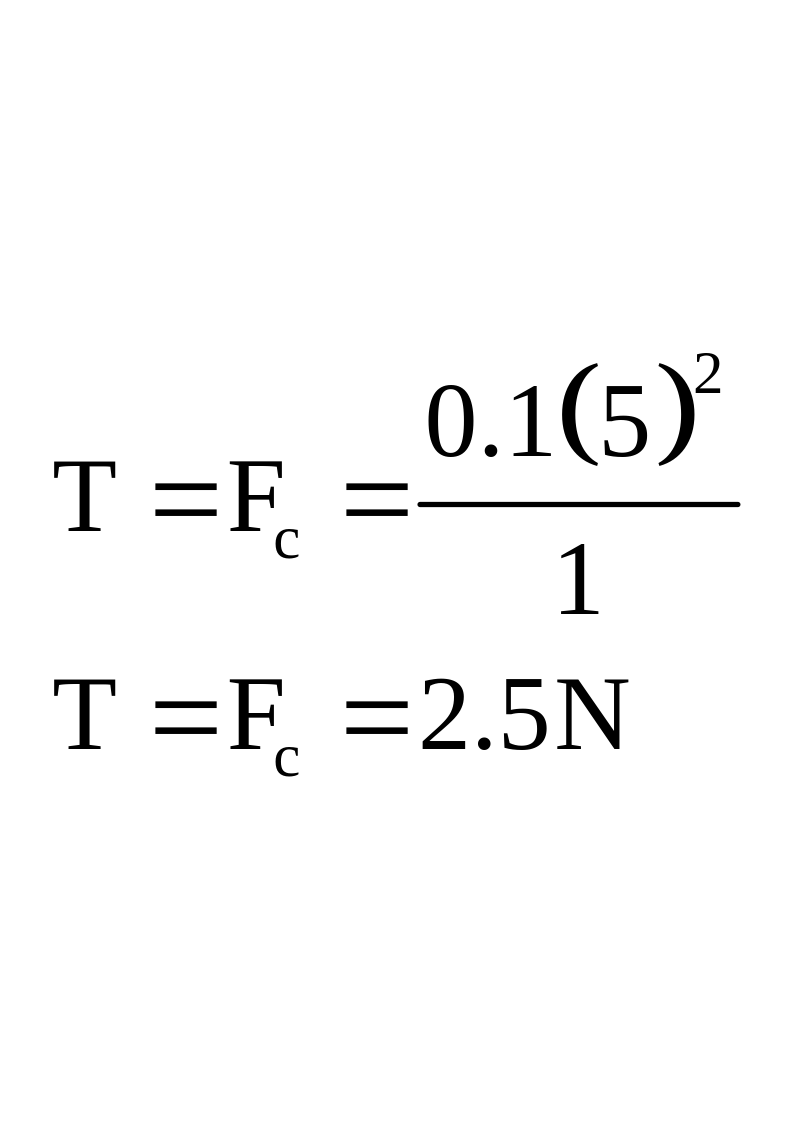
By putting the values, we have
Result:
TB Text Book Exercise
Long Questions
Q1. (iii) Sliding friction and rolling friction
DIFFERENTIATION
Mass and weight can be differentiated as:
| Mass | Weight |
| Definition | Definition |
| Mass of a body is the quantity of matter possessed by the body. | Weight of a body is the force equal to the force with which Earth attracts it. |
| Quantity | Quantity |
| It is a base and scalar quantity. | It is a derived and vector quantity. It is always directed toward the center of the earth. |
| Measurement | Measurement |
| It is measured by comparison with standard masses using a physical balance (beam balance or electronic balance etc. | It is measured by spring balance. |
| Variations | Variations |
| It remains same everywhere and does not change with change of place. | It does not remain same at all places and varies with the value of ‘g’, acceleration due to gravity. |
| Unit | Unit |
| Unit of mass is kilogram (Kg). | Unit of weight is newton (N). |
| Formula | Formula |
| It can be calculated by using the formula F = ma | It can be calculated by using the formula w = mg |
| Zero Value | Zero Value |
| Mass of a body can never be zero | Weight of body can be zero |
| Measuring Instruments | Measuring Instruments |
ii) ACTION AND REACTION
When two bodies come in contact with each other, the force exerted by first body on second body is known as action.
When two bodies come in contact with each other, the force exerted by second body on first body is known as reaction.
iii) Sliding friction and rolling friction (GRW 2015)
| Sliding Friction | Rolling Friction |
| Definition | Definition |
| Frictional force experienced by the body when a body slides over the other body. | Frictional force experienced by the body when a body rolls over the other body. |
| Magnitude | Magnitude |
| It is greater than rolling friction | It is less than sliding friction |
Q2. What is the law of inertia?
LAW OF INERTIA
Since Newton’s first law of motion deals with the inertial property of matter, therefore, Newton’s first law of motion is also known as law of inertia.
Statement:
Newton’s First Law of Motion states that:
“A body continues in its state of rest or of uniform motion in a straight line provided no net force acts on it.”
Example:
A book lying on a table remains at rest as long as no net force acts on it. Similarly, a moving object does not stop moving by itself.
Q3. When a moving bus takes a sharp turn, passengers fall in the outward direction. It is due to inertia that they want to continue their motion in a straight line and thus fall outwards. How can you relate a force with the change of momentum of a body?
See Q.no.6 Long Question
Q4. What is the law of conservation of momentum?
LAW OF CONSERVATION OF MOMENTUM
Statement:
According to Law of Conservation of Momentum:
“The momentum of an isolated system of two or more than two interacting bodies remains constant”.
Example:
Consider the example of an air-filled balloon. In this case, balloon and the air inside it form a system. Before releasing the balloon, the system was at rest and hence the initial momentum of the system was zero. As soon as the balloon is set free, air escapes out of it with some velocity. The air coming out of it possesses momentum. To conserve momentum, balloon moves in the direction opposite to the air coming out of it.
Mathematical Form:
m1u1 + m2u2 = m1v1 + m2v2
Q5. When a gun is fired, it recoils. Why?
Total momentum of the gun and the bullet is zero before the firing. When gun is fired, bullet moves in forward direction hence gains some momentum in order to conserve momentum according to law of conservation of momentum the gun recoils.
Mathematically:
Total momentum of the gun and bullet after the gun is fired = M V + m v
According to the law of conservation of momentum
M V + m v = 0
OR M V = – m v
Here negative sign indicates that velocity gun is opposite to the velocity of bullet i.e. the gun recoils.
Q6. Describe ways to reduce friction. (LHR 2014)
METHODS TO REDUCE FRICTION
The friction can be reduced by:
Making the sliding friction smooth
Making the fast moving objects a streamline shape (fish shape) such as car, aero-planes, etc. this causes the smooth flow of air and thus minimizes air resistance at high speeds.
Lubricating the sliding surfaces
Using ball bearings or roller bearings. Because the rolling friction is lesser than the sliding friction.
Q7. Why rolling friction is less than sliding friction? (LHR 2013, 2014)
ROLLING VS SLIDDING FRICTION
Rolling friction is less than sliding friction due to following reasons:
We know that greater the points of contact between two surfaces, greater will be the friction and vice versa. Since the points of contact between surfaces in case of rolling are less than points of contact in case of sliding therefore rolling friction is less than sliding friction.
There is no relative motion between rolling surfaces.
What you know about the following:
Tension in the string
(TOPIC TENSION AND ACCELERATION IN THE STRING SHORT QUESTION#1)
Limiting force of friction
(TOPIC 3.3 FRICTION LONG QUESTION#1)
Braking force
(TOPIC 3.3 FRICTION LONG QUESTION#3)
Skidding of vehicles
(TOPIC 3.3 FRICTION LONG QUESTION#3)
Seatbelts
(TOPIC FORCE AND MOMENTUM SHORT QUESTION#11)
Banking of roads
(TOPIC 3.4 UNIFORM CIRCULAR MOTION SHORT QUESTION#4)
Cream separator
(TOPIC 3.4 UNIFORM CIRCULAR MOTION SHORT QUESTION#10)
Short Questions
Q1. Why is it dangerous to travel on the roof of a bus?
TRAVELLING ON THE ROOF
It is dangerous to travel on the roof of a bus because when brakes are applied suddenly, the lower part of body of passenger sitting on its roof comes to rest immediately but due to inertia upper part of his body continues its motion in a straight line and he may fall forward and gets injured if there is no support.
Q2. Why does a passenger move outward when a bus takes a turn?
OUT WARD MOTION
Q3. What will be the tension in a rope that is pulled from its ends by two opposite forces 100 N each?
TENSION IN THE ROPE
The tension in a rope that is pulled from its ends by two opposite forces 100 N each will be 100 N.
Q4. Action and reaction are always equal and opposite then how does a body move?
ACTION AND REACTION
Action and reaction are equal in magnitude but opposite in direction. Action and reaction do not act on the same body. Action is applied on one body due to which an equal and opposite reaction is acting on another body. Both of these do not neutralize each other due to which the body will move.
Q5. A horse pushes the cart. If the action and reaction are equal and opposite then how does the cart move?
MOTION OF THE CART
Yes, Action and reaction are equal in magnitude but are opposite in direction but they do not cancel each other because they act on two different bodies.
The horse apply action on the road by his feet, the reaction is given by the road on the horse, due to which horse moves. The cart which is tied with the horse will also move.
Q6. Why is the law of conservation of momentum important?
LAW OF CONSERVATION OF MOMENTUM
Importance:
Law of conservation of momentum has vast applications and is applicable universally on bigger bodies as well as on atoms and molecules. A system of gun and bullet, rocket and jet engines etc. work on the Principle of law of conservation of momentum. This law helps us to understand variations in quantity of motion of different bodies.
Q7. Describe two situations in which force of friction is needed?
FRICTION IS NEEDED
The situations in which force of friction is needed are:
We cannot write if there would be no friction between paper and the pencil.
Friction enables us to walk on the ground. We cannot run on a slippery ground. A slippery ground offers very little friction. So for smooth walk on the ground friction is needed.
Q8. How does oiling the moving parts of a machine lower friction? (GRW 2017)
OILING LOWERS FRICTION
As the friction of liquids is less than friction of solids. So oiling the moving parts of the machines lower the friction. Oil makes cold weld loose by making pits and bumps slippery hence oiling lowers friction.
Q9. What would happen if all friction suddenly disappears?
FRICTION SUDDENLY DISAPPEARS
If all friction suddenly disappears the movement will become uncontrollable. The balance of natural forces will be disturbed and the whole system will collapse.
Q10. Why the spinner of washing machine is made to spin at very high speed?
SPINNER OF WASHING MACHINE
Spinner of washing machine is made to spin at high speed because water is to be thrown out of wet clothes through perforated walls. Water moves out due to lack of centripetal force.
As we know,
Fc =
This formula indicates that when speed will be high more centripetal force will be required to make the water particles to move in circles hence due to lack of centripetal force water moves out through perforated walls.
Numerical Problems
Numerical 1. A force of 20 N moves a body with an acceleration of 2 ms-2. What is it its mass? (LHR 2013)
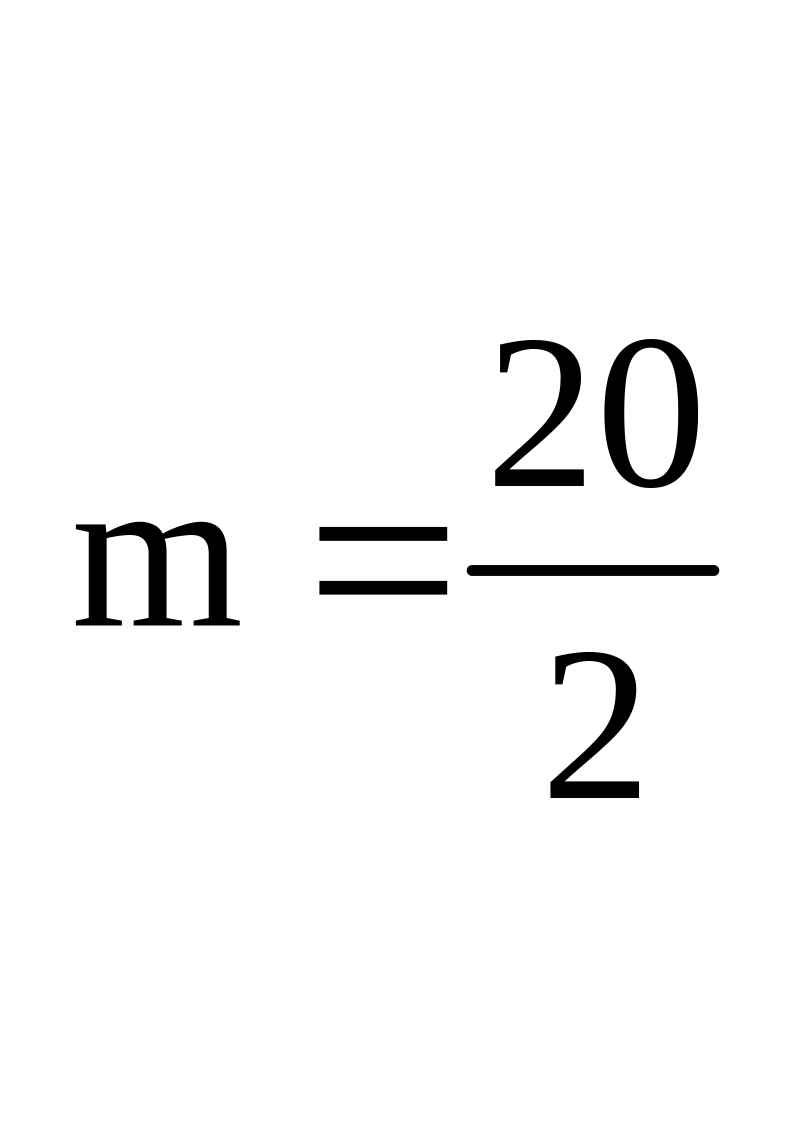
Given Data:
Force acting on the body = F = 20 N
Acceleration of the body = a = 2 ms-2
To Find:
Mass of the body = m = ?
Calculations:
From Newton’s second law of motion
F = ma
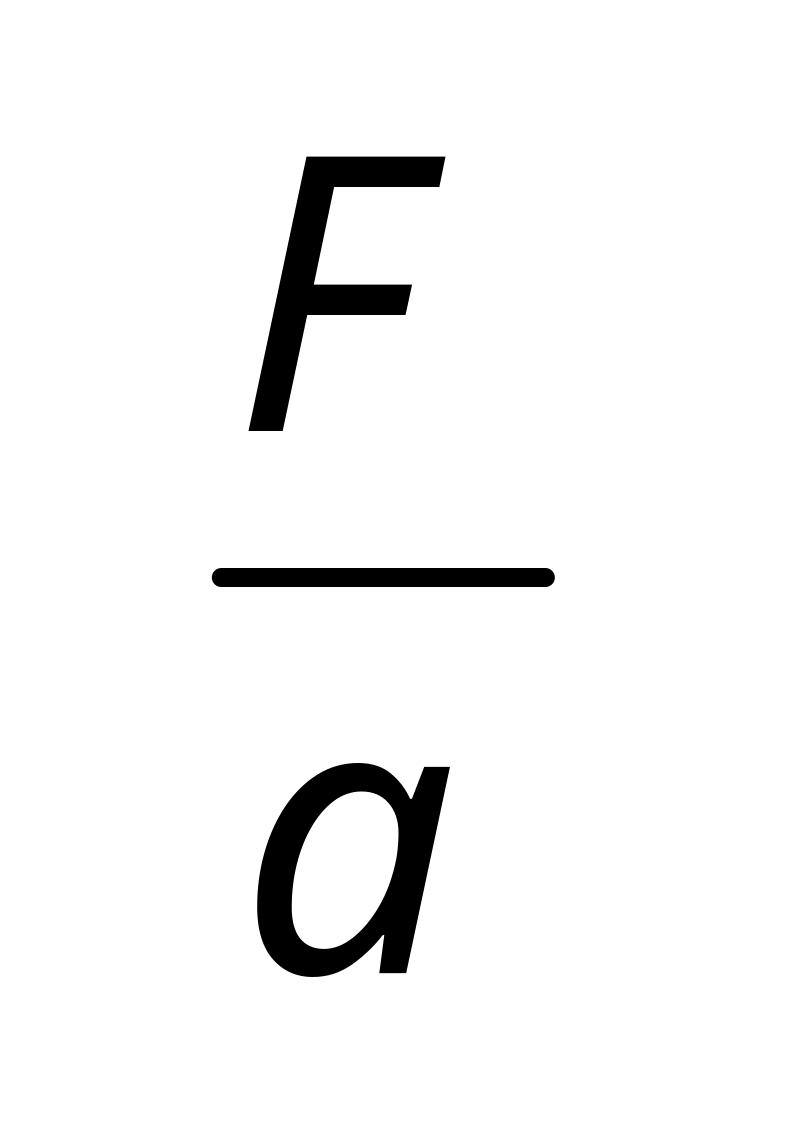
So m =
By putting the values, we have
m = 10 kg
Result:
Numerical 2. The weight of a body is 147 N. What is its mass? (LHR 2013, 2015)
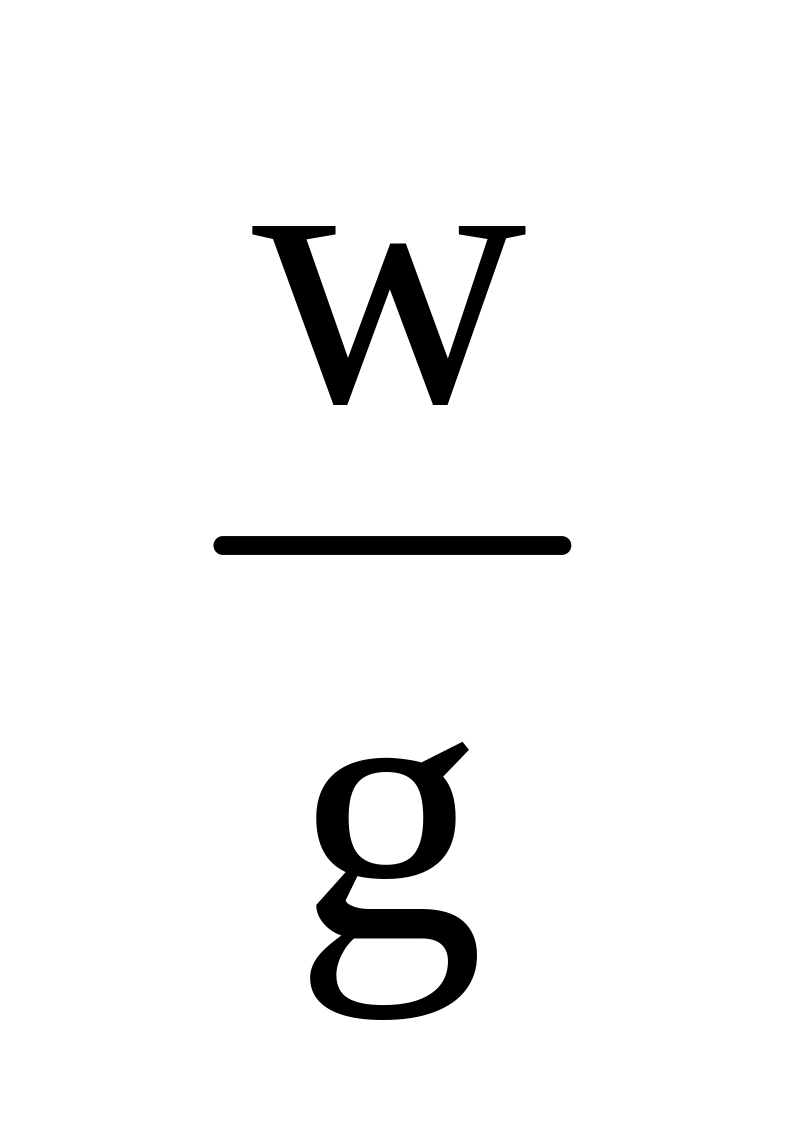
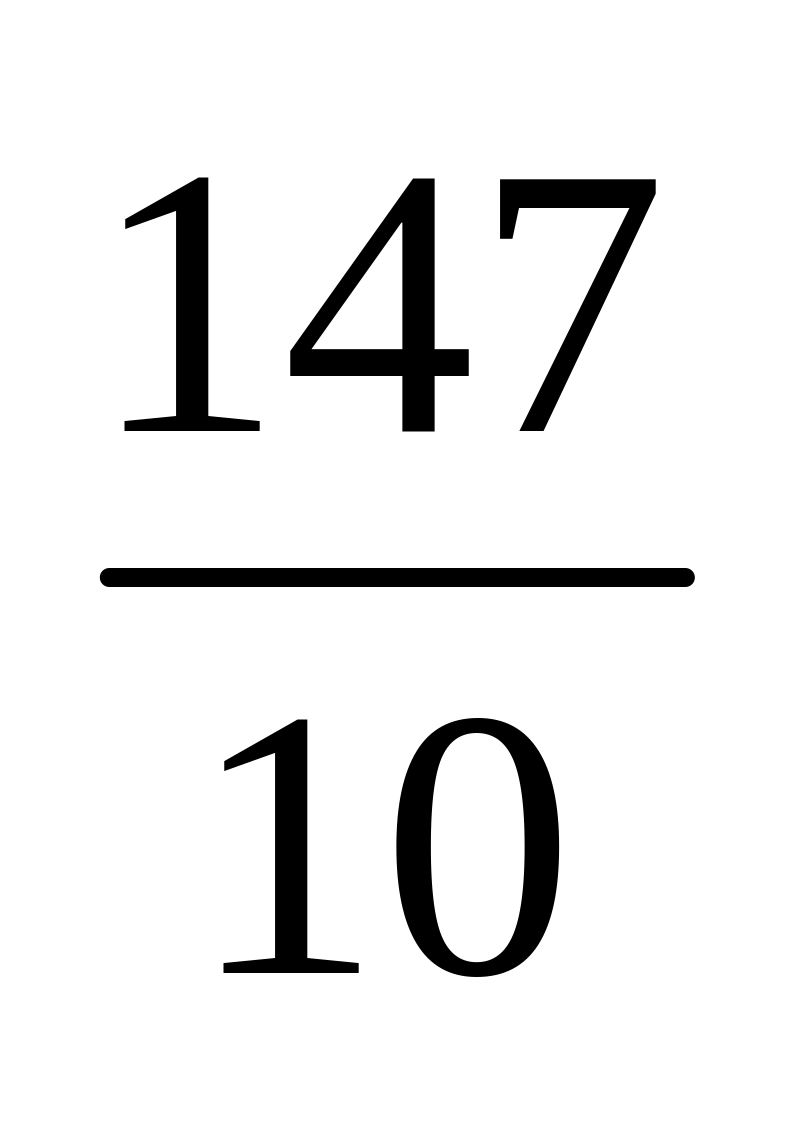
Given Data:
Weight of the body = w = 147 N
Gravitational acceleration = g = 10 ms-2
To Find:
Mass of the body = m = ?
Calculations:
As we know that
w = mg
So m =
By putting the values, we have
m =
m = 14.7 kg
Result:
Numerical 3. How much force is needed to prevent a body of mass 10 kg from falling?
Given Data:
Mass of the body = 10 kg
Gravitation acceleration = g = 10 ms-2
To Find:
Force required to prevent the body from falling = R = ?
Calculations:
As we know that in stable position,
R = w = mg
By putting the values, we have
R = w = 10 x 10
R = 100 N
Result:
Numerical 4. Find the acceleration produced by a force of 100 N in a mass of 50 kg. (GRW 2013)
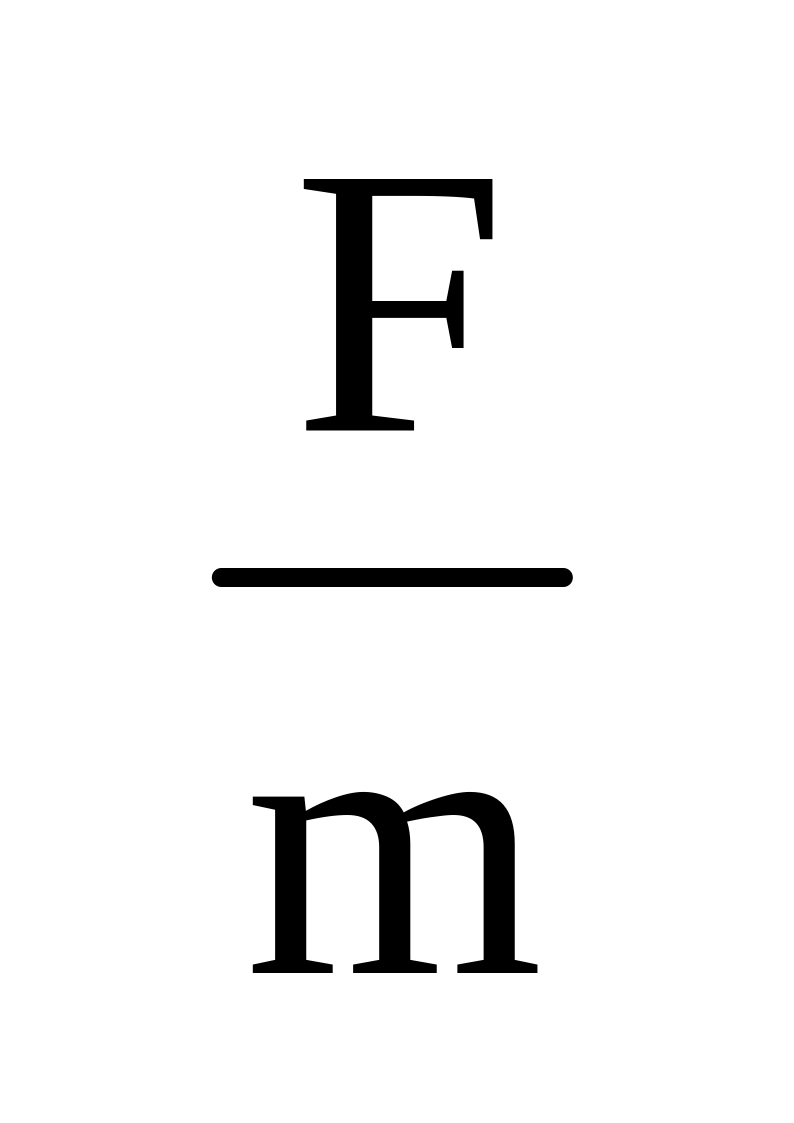
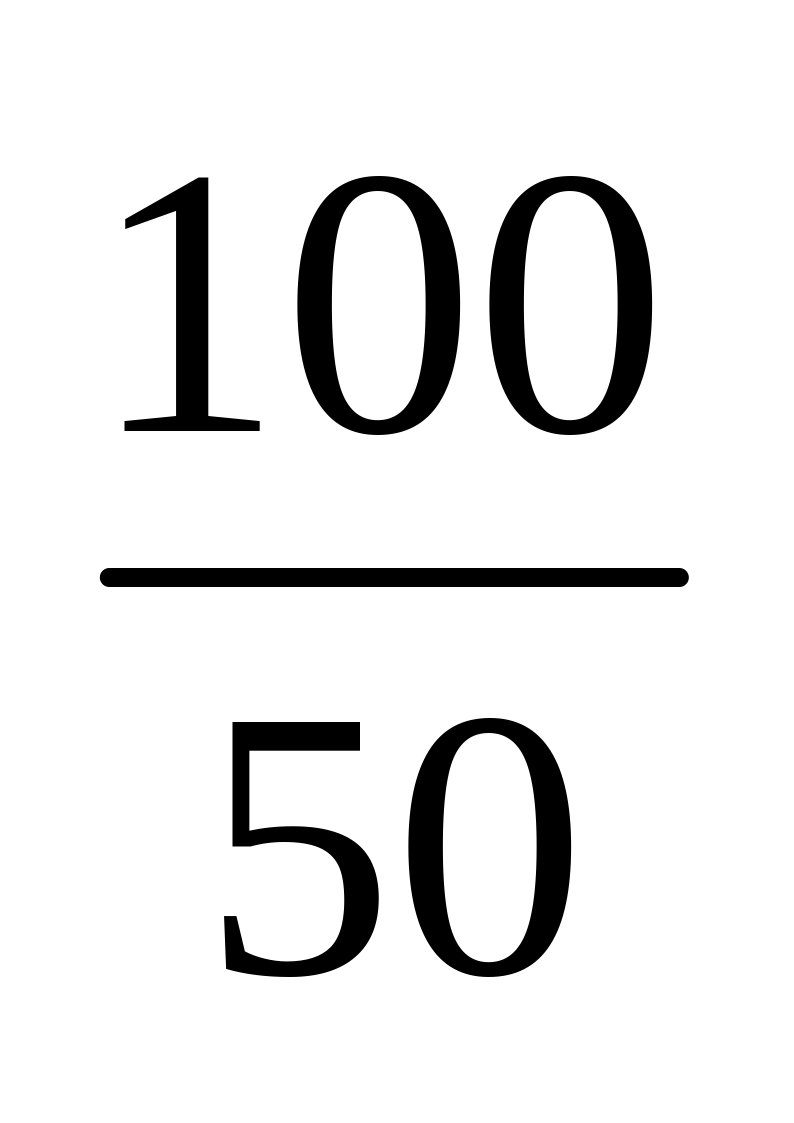
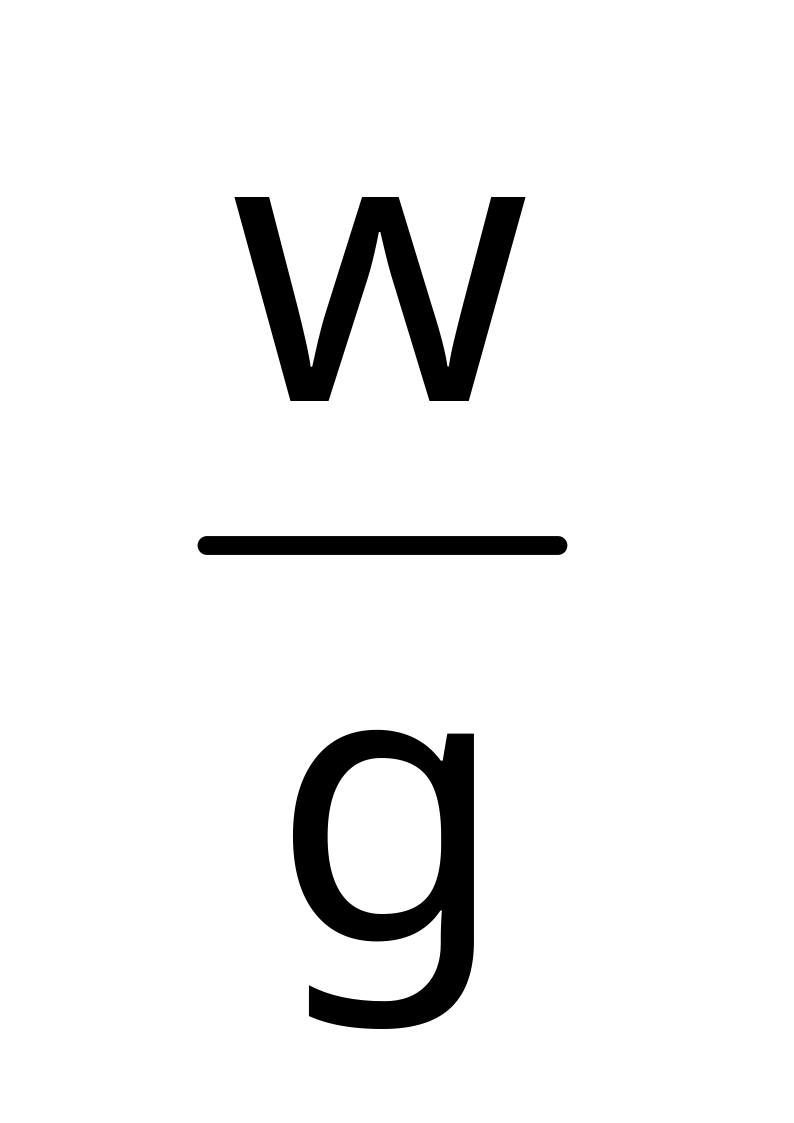
Given Data:
Force acting on the body = F = 20 N
Mass of the body = m = 50 kg
To Find:
Acceleration of the body = a = ?
Calculations:
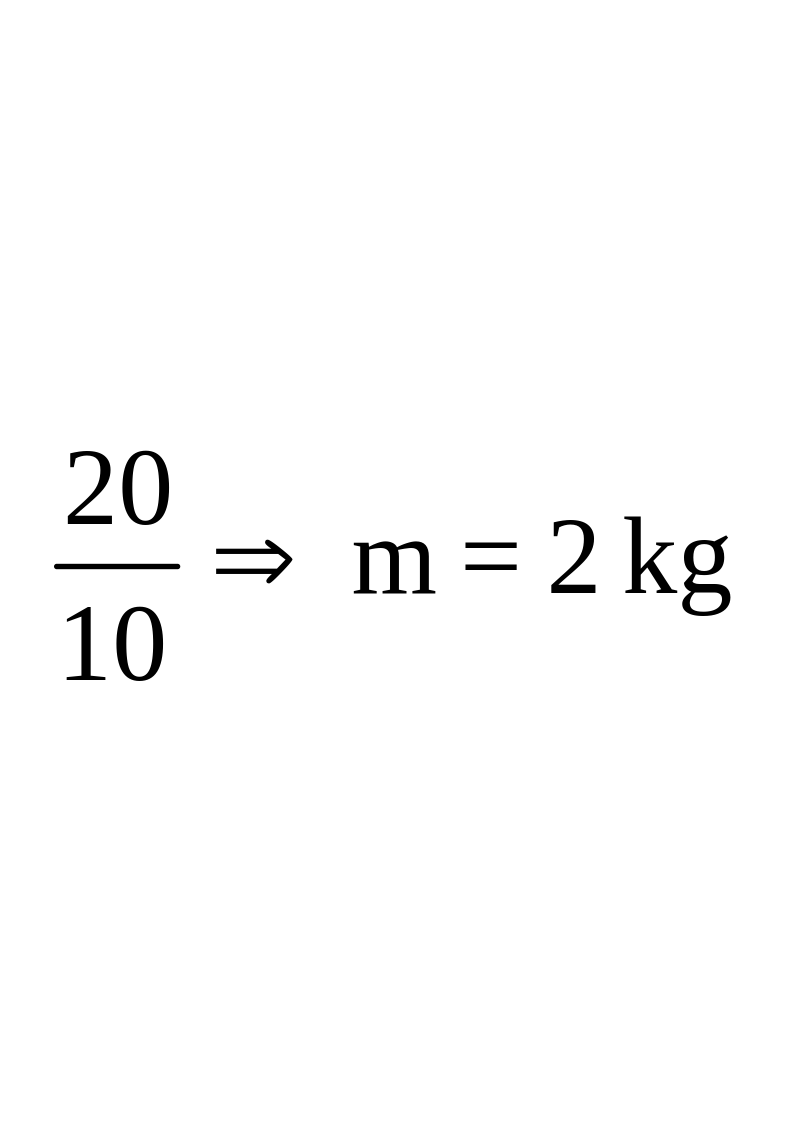
Numerical 5. From Newton’s second law of motion F = ma So a = By putting the values, we have a = a = 2 ms-2 Result: A body has weight 20 N. How much force is required to move it vertically upwards with an acceleration of 2 ms-2.
Given Data:
Weight of the body = 20 N
Acceleration of the body = a = 2 ms-2
Gravitational acceleration = g = 10 ms-2
Normal reaction = R = w = 20 N
To Find:
Force acting on the body moving vertical upward = F =?
Calculations:
As we know that
w = mg
So m =
By putting the values, we have
m =
From Newton’s second law of motion
F = ma
By putting the values, we have
F = 2 x 2 F = 4 N
Now net force required to move the body upward
= normal reaction + force producing acceleration
= 20 N + 4 N 24 N
Result:
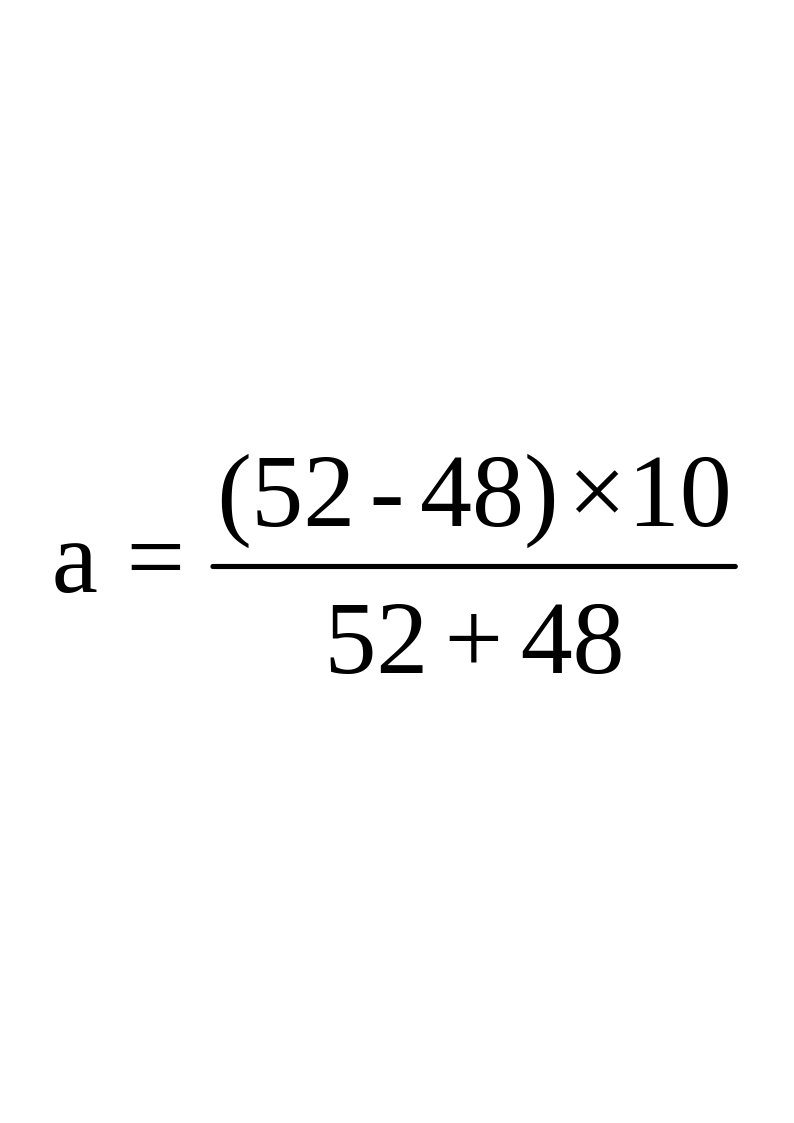
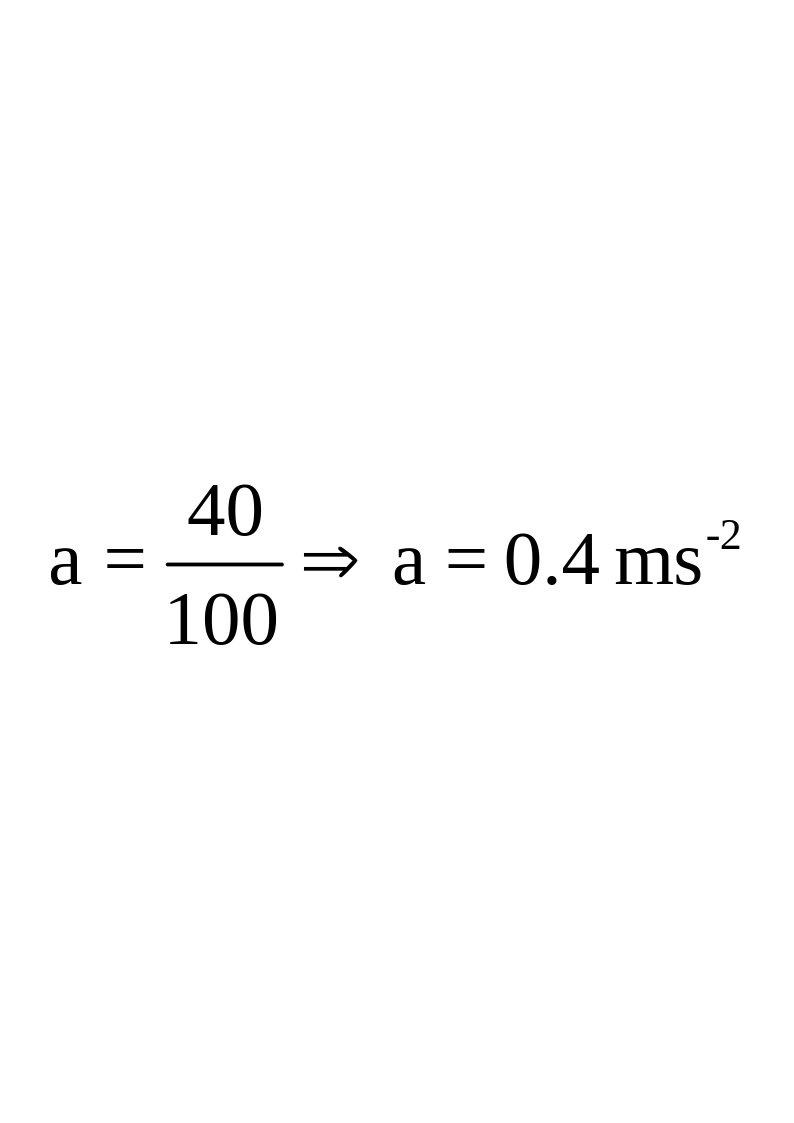
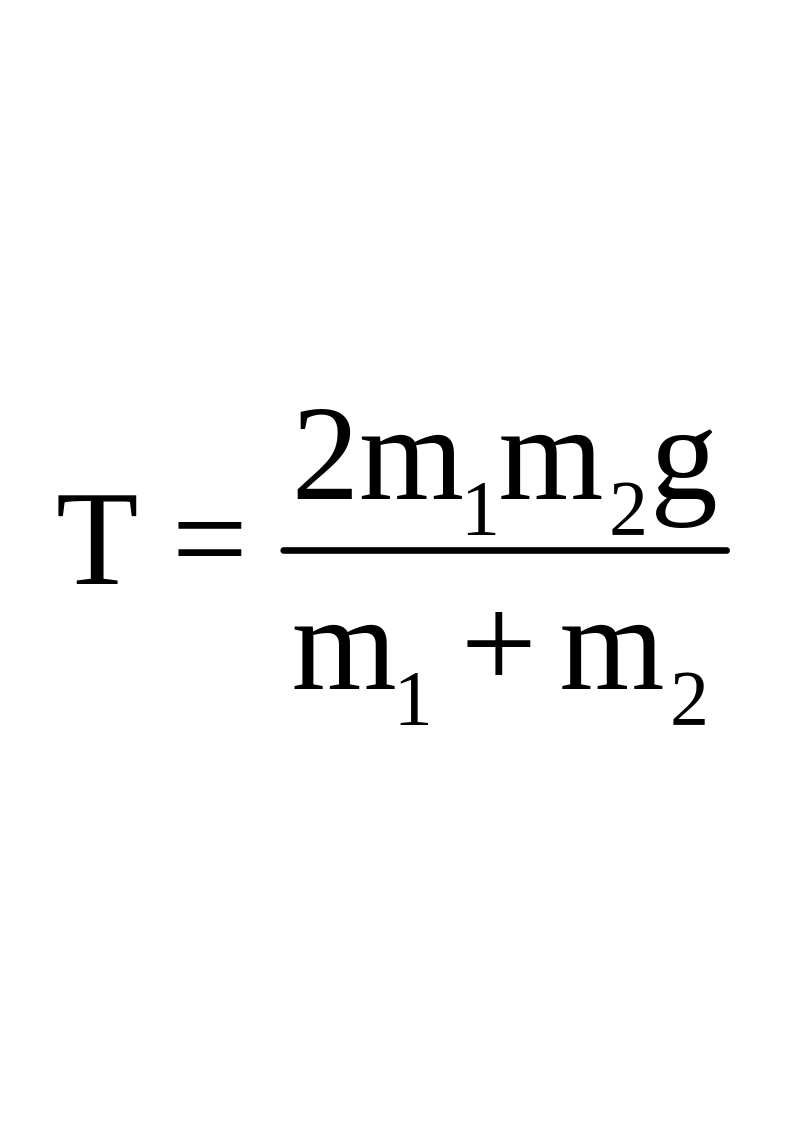
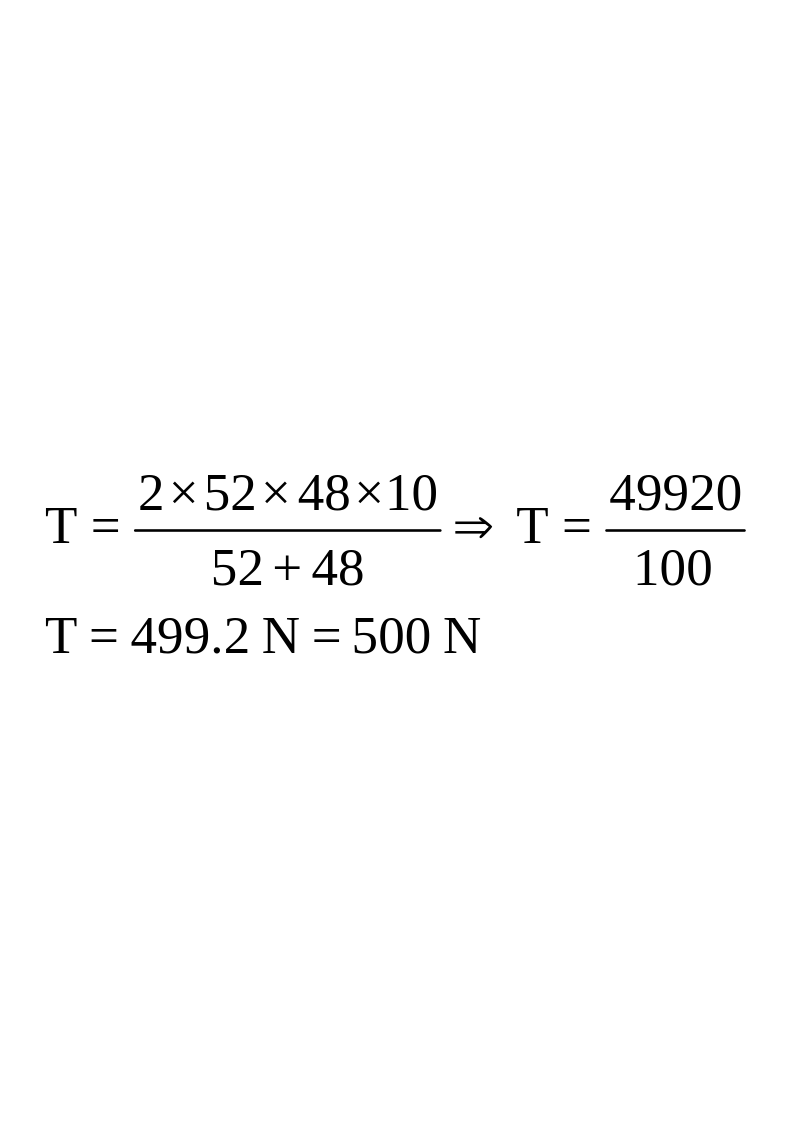
Numerical 6. Two masses 52 kg and 48 kg are attached to the ends of a string that passes over a frictionless pulley. Find the tension in the string and acceleration in the bodies.
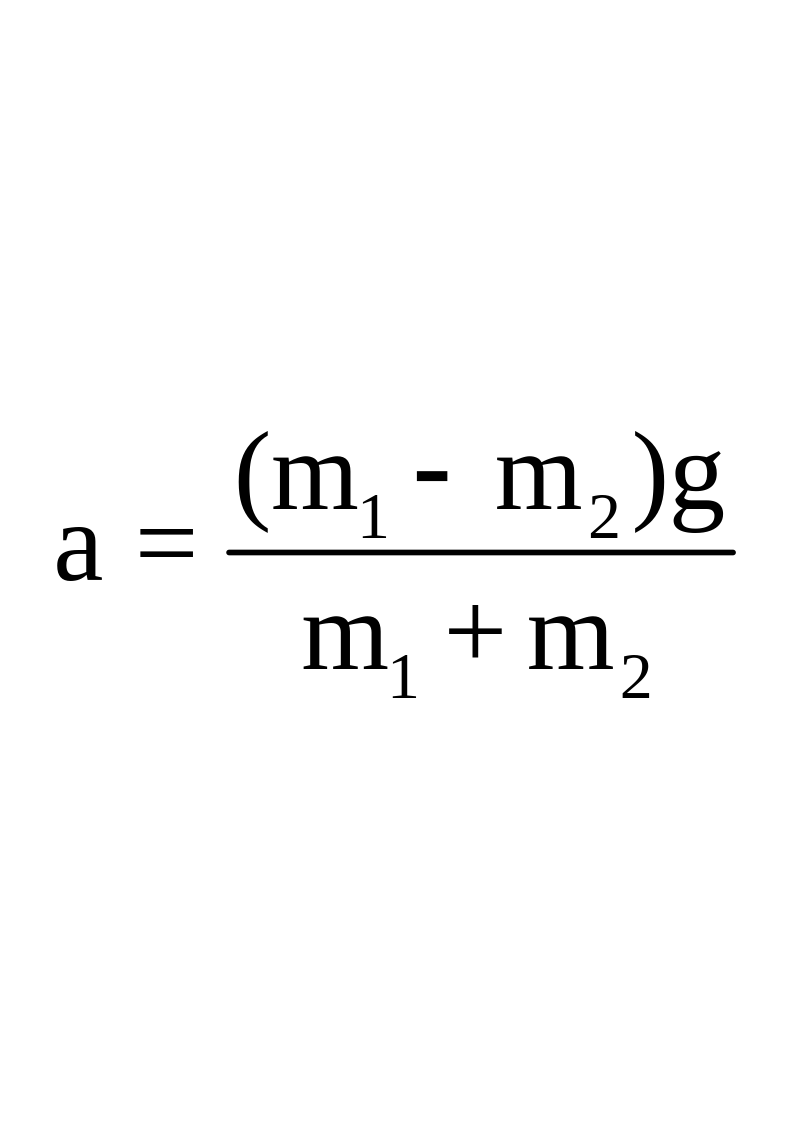
Given Data:
Mass of first body = m1 = 52 kg
Mass of second body = m2 = 48 kg
Gravitational acceleration = g = 10 ms-2
To Find:
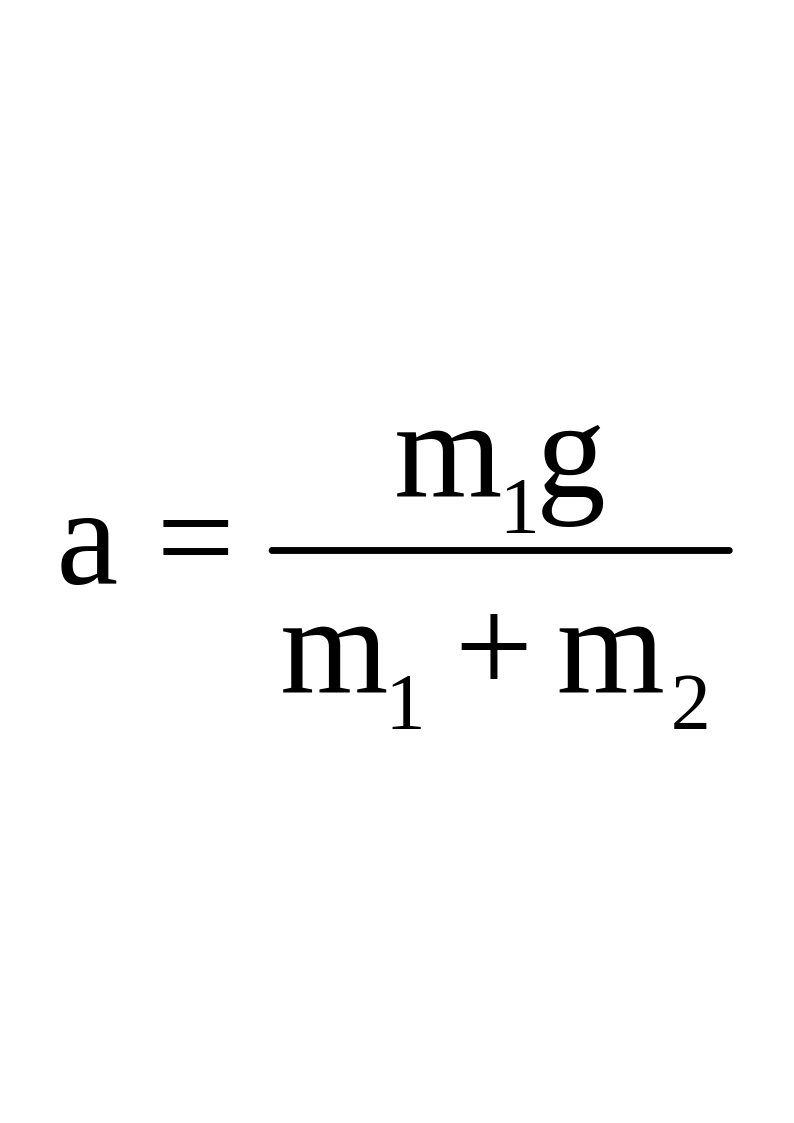
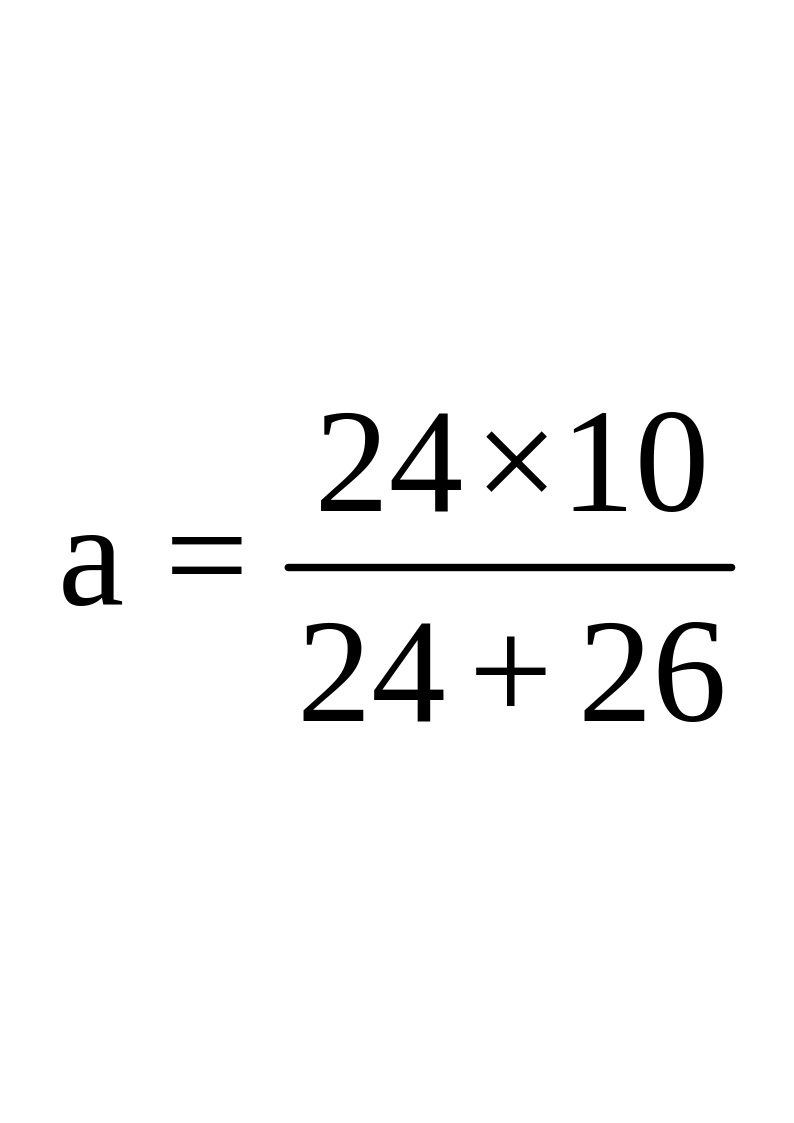
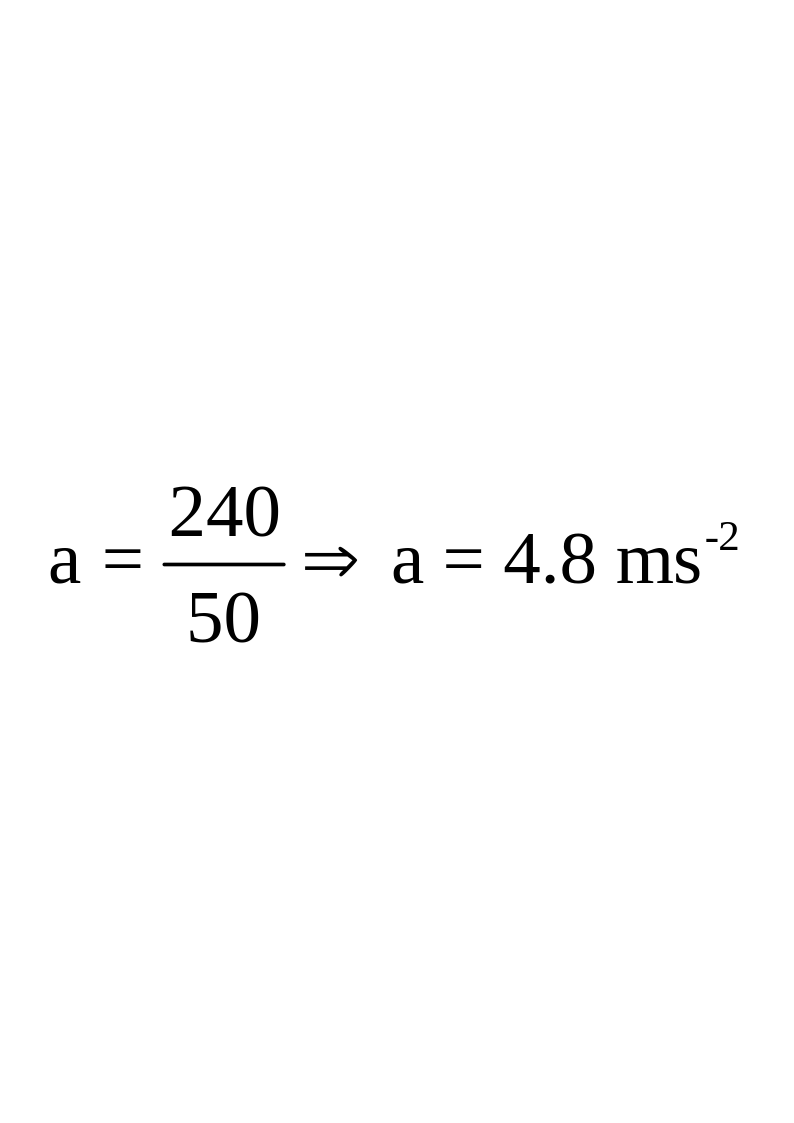
Acceleration of the bodies = a = ?
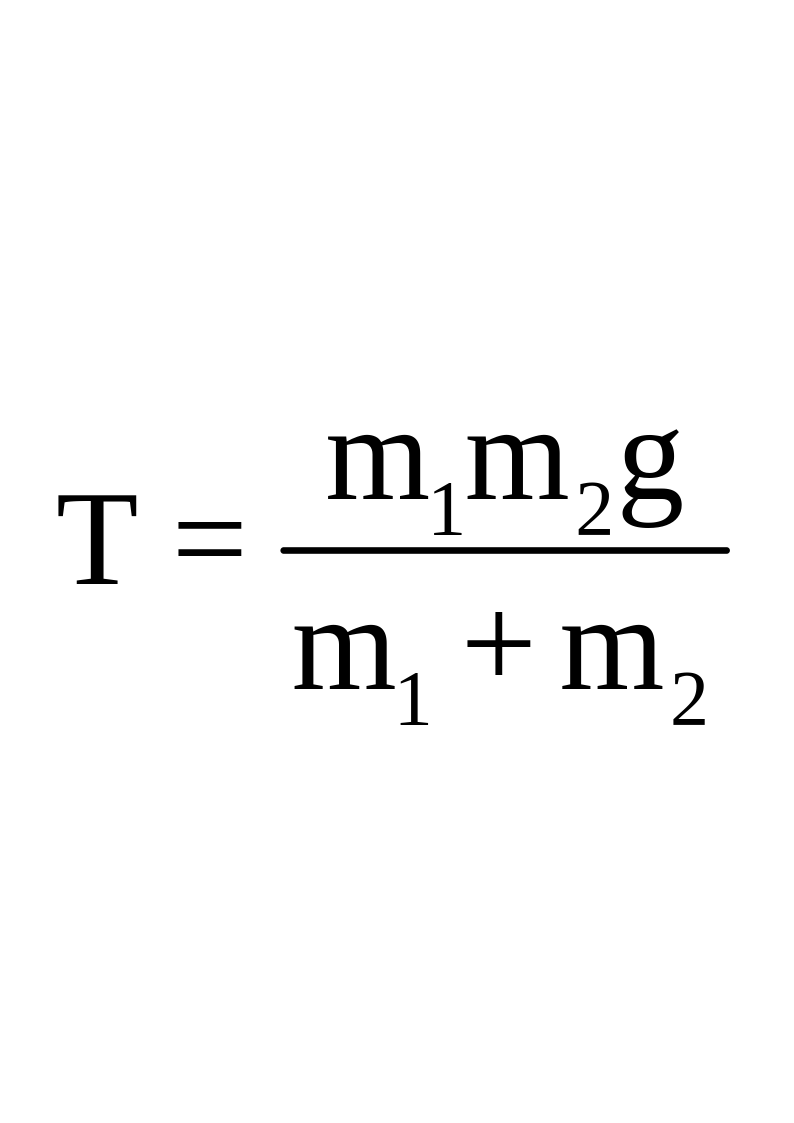
Tension in the string = T = ?
Calculations:
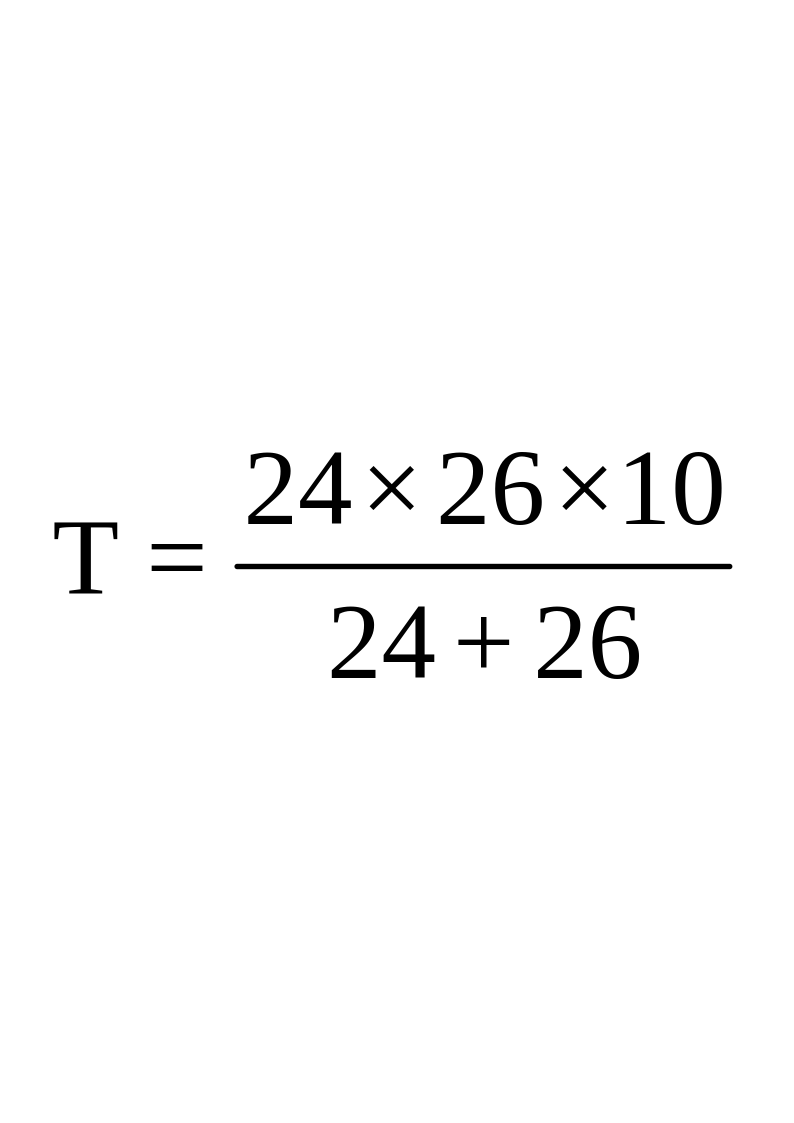
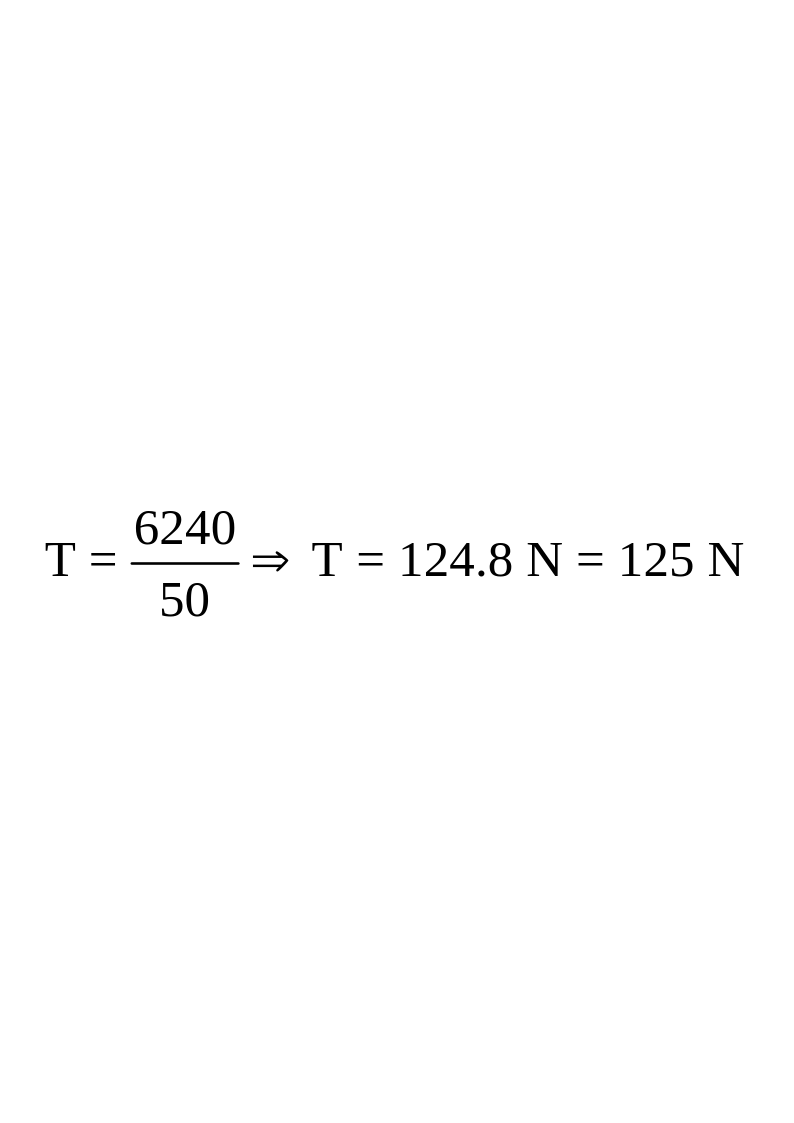
Numerical 7. When the two bodies are moving vertically then acceleration of the bodies is as, By putting the values in above equation, we have When the two bodies are moving vertically then tension in the string is as, By putting the values in above equation, we have Result: Two masses 26 kg and 24 kg are attached to the ends of a string which passes over a frictionless pulley. 26 kg is lying over a smooth horizontal table. 24 kg mass is moving vertically downward. Find the tension in the string and the acceleration in the bodies.
Given Data:
Mass of the block moving vertically = m1 = 24 kg
Mass of the block moving along table = m2 = 26 kg
Gravitational acceleration = g = 10 ms-2
To Find:
Acceleration of the bodies = a = ?
Tension in the string = T = ?
Calculations:
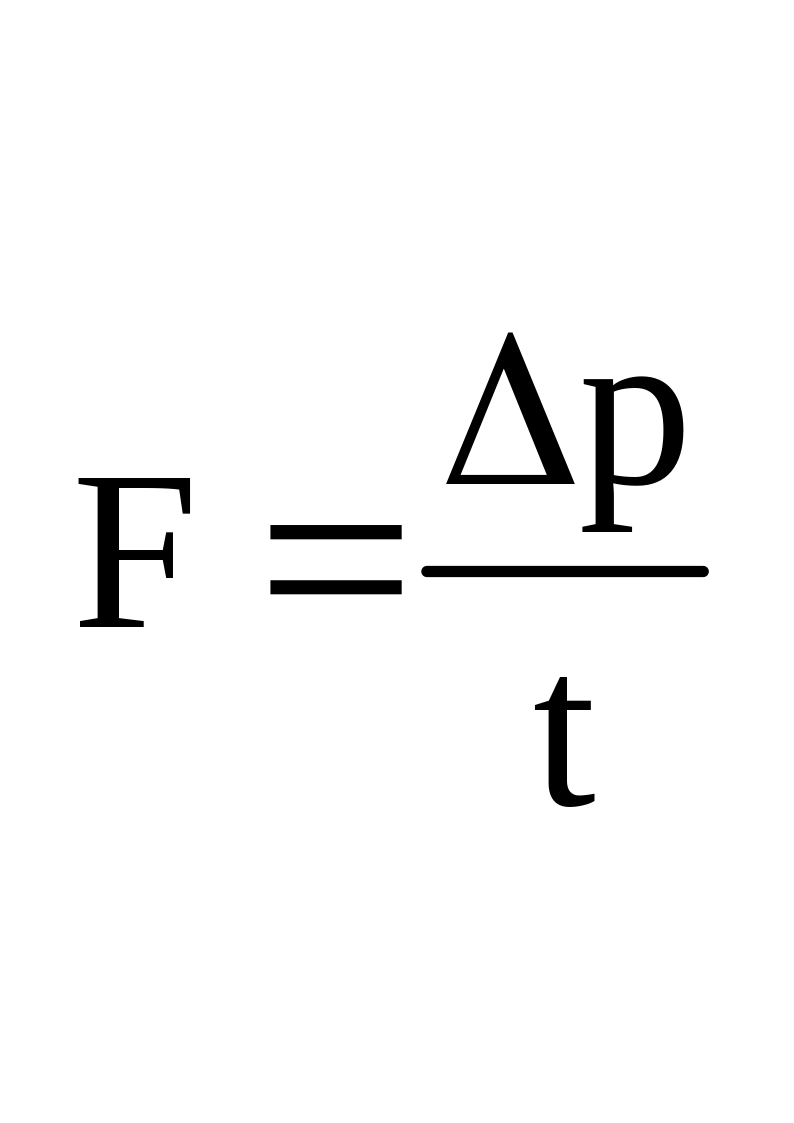
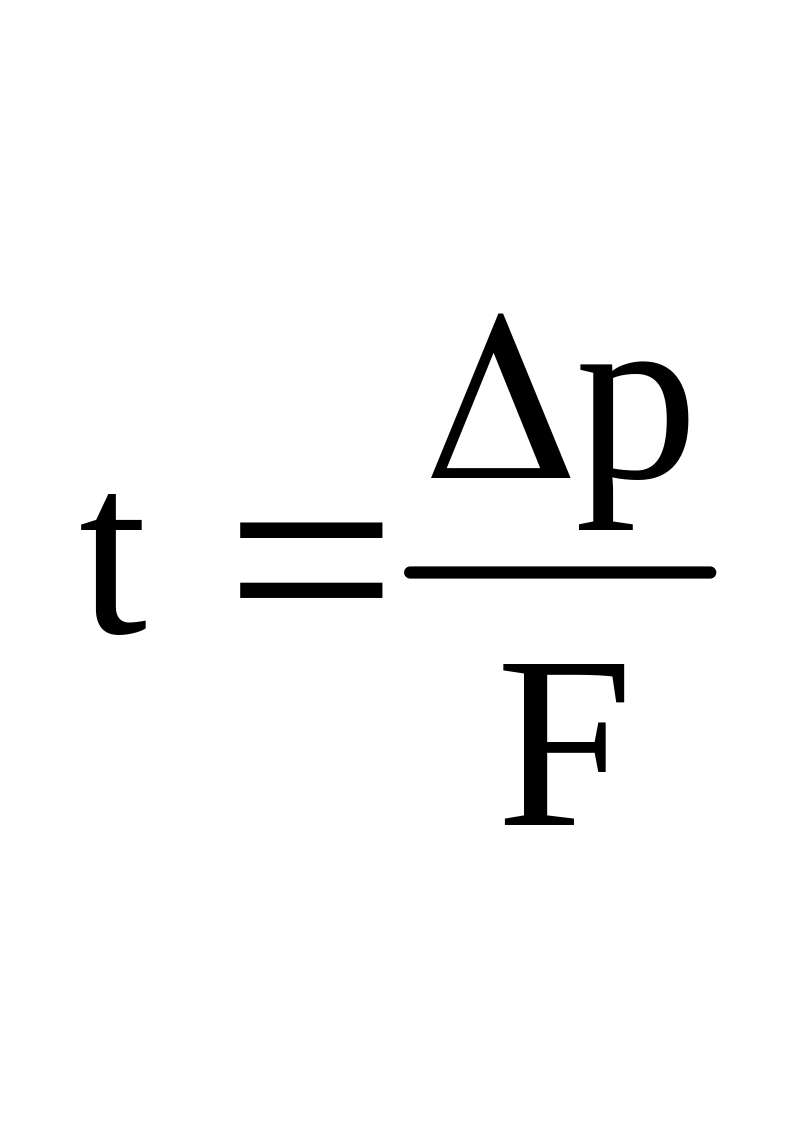
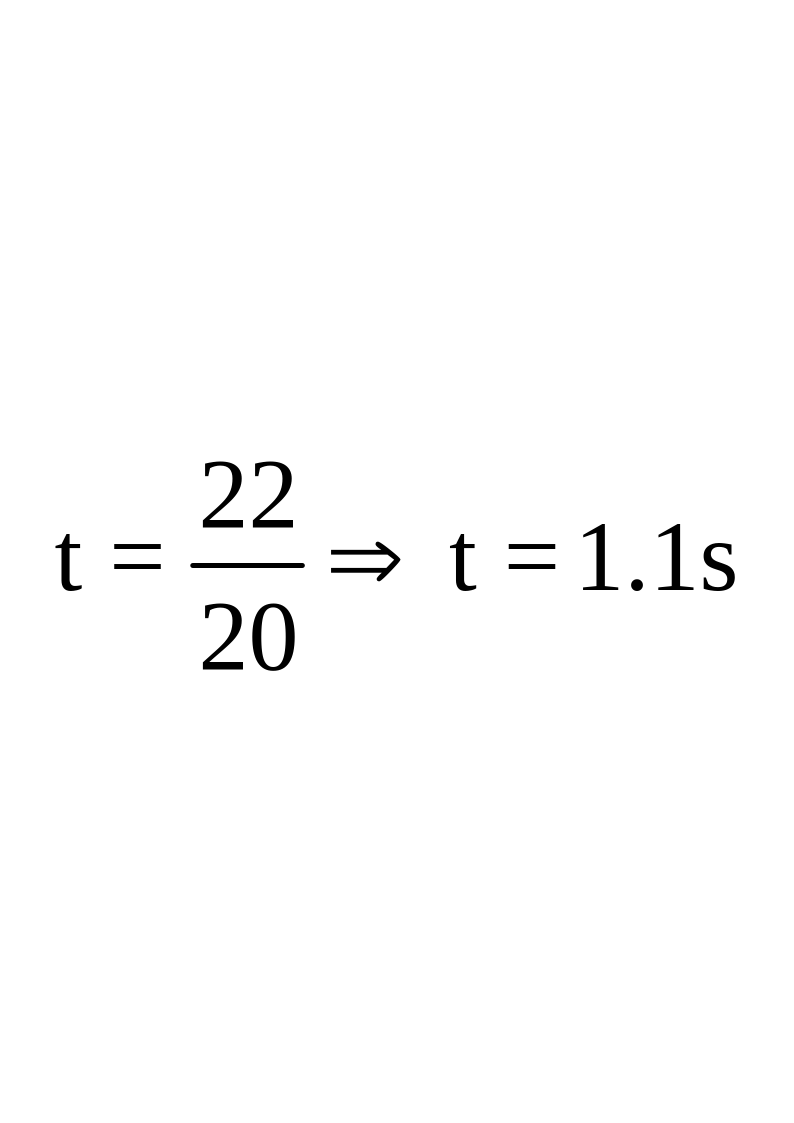
Numerical 8. When one body is moving vertically and other body is moving horizontally then acceleration of the bodies is as, By putting the values in above equation, we have When the two bodies are moving vertically then tension in the string is as, By putting the values in above equation, we have Result: How much time is required to change 22 Ns momentum by a force of 20 N? (LHR 2014)
Given Data
Change in momentum = ΔP = 22 Ns
Force applied = F = 20 N
To Find:
Time required = t = ?
Calculations:
As we know that,
By putting the values, we have
Result:
Numerical 9. How much is the force of friction between a wood block of mass 5 kg and the horizontal marble floor? The coefficient of friction between wood and marble is 0.6.
Given Data:
Mass of the block = m = 5 kg
Coefficient of friction = μs = 0.6
To Find:
Force of friction = Fs = ?
Calculations:
As we know that
Fs = μs mg
By putting the values, we have
Fs = 0.6 x 5 x 10
Fs = 30 N
Result:
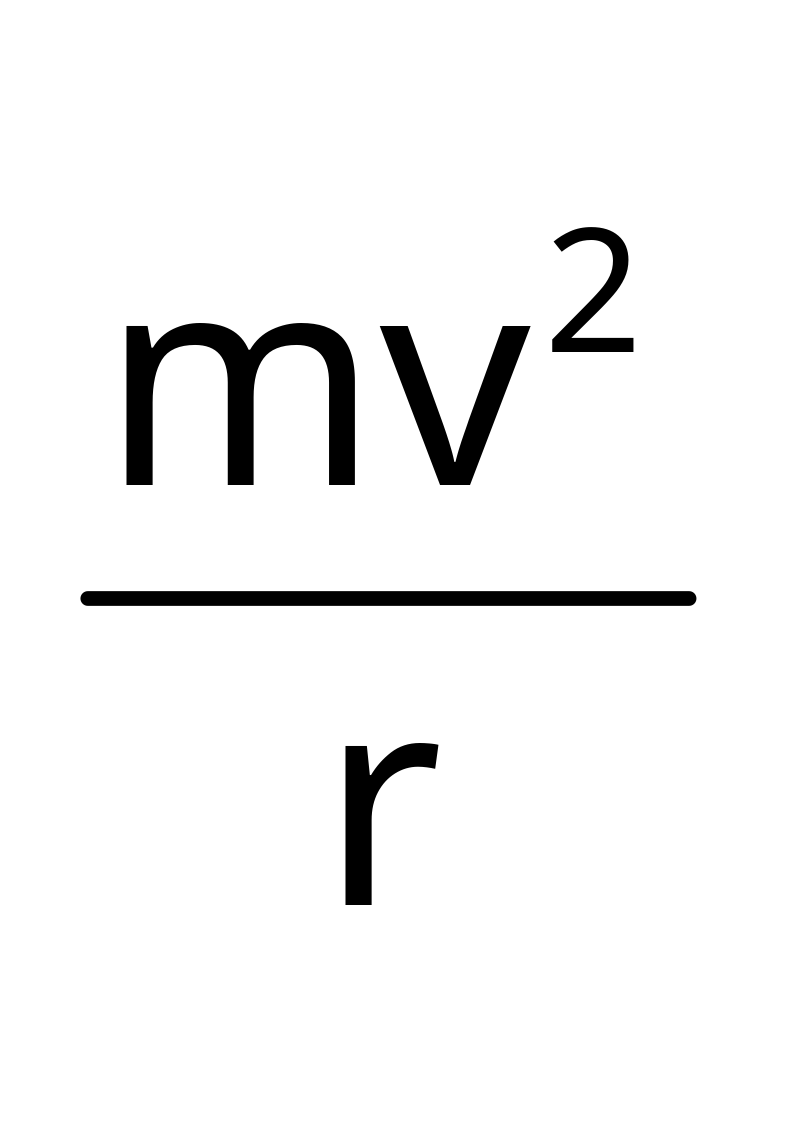
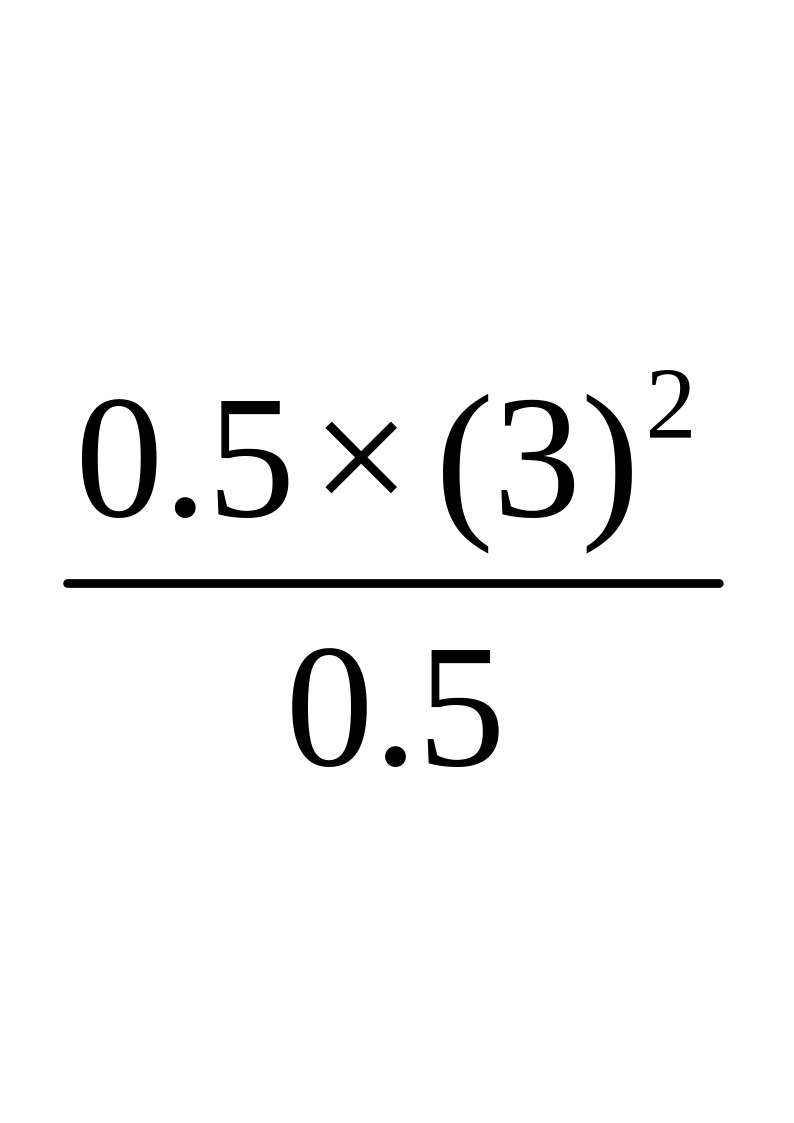
Numerical 10. How much centripetal force is needed to make a body of 0.5 kg to move in a circle of radius 50 cm with a speed of 3 ms-1? (LHR 2012)
Given Data:
Mass of the body = m = 0.5 kg
Radius of the circle = r = 50 cm = 0.5 m
Speed of the body = v = 3 ms-1
To Find:
Centripetal force = Fc = ?
Calculations:
As we know that
Fc =
By putting the values, we have
Fc =
Fc = 9 N
Result:
TB.ST Self Test
Long Questions
Q1. State and Explain law of conservation of momentum.
Q2. A stone of mass 100 g is attached to a string 1m long. The stone is rotating in a circle with a speed of 5 ms-1. Find the tension in the string.
Q3. Note:
Q4. Parents or guardians can conduct this test in their supervision in order to check the skill of students.
Short Questions
Q1. A lead shot of mass 5g is fired with an air gun. If the velocity of the shot is 60 ms–1. What is its Momentum?
Q2. An inflated balloon shoots off when its air is released. Why?
Q3. Why is it hard to stop fast moving and heavy vehicles?
Q4. A body of mass 5 kg is moving with a velocity of 10 ms–1. Find the force to stop it in 2 s.
Q5. What is centripetal force? Write its dependence.